
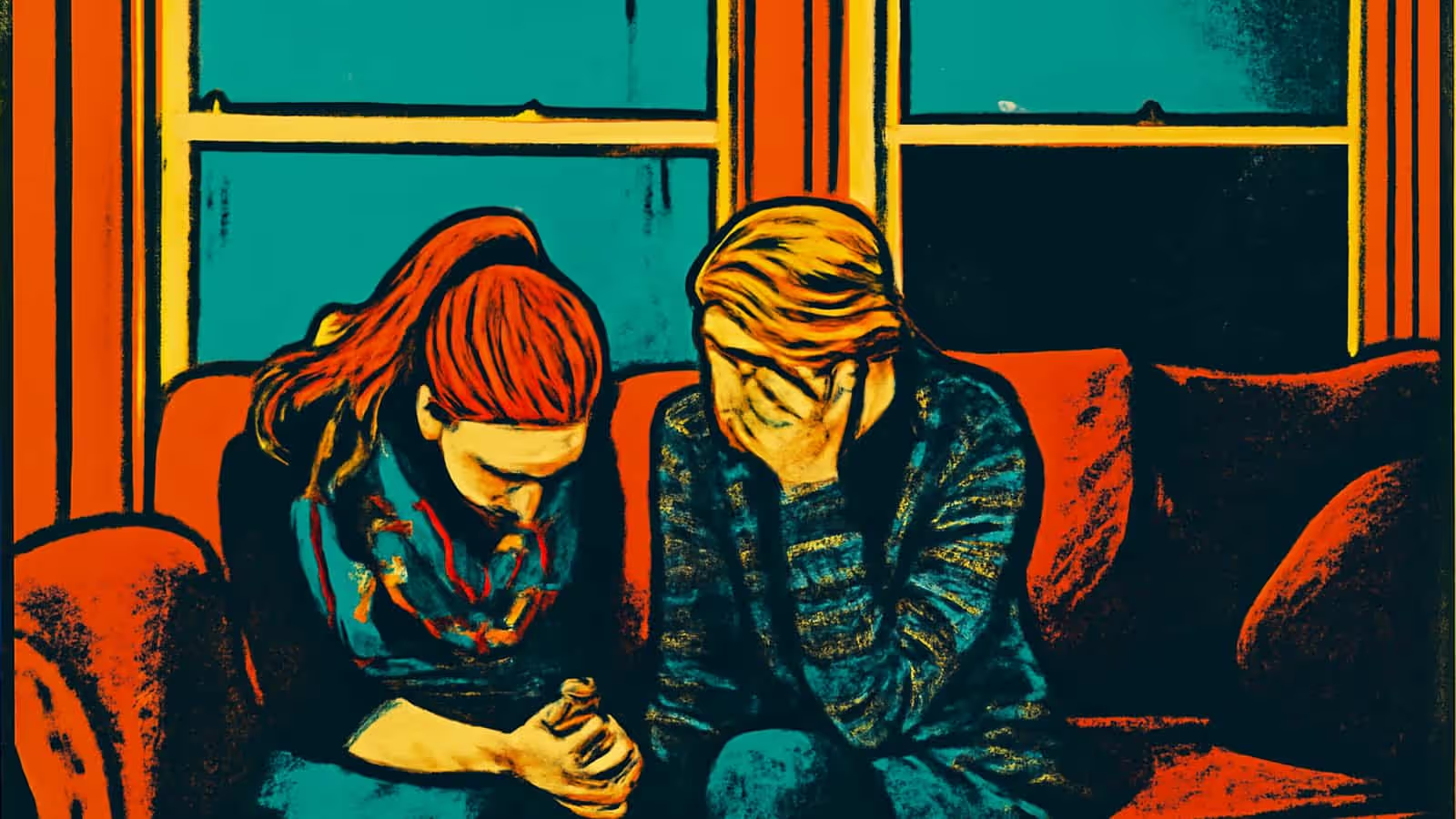
Most grief does not need therapy, and a minority of it clearly does. Knowing which situation you are in matters more than knowing what treatments exist, because the same intervention that helps one group has not shown clear benefit for the other.
That is an unusual shape for a health topic, and it is the reason this article spends as much time on who should not seek treatment as on who should.
Why routine grief counselling is not recommended
Grief is not a disorder. It is the ordinary response to losing someone, it is frequently the most painful thing a person experiences, and neither of those facts makes it a clinical condition.
Trials of counselling offered to bereaved people generally, rather than to those identified as struggling persistently, have not demonstrated clear benefit. The sensible reading is not that support is useless but that most people already have what they need in the people around them, and that adding a professional to an ordinary bereavement does not reliably improve on it. Grief that hurts a great deal is still, usually, grief working normally.
This is why the useful question is not how bad your grief is. It is whether it has stayed in the same acute state for a long time while your life has failed to resume in any form.
When grief becomes a disorder
A minority of bereaved people develop grief that stays acute and disabling rather than gradually changing shape. That pattern was validated as a distinct condition, prolonged grief disorder, before it entered the major diagnostic manuals. [prigerson-2009-pgd]
The features are specific: persistent intense yearning or preoccupation with the person who died, alongside significant impairment in everyday functioning, well beyond what is typical for the person’s circumstances and culture. Clinical descriptions emphasise that this is not simply grief that is taking longer, but grief that has become stuck in a way the person can usually recognise when it is described to them. [shear-2015-grief]
Duration alone is a poor test, which is worth saying plainly because the diagnostic time thresholds circulate as though they were deadlines. They exist to help clinicians avoid diagnosing too early. They are not a statement that feeling the loss after a year is abnormal, and plenty of people feel it keenly for years without meeting any part of the definition.
Is this worth raising with someone?
Tick anything that has been true for many months rather than weeks. This is a reflection prompt, not a diagnostic tool, and it produces no score.
0 of 6 ticked
Most of this describes you. Please speak to a professional. This is the pattern targeted grief treatment was designed for, and it works.
Some of this describes you. Worth mentioning to a doctor or a therapist, particularly if it has been many months and nothing has shifted.
Little of this describes you. That is consistent with grief doing what grief does, however painful it currently is.
We have no screener for grief, and we are not going to point you at the depression questionnaire instead. It measures something related but different, and grief is not depression.
What the treatment evidence shows
For people with that pattern, targeted treatment outperforms general psychotherapy. In a randomised controlled trial of 95 people meeting criteria for complicated grief, complicated grief treatment produced higher response rates and faster improvement than interpersonal psychotherapy. [shear-2005-cgt]
The comparator is what makes this result useful. Interpersonal psychotherapy is a real, established treatment, not a waiting list, so the trial is answering whether grief-specific work adds something over good generic therapy. It did. Treatment ran to roughly sixteen sessions, which is a realistic course rather than an open-ended commitment.
What the approach involves is two things held together: work on the loss itself, including the memories people avoid most, and structured attention to restoring engagement in ordinary life. Those halves matter jointly. Focusing only on the loss leaves the shrunken life untouched, and focusing only on activity asks someone to move on around a wound nobody has addressed.
When to seek help
Speak to a professional if the pattern above describes you and has done for many months, if you cannot function in the way you need to, or if you are avoiding reminders so thoroughly that your life has contracted around the avoidance.
Seek help immediately if you have thoughts of ending your life. Feeling that you would rather not be here is not an uncommon experience in intense grief, and it is still a reason to talk to someone now rather than wait.
Ask about grief-focused treatment by name. It is the thing with the strongest trial evidence and it is not what a general counselling referral automatically provides. Our guide to what the five stages model gets wrong covers why the most familiar account of grief is also the least accurate, and the grief pillar sets out the wider picture.
How MyFreud can help
Grief is hard to assess from inside, and the question a clinician will ask is whether anything has shifted over months. Daily mood tracking gives you an actual record rather than an impression formed on the hardest day, which is the difference between “it is exactly the same” as a feeling and as a finding.
Download MyFreud and start today: App Store or Google Play.