
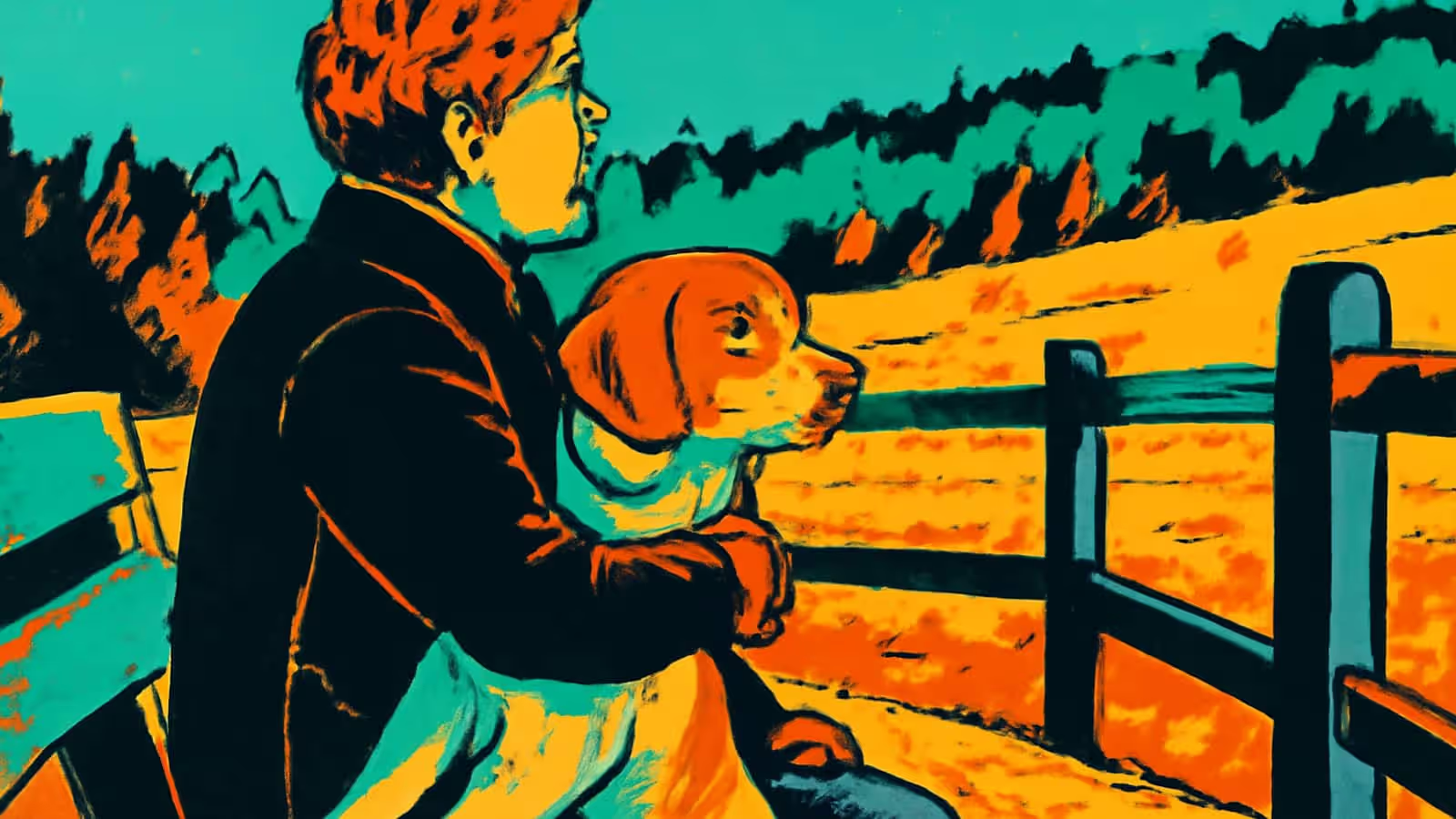
Grief after a pet dies follows much the same shape as grief for a person. Research using a bereavement questionnaire adapted from human grief found the reactions genuinely parallel, with somewhat lower frequency of affective distress. [archer-pet-bereavement]
What makes it distinctively difficult is not the intensity. It is that almost nothing around you treats it as a bereavement.
Why the grief is real
The grief is real because the attachment was real, and attachment loss is what produces grief regardless of the species involved. This has been documented since the early nineties and is still routinely met with surprise, including by the people experiencing it.
There is also a structural reason it bites harder than people expect. A pet is embedded in the physical routine of your day: the feed, the walk, the sound at the door, the weight on the bed. Human bereavement is largely encountered in thought, while this one is encountered in the body of your daily routine dozens of times a day, and each encounter is a small fresh notification.
Why so few people treat it as a bereavement
There is no social script for pet loss, and that absence does most of the damage. No leave, no ritual most people will attend, no shared expectation about how long you might be affected, and a reasonable chance that somebody will ask whether you are getting another one within the week.
Grief that the people around you do not recognise as grief is sometimes called disenfranchised grief. The practical consequence is that you carry the loss and conceal it simultaneously, which is more work than either alone, and the concealment removes exactly the support that ordinarily helps. Many people describe the isolation as worse than the sadness.
How the grief usually moves
Grief after a pet dies is typically sharpest in the first weeks and loosens over months, though the routine reminders fade more slowly than the acute distress does. There is no correct timetable, and the shape below is a general pattern rather than a schedule to measure yourself against. The same is true of grief generally. What makes this particular loss harder is that few people around you treat it as one, which our piece on disenfranchised grief covers.
A schematic of the general pattern described in this article, drawn to show shape rather than reproduced from measured data.
The routine line falls more slowly on purpose, because that is what people most often find confusing. Feeling steadier in general while still stopping at the cupboard where the lead used to hang is not a relapse. It is the second line, doing what it does.
The guilt, and why it is so common
Guilt is unusually prominent in pet loss because most owners made the decision about when their animal died. That is a responsibility almost nobody carries in human bereavement, and having carried it, the mind goes back over it looking for the error.
Nearly everyone finds one. People who chose earlier wonder whether they took time the animal still had; people who waited wonder whether they extended suffering for their own sake. That both conclusions are reached with equal conviction is the clue: this is grief reviewing itself, not evidence that you got it wrong. Decisions of this kind are made with partial information, under time pressure, by someone who is already distressed.
What tends to help, and what does not
The pattern here is that the things which help are the ones that treat the loss as a loss.
| Tends to help | Tends not to |
|---|---|
| Telling one person who will take it seriously | Explaining yourself to someone who will not |
| Marking it somehow: a photograph, a spot in the garden | Removing every trace immediately to stop the reminders |
| Keeping the parts of the routine that were yours, like the walk | Restructuring your whole day at once to avoid the gaps |
| Letting children have their own version of the loss | Replacing the animal quietly and hoping nobody notices |
| Naming the guilt out loud to somebody | Relitigating the decision alone at three in the morning |
Removing every trace deserves the extra word, because it is the most common instinct and it usually backfires. Clearing the bowls and bed within hours is understandable, and it tends to add a second loss rather than removing the first.
When to seek help
Speak to a doctor or a therapist if the grief is not loosening at all after several months, if you are unable to work or care for yourself, or if you are drinking more or withdrawing from everyone. Grief that stays completely unchanged over a long period, rather than easing unevenly, is the pattern worth having looked at, and it is described in more detail in our article on prolonged grief disorder.
Do not discount it because it was a pet. If you are hesitating to raise this with a professional because you expect it to sound trivial, that hesitation is a symptom of exactly the disenfranchisement described above, and it is a reason to raise it rather than a reason not to. If you are thinking about harming yourself, contact your local emergency services or a crisis helpline now rather than waiting for an appointment.
There is no self-assessment for grief on this site, and grief is not depression, so pointing you at a depression questionnaire would be the wrong instrument. The self-assessment hub is there if something alongside the grief, such as sleep or stress, is what you actually want to look at.
How MyFreud can help
MyFreud’s daily tracking is useful for grief in one specific way: it shows direction. Grief is very hard to judge from inside, and a bad week reads as no progress at all, whereas a few months of logged mood shows the slow uneven loosening that is genuinely happening underneath.
Download MyFreud and start today: App Store or Google Play.