
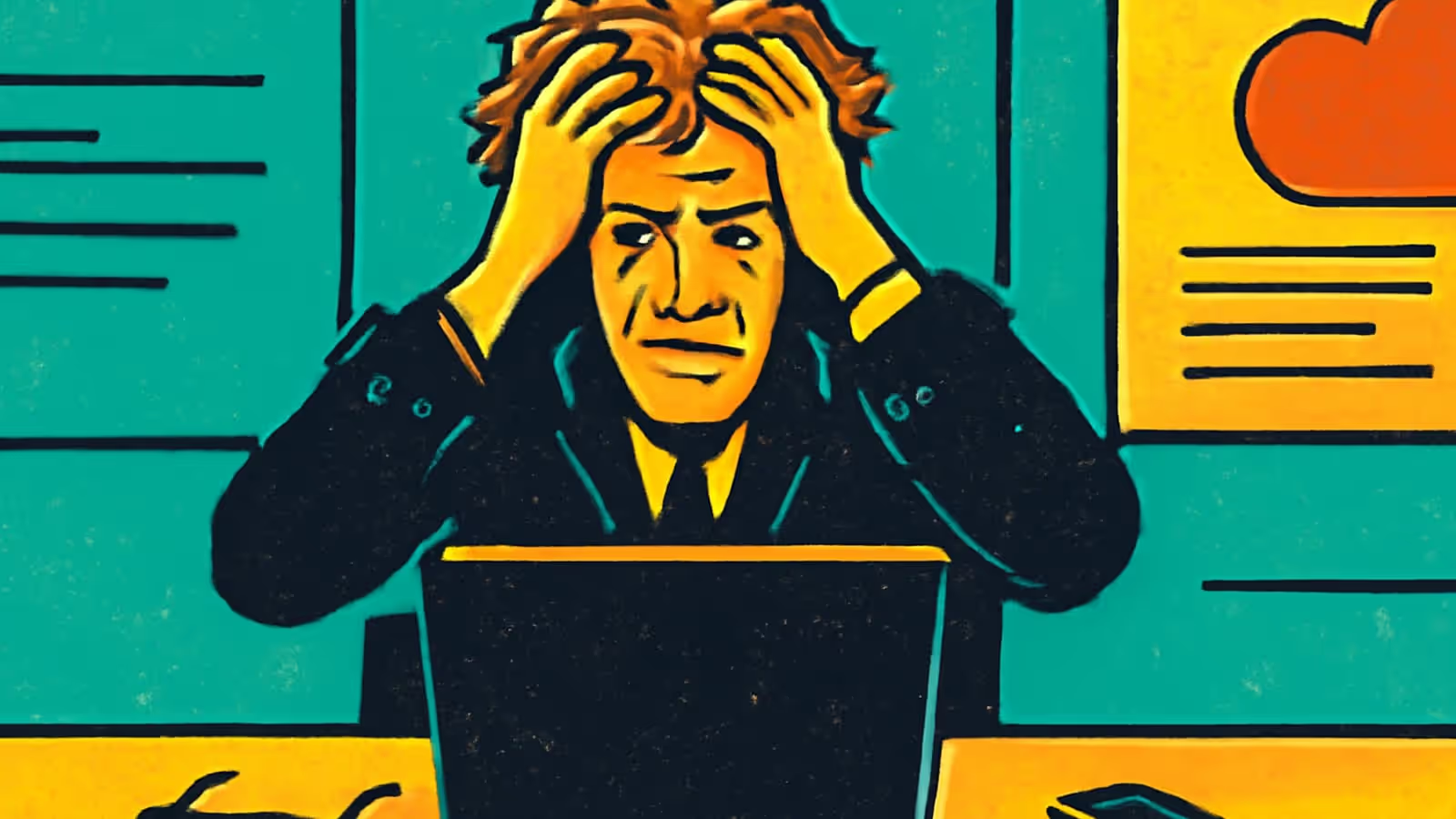
Anger is the response that fires when something you care about is threatened, blocked or violated. It is fast, it is physical, and it arrives with a ready-made explanation of whose fault it is. That explanation is sometimes right, which is part of what makes anger so difficult to handle well.
This hub is the anchor page for everything we publish on anger. It covers what anger is for, the single most widely believed piece of advice about it and why the evidence says the opposite, and what actually brings the temperature down.
What anger is doing
Anger is not a malfunction. It appears in every culture, it has a consistent physiological signature, and it does something useful: it mobilises energy and it signals to other people that a line has been crossed. People who cannot get angry are not serene, they are usually easier to exploit.
The physiology is worth knowing because it explains the timing problem. Heart rate rises, blood pressure rises, muscles tense, attention narrows onto the threat and away from the context. That is a body preparing to act, and it happens well before the part of you that considers consequences has finished reading the situation.
This is the central difficulty. The signal can be accurate and the response can still be a disaster. Being right that you were treated badly does not make the email you are about to send a good idea. Almost all practical anger work lives in that gap: keeping the information, losing the reflex.
The venting myth
The most widely believed thing about anger is that it builds up and needs releasing. Hit a pillow. Smash plates at a rage room. Go for a hard run to burn it off. Get it out rather than bottling it up.
This is wrong, and it has been tested carefully enough that it is no longer an open question.
A 2024 meta-analysis reviewed 154 studies covering more than 10,000 participants and split anger management activities into two groups: those that raise physiological arousal and those that lower it. Arousal-raising activities, including the classic cathartic ones, did not reduce anger, and several increased it. Arousal-lowering activities did reduce it. [kjaervik-2024-anger-arousal]
The boiler metaphor is the problem. Anger is not a fixed quantity of pressure that has to go somewhere. Rehearsing the anger physically tends to practise it rather than discharge it: you spend twenty minutes hitting something while thinking about the person you are angry at, and what you have built is an association, not a release.
One caution, because the finding is easy to overstate. This is about venting as catharsis, not about exercise generally. Regular physical activity is good for mood and stress by every measure we have. Going to the gym is fine. Going to the gym specifically to punch out your rage at your manager, while thinking about your manager, is the thing that does not work.
Shape of the finding in Kjærvik and Bushman (2024), Clinical Psychology Review. Bar heights are author-drawn to show the direction of the result and are not the published effect sizes. Shorter bars mean less anger left.
Read the two panels together rather than separately. The point is not the height of any single bar but that switching tabs moves everything downward: the group of activities people are usually told to try sits above the group that works.
What works instead
The practical implication of the meta-analysis is almost disappointingly plain: bring the arousal down, and the anger follows.
Slow breathing, with a long exhale. The same mechanism that makes breathing useful for anxiety applies here, and it is the fastest lever available in the moment. Our guide to breathing exercises covers the patterns worth knowing and which one has the best trial evidence.
Leave, and stay gone long enough. The standard advice to take a break fails mainly because people take a break for ninety seconds. Physiological arousal outlasts the decision to calm down by a wide margin, so a break needs to be measured in tens of minutes rather than breaths. Twenty is a reasonable floor.
Do not rehearse it while you are away. A break spent mentally re-running the argument keeps arousal high and defeats the purpose. This is the most common way a timeout fails.
Change what the event means. Anger runs on interpretation, and the interpretation arrives so fast it feels like perception. “He ignored me deliberately” and “he did not see the message” produce entirely different bodies from the same event. This is the cognitive half of anger work and it is where the durable gains are.
The twenty-minute rule
Use this when you have left a situation angry. The instruction is simply to not decide anything, and not re-run the argument, until the timer stops.
5:00
Breathe out for longer than you breathe in. If the argument starts replaying, that is expected. Put your attention on something in the room instead, without treating the replay as a failure.
Now decide what to do. The decision made after the timer is reliably better than the one you wanted to make before it, which is the entire point of the exercise.
When anger is a symptom of something else
Anger that is new, or out of character, is usually a symptom rather than the condition.
Depression frequently presents as irritability rather than sadness, and this is particularly common in men, which is one reason male depression is underdiagnosed. If the anger arrived alongside loss of interest, flattened mood or disrupted sleep, the anger is not the thing to treat first. Our depression hub covers what that looks like.
Post-traumatic stress carries irritability and angry outbursts as recognised features, alongside hypervigilance and a nervous system tuned permanently high.
Sleep debt lowers the threshold for anger dramatically and is the single most reversible cause on this list. Before concluding you have an anger problem, it is worth ruling out that you have a sleep problem.
Chronic pain, alcohol, and some medications all belong on the list too. So does the ordinary, non-clinical explanation: a sustained situation that would make most people angry. Sometimes the correct intervention is to the circumstances, not to the person.
If what you are dealing with is less a series of outbursts than a fuse that has been short for months, that low-grade version has its own causes and its own order of work. Our guide to why you might be so irritable goes through them starting with the most reversible, and includes the experimental evidence that sleep loss stops you adapting to things rather than simply making you grumpy.
Anger treatment actually works
Anger has been studied as a treatment target for a long time, and cognitive behavioural approaches have consistently produced moderate to large reductions in anger and aggression. [delvecchio-2004-anger-cbt] That is a better result than most people anticipate, probably because anger is so often framed as a character flaw rather than something with a protocol.
The work usually combines three things: arousal reduction of the sort described above, identifying and testing the interpretations that trigger escalation, and rehearsing alternative responses before you need them. The rehearsal matters. A technique learned during a calm afternoon is available at the moment it is needed; one read about and never practised is not. Our guide to anger management therapy goes further into which approaches the trial evidence supports, and why the venting most people are told to try is the one that reliably fails.
It also tends to be shorter than people expect. This is not open-ended therapy, it is a targeted piece of work.
When to seek help
Speak to a doctor or a therapist if your anger frightens people, if it has led to damaging property or any physical aggression, if you regularly say things you would not defend afterwards, if it is affecting your work or your relationships, or if you cannot bring it down once it starts.
Also seek help if it is new. A change in temper is information about something, and the something is worth finding.
If you are worried you might hurt someone, or yourself, contact your local emergency services or a crisis helpline now.
How MyFreud can help
MyFreud’s daily mood tracking is useful here for an unglamorous reason: anger is badly remembered. People recall the incidents and not the conditions around them, so the pattern stays invisible. A record shows what the week looked like before the flashpoint, which is usually where the actual answer is.
Download MyFreud and start today: App Store or Google Play.