
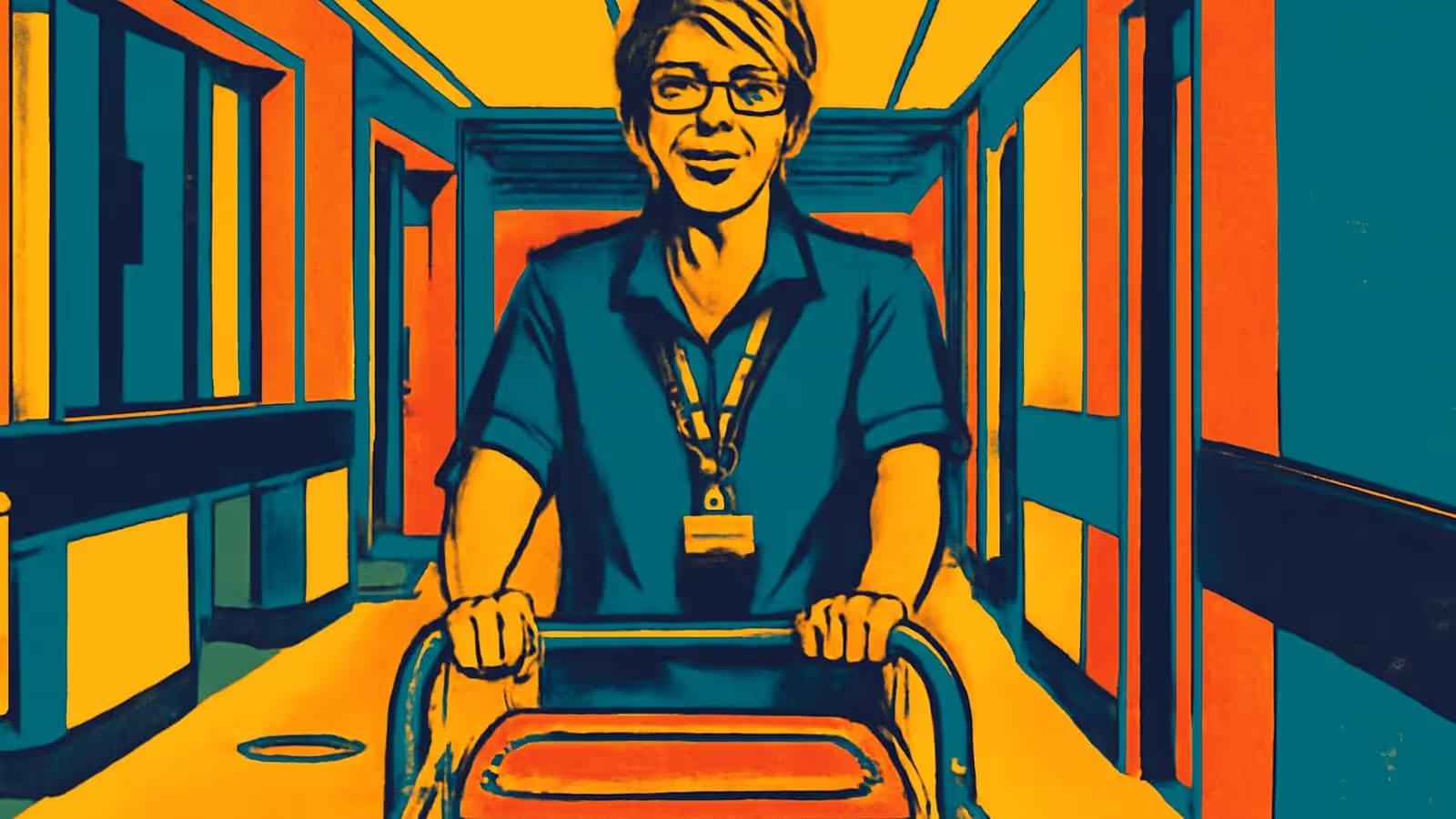
Compassion fatigue is what happens when the thing wearing you down is not the workload but the people. It is the exhaustion that comes from repeated contact with others in distress, and its most recognisable sign is that you have stopped being able to feel much about them.
That numbness is the symptom. It gets experienced as a verdict on your character, which is the main reason it goes unmentioned.
It is not burnout with a kinder name
The two get used interchangeably and they have different sources, which is why they need different responses.
Burnout is about the job. The established account describes exhaustion, cynicism and reduced effectiveness arising from chronic workplace stressors: excessive load, insufficient control, inadequate reward, unfairness, breakdown of community, and conflicting values. [maslach-2016-understanding-cf] Fix enough of those and it improves.
Compassion fatigue is about exposure to suffering. It is described as the convergence of secondary traumatic stress, which resembles post-traumatic symptoms acquired from somebody else’s experience, with accumulated burnout. [cocker-2016-compassion-fatigue]
The practical consequence is that somebody can have a reasonable rota, a decent manager and a manageable caseload, and still be in trouble, because what is doing the damage is the twentieth conversation this month with somebody whose life has come apart.
Our guide to burnout and depression covers a different confusion that matters for the same reason: the treatment follows from which one it actually is.
A schematic contrast of the two, based on the accounts in the sources cited. Not measured data.
The bottom bar is the one with consequences. An organisation that responds to compassion fatigue by adjusting the rota has addressed the wrong variable, and the staff will notice.
What it looks like
The presentation is broader than tiredness, and several parts of it are easy to read as personal failings.
- Reduced sympathy and empathy. The defining feature, and the one people are most ashamed of.
- Intrusive thoughts or images from other people’s experiences, sometimes arriving at home rather than at work.
- Dread of particular people on the list, and relief when an appointment is cancelled.
- Irritability and anger, often directed at colleagues or family rather than at the source.
- Cynicism about the people you serve, which is the version most likely to leak into how you speak about them.
- Disturbed sleep and difficulty switching off after a shift.
- Drinking more, or other ways of putting a gap between the day and the evening.
- Absence and indecision, including finding reasons not to be there.
The measure used for this captures something the list misses. The Professional Quality of Life scale assesses burnout and secondary traumatic stress, and alongside them compassion satisfaction, the genuine reward of doing the work. [cocker-2016-compassion-fatigue] That third component matters, because the goal is not to care less. Somebody can be high in both fatigue and satisfaction, and the satisfaction is what makes the job survivable.
Is this the shape of it?
Tick anything true over the past few months. This is a reflection prompt rather than a test, and it produces no diagnosis.
0 of 8 ticked
The first item is the one people find hardest to say and the one that most defines this. The last item is deliberately positive: if satisfaction in the work is still there, that is a genuine protective factor and the aim is to keep it, not to care less. Intrusive material from other people experiences is the item to raise with a professional rather than a manager.
A hard few months in a caring role produces some of this in almost everybody. The question worth tracking is whether it lifts on leave. Exhaustion that comes back within a week of returning is different from exhaustion that a break resolves.
Nothing here matched. If exhaustion is still the issue but it is about the job rather than the people, our burnout guide covers that version.
The free burnout screener uses the CBI, which measures personal, work-related and client-related burnout separately. That third scale is the closest thing on this site to what is described here, so it is worth reading the subscales rather than only the total.
What actually helps
Two honest caveats first. The evidence here is thin. The systematic review of interventions found only thirteen relevant studies, ten of them in nurses, three in community service workers, and none at all in emergency service workers. [cocker-2016-compassion-fatigue] And in the adjacent burnout literature, organisational interventions tend to outperform individual ones. [west-2016-interventions-cf]
Which means the advice below is reasonable rather than proven, and the parts that matter most are not yours to implement alone.
Talk about the cases, with somebody who understands them. Structured reflective practice, supervision, or a debrief that is not a performance review. This is the intervention most consistently described as useful and the first thing cut when a service is under pressure.
Vary the caseload if you have any say in it. A list composed entirely of the worst situations is a specific and modifiable risk, and it is often the newest or most willing person who ends up with it.
Protect the transition home. A deliberate boundary between the shift and the evening does more than an equivalent amount of time off at the weekend, because the problem is intrusion rather than hours.
Do not treat it as a resilience deficit. This is the framing most organisations reach for and it relocates a structural problem into the individual. Being affected by other people’s suffering is the capacity that makes somebody good at the work.
Take the intrusive symptoms seriously. Images and thoughts from other people’s experiences arriving unbidden is not something to build tolerance for. It is a reason to be assessed properly.
Our guide to how long burnout lasts covers recovery timescales, and the freeze response covers what secondary exposure to trauma can look like from the inside.
When to seek help
See a doctor or occupational health if you have stopped being able to feel for the people you care for, if material from work is intruding on your own time, if you are sleeping badly for weeks, or if you are drinking more to manage the end of the day.
Do the same if you have started avoiding the work, or thinking about leaving a profession you chose deliberately. That is worth a proper conversation before it becomes a decision made while exhausted.
Many health and care employers run a confidential staff support service, which is worth asking about because it is usually quicker to reach than anything you would be referred to, and in some countries you can approach a talking therapy service directly rather than going through a doctor.
Go urgently if you have thoughts of harming yourself.
How MyFreud can help
The reason this accumulates unnoticed is that everybody’s attention, including yours, is correctly on the person in front of you. MyFreud gives you daily mood tracking that takes seconds, which is enough to show whether a bad week is a bad week or the shape of the last six months.
Download MyFreud and start today: App Store or Google Play.