
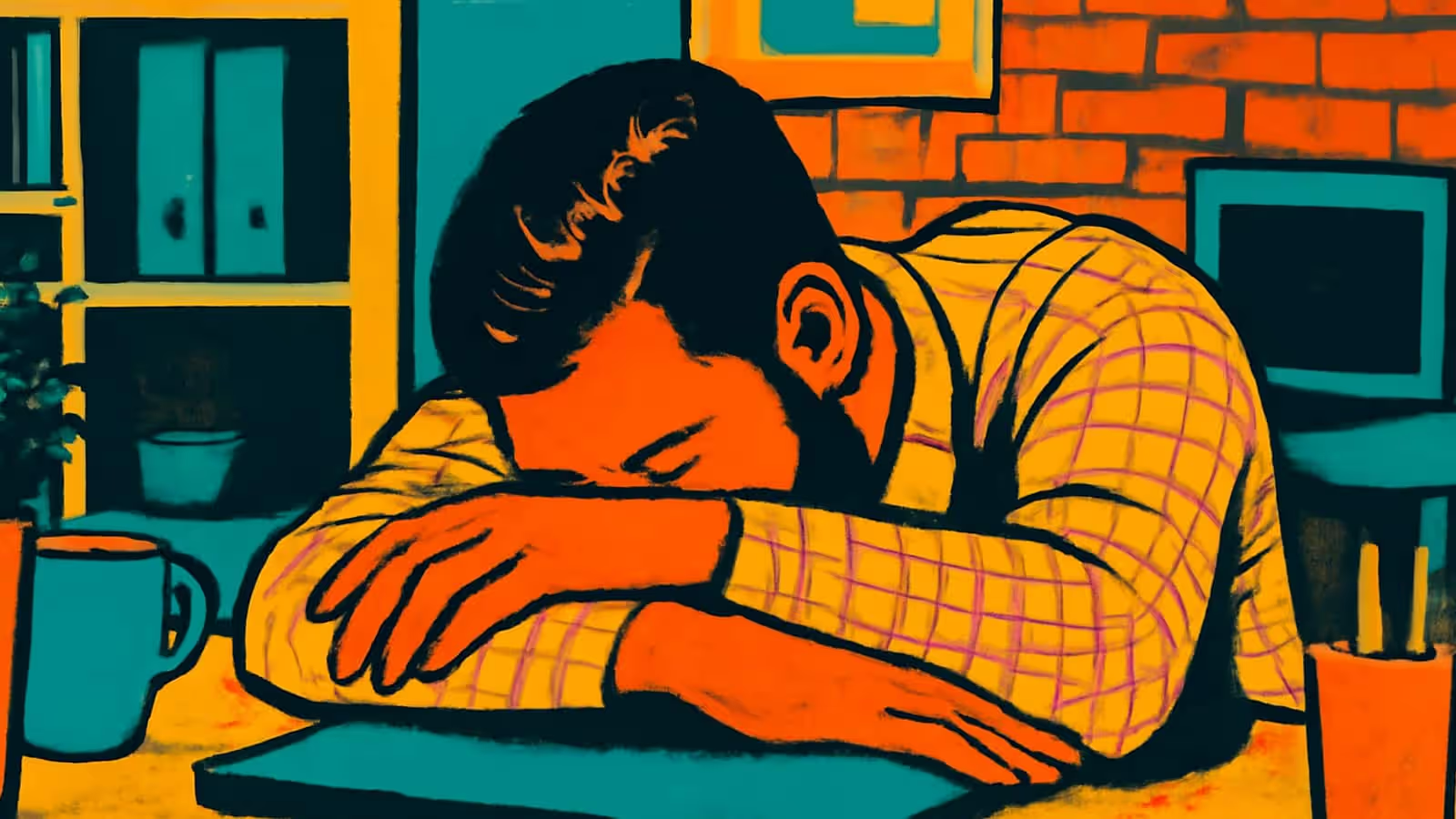
Therapy helps with burnout, and it helps less than most people expect, because burnout is defined by its relationship to the job. A systematic review and meta-analysis of interventions for employees with burnout found modest effects on burnout symptoms and limited evidence on returning to work. [ahola-2017-burnout-interventions]
That is not an argument against going. It is an argument for knowing what therapy can deliver and what it structurally cannot, so you do not conclude you have failed at recovery when what actually happened is that nothing about the work changed.
Why therapy for burnout has a ceiling
Burnout is classified as an occupational phenomenon rather than a medical condition, and the definition names its cause. It is described as resulting from chronic workplace stress that has not been successfully managed. [who-icd11-burnout-therapy] The cause sits in the conditions, so an intervention aimed only at the person is treating one side of it.
This is unusual among the things this site covers. Anxiety and depression can be treated in the person whatever is going on around them. Burnout is more like treating someone for cold exposure while they stand outside: the treatment is real, the effects are real, and they will not hold while the exposure continues.
What follows from that is practical rather than defeatist. Therapy is worth doing, and it should include what you can change about the work rather than only how you feel about it.
What therapy actually does well
Three things, and it is worth being specific because “burnout treatment” is vague enough to mean anything.
It treats what has grown alongside it. Depression and anxiety frequently develop on top of burnout, and those respond to ordinary treatment with ordinary effect sizes. This is often the most valuable thing a course of therapy does.
It works on the part you control. Boundaries, the reflex to absorb other people’s tasks, the belief that slowing down is a moral failure. Not all of that is about the workplace, and the parts that are not are workable. Our guide to people-pleasing covers the pattern that most often shows up here.
It gives you evidence for a conversation. A clear account of what the workload is doing to you is more useful in a manager conversation than a general sense of not coping, and building it is something a therapist can help with.
A schematic of the two-sided problem described in this article and in the sources cited. Not measured data.
Neither column is sufficient alone, which is the actual finding rather than a compromise between two views.
Is it burnout, or depression
This is the question a first appointment should settle, because the treatments diverge and burnout has no threshold to sort it by. The most useful practical test is whether your mood tracks your working week: burnout typically eases somewhat with distance from the work and returns on contact with it, while depression follows you into the weekend and does not lift on holiday.
That test is imperfect and both can be present at once, which is common rather than exceptional. Our guide to burnout versus depression covers where the measures actually disagree, and the burnout hub covers what the syndrome is and how it develops.
Does it track your working week?
Tick anything true over the last month. This is a reflection prompt rather than a test, and it produces no diagnosis.
0 of 7 ticked
Items one, two, three and seven describe something that tracks the job, which is the shape burnout takes. Take that pattern to an appointment in those words, because "I feel better after three days off and worse the night before I return" is far more useful to a clinician than a general account of exhaustion.
If you ticked the fifth or sixth item in particular, that points away from something purely occupational, because low mood that does not lift with distance from the work is the pattern depression takes. Both can be true at once, and it is worth saying so rather than choosing.
Nothing here matched, which is worth knowing before you adopt the label. Being tired by a demanding period is not the same as burnout, and the distinction is about whether recovery still works when you get a break.
The screener above uses the Copenhagen Burnout Inventory, which is a real burnout measure rather than an anxiety questionnaire pressed into service. It gives you a number to bring to an appointment; it is not a diagnosis, because burnout has none to give.
When to seek help
Speak to a doctor if exhaustion has lasted months rather than weeks, if a normal weekend no longer restores anything, if you have become cynical or detached about work you used to care about, or if your performance has dropped in a way you cannot pull back. Occupational health, where you have access to it, is often faster than a general route and is worth asking about.
Go sooner if low mood or loss of interest has followed you away from the work, if you are drinking more to get through the evening, or if you are having trouble sleeping on nights before you are not even working. Say plainly whether the feeling lifts when you are away, since that is the detail that routes you correctly.
Go urgently if you have thoughts of harming yourself.
How MyFreud can help
The question this article turns on, whether your mood tracks your working week or ignores it, is answerable with a fortnight of actual data and almost impossible to answer from memory. MyFreud gives you daily mood tracking that shows the shape of a working month, so you can see whether the bad stretches follow deadlines or arrive regardless.
Download MyFreud and start today: App Store or Google Play.