
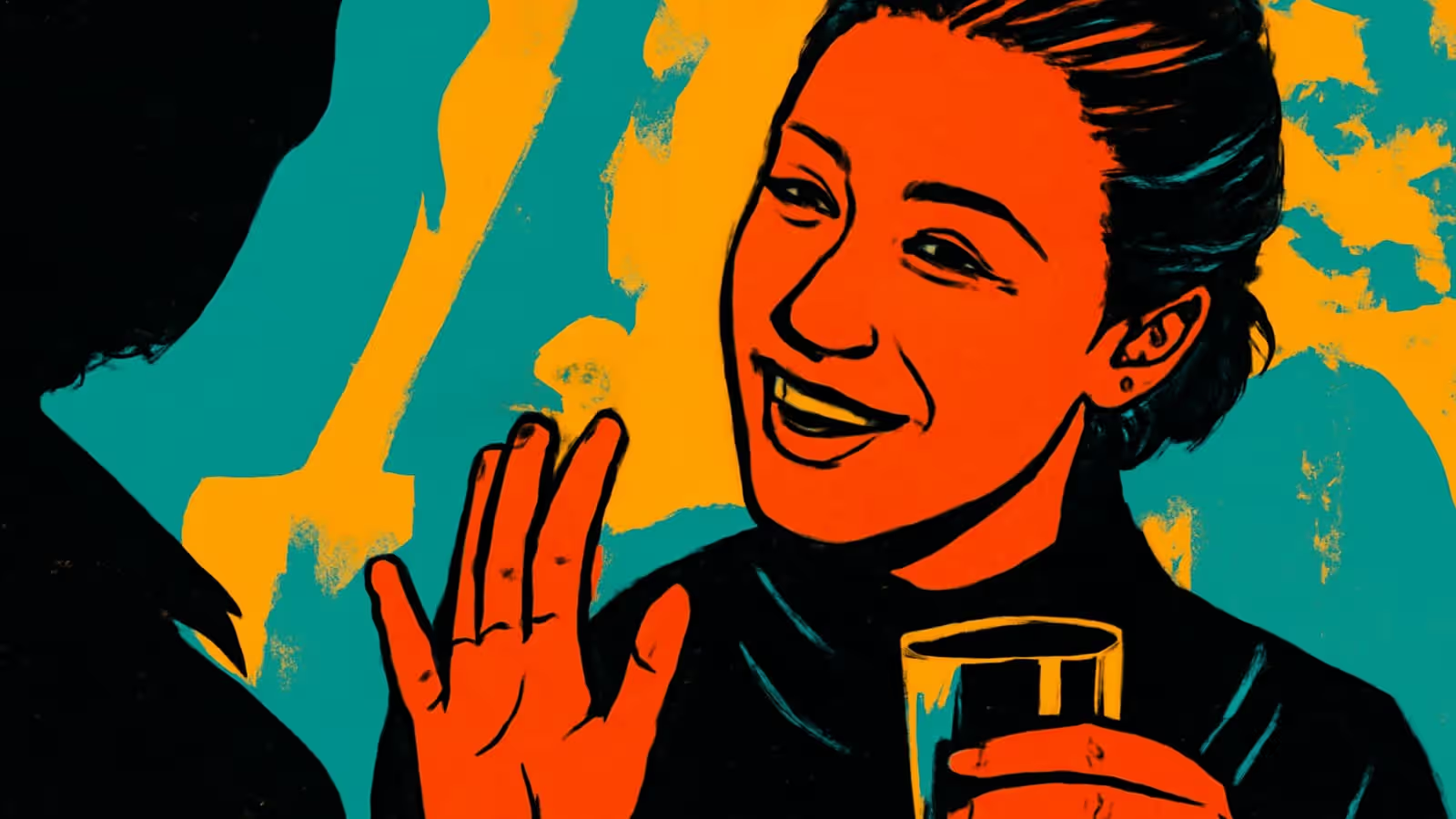
Safety behaviours are the things you do to survive a social situation, and they are the reason the situation never gets easier. Rehearsing sentences before you say them, gripping a glass so your hands do not shake, keeping to one person you know, saying as little as possible.
Every one of those works. That is the problem.
The experiment that showed it
Eight people with social phobia each did two sessions: one of exposure alone, and one of exposure with their safety behaviours deliberately reduced, in a counterbalanced order so neither could be explained by practice.
Exposure with safety behaviours reduced was significantly better than exposure alone, both at lowering anxiety within the situation and at reducing belief in the feared catastrophe. [wells-1995-safety]
That is a small study and it settles something large, because it isolates the variable. Same people, same situations, one difference. It explains the thing that puzzles clinicians and infuriates patients: people with social anxiety are frequently exposed to the situations they fear without getting better.
Why facing it is not enough
The cognitive model this comes from describes what actually happens in the moment. [clark-wells-1995-model] When you enter a feared social situation, attention turns inward. You start monitoring yourself, and using how you feel as evidence for how you look. Feeling hot becomes looking red. Feeling shaky becomes visibly shaking.
Alongside that, you deploy precautions. Then the event ends without disaster, and here is the crucial step: you attribute that to the precaution.
I got through it because I planned what to say. I got away with it because I stood at the back.
The belief that the situation is dangerous survives completely intact. You did not learn that it was fine. You learned that your defence worked, and next time you will need it again, possibly slightly more.
A schematic of the two courses described in this article and demonstrated in the experiment cited. Not measured data from that study.
The left-hand line is what twenty years of attending things looks like when the precautions never come off.
The ones nobody notices
The obvious safety behaviours are physical and people often drop them without effect, because the real ones are internal.
- Rehearsing. Preparing sentences in advance, and running the next one while somebody is still talking.
- Monitoring. Checking your own voice, your face, whether you are sweating, how you are coming across.
- Editing. Deciding what not to say. Most people with social anxiety do this continuously and would not call it a behaviour.
- Hiding the body. Gripping a glass, keeping hands in pockets, folded arms, sitting on your hands.
- Positioning. Near the exit, near the one person you know, on the edge of the group.
- Under-participating. Asking questions so you never have to talk, agreeing to close things down, being the one who listens.
- Alcohol. The most effective single safety behaviour available, and the one with the longest bill.
- Post-mortem. Reviewing everything you said on the way home. Technically after the event rather than during it, and it maintains the belief just as reliably.
Several of these produce the impression you were guarding against. Gripping a glass makes hands visibly tense. Rehearsing makes you a worse listener, so conversations go flatter, which then confirms that you are bad at this. That is the loop closing.
Which precautions are yours?
Tick anything you do in social situations. This is a reflection prompt rather than a test, and it produces no diagnosis.
0 of 8 ticked
That is a full set, and it explains the experience of going to things for years without them getting easier. The useful move is not to attend more. It is to attend once with one of these deliberately switched off, and to notice what actually happens rather than how it felt.
Nearly everybody does one or two of these occasionally. They matter when they are automatic and when you would feel unable to go without them, so the question is whether you could drop one on purpose rather than whether you use it.
Nothing here matched. If social situations are still difficult, our guide to social anxiety and introversion covers a distinction worth being clear about first.
No screener on this site is specific to social anxiety. The free anxiety screener uses the GAD-7, which measures generalised anxiety, so read it as a general signal rather than a measure of this.
How to drop one
One behaviour, one situation, on purpose. Not all of them and not everywhere. Pick the one you would most hate to be without, and pick a situation that matters least.
Decide in advance what you are testing. Not “I will feel better” but something checkable: if I do not rehearse, will there be a silence I cannot recover? Then find out.
Pay attention outward. The precaution being gone is only half of it. The other half is putting attention on the other person rather than on yourself, because the self-monitoring is what generates the evidence you have been using.
Expect it to feel worse. It will, the first few times, and that is not the measure. The measure is what happened, which is almost always considerably less than predicted.
Then do it again. One disconfirmation does not overturn a decade of belief. Several do.
Our guide to social anxiety and introversion covers a distinction worth being clear about before starting, because the strategies only make sense if the discomfort is fear rather than preference. Our guide to fear of public speaking applies the same mechanism to the single most commonly reported social fear.
Safety behaviours have an after-effect as well as an in-the-moment one, because the attention they consume becomes the only material you have to review afterwards. That review is covered in our article on post-event rumination.
What treatment involves
Cognitive behavioural therapy has the strongest evidence for social anxiety in adults. [mayowilson-2014-safety] The version specific to this condition targets exactly what is described above: the inward attention, the use of feelings as evidence, and the safety behaviours.
If therapy for social anxiety consists of being encouraged to attend more things, that is exposure alone, and the experiment above is the reason it disappoints. Ask directly whether safety behaviours will be identified and dropped. A good therapist will already have said so.
Our guide to CBT for social anxiety sets out what the full course actually involves, including the attention training and the video feedback that most people are not expecting.
When to seek help
See a doctor if fear of social situations is shaping your job, your friendships or your education, if you are drinking to manage it, or if you have been avoiding opportunities because of what they would involve socially.
In some countries you can refer yourself to a talking therapy service without going through a doctor first, so it is worth asking. Say social anxiety, and say that you attend things but they never get easier, because that detail routes you toward the right treatment.
Go urgently if you have thoughts of harming yourself.
How MyFreud can help
The evidence that changes this belief is what actually happened, and the post-mortem on the way home rewrites it within the hour. MyFreud gives you daily mood tracking that takes seconds, so there is a record of how the week went that was not written by the part of you doing the reviewing.
Download MyFreud and start today: App Store or Google Play.