
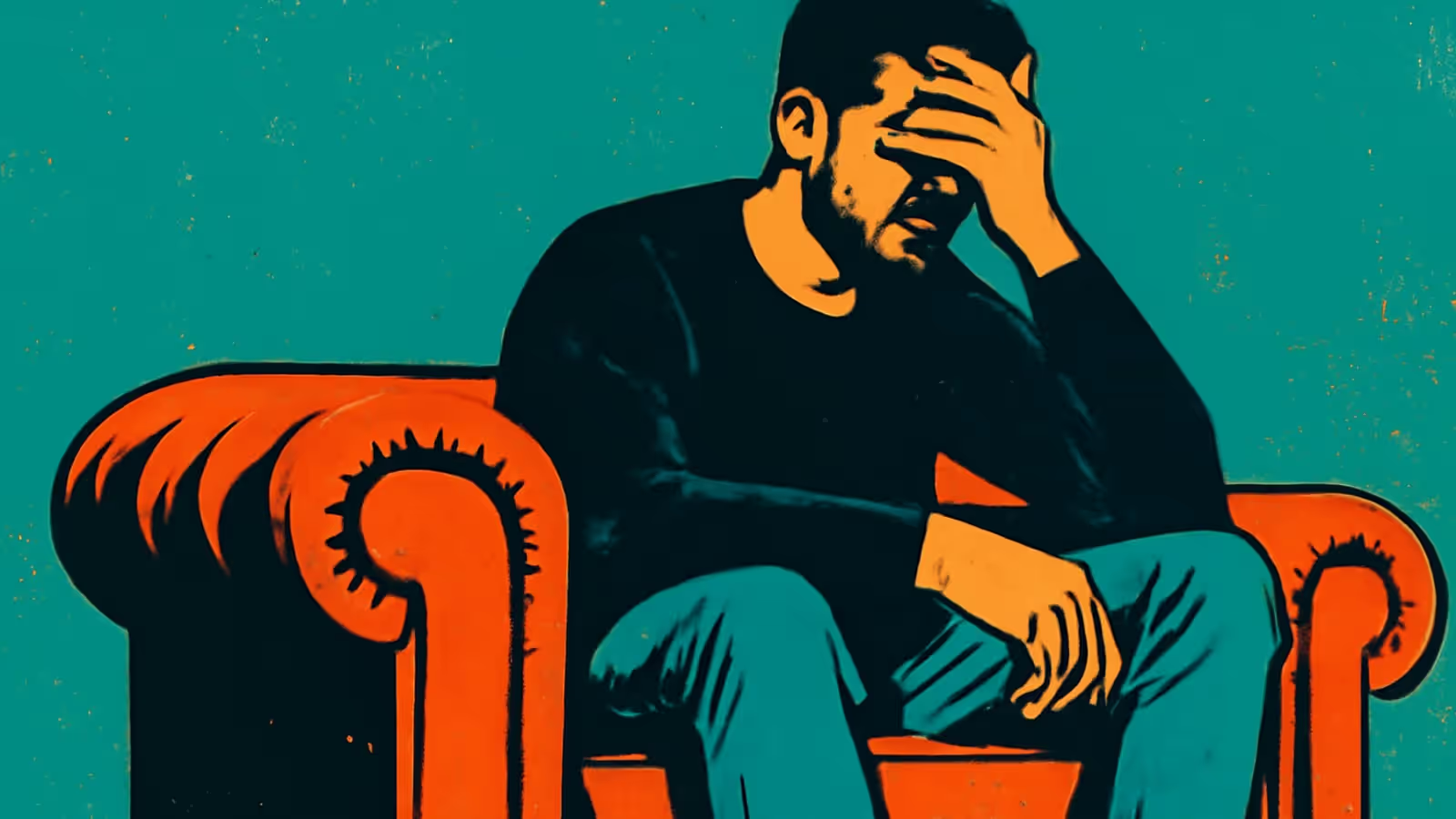
Replaying a conversation for hours afterwards is called post-event processing, and it is one of the most consistently documented features of social anxiety. It occurs commonly after an anxiety-provoking or embarrassing social event, and the recollections tend to be recurrent, intrusive and disruptive to concentration. [rachman-pep]
The important thing about the replay is not that you do it. It is that the version it produces is systematically worse than what happened.
Why the review is biased against you
The replay is biased because of what it is built from. During an anxious social situation your attention turns inward, onto how you feel and how you imagine you look, which means the material available for review afterwards consists mostly of your own discomfort.
You then treat that internal record as evidence about the external event. The heat in your face, the pause that felt endless, the sentence that came out wrong all get weighted as though everybody present experienced them at the same intensity you did. The parts that would contradict the verdict, that the conversation continued normally, that nobody reacted, were never encoded, because attention was elsewhere.
What it does to the next situation
Post-event processing worsens the memory of the event, and that worsened memory becomes what you expect next time. This is the mechanism that turns one uncomfortable evening into a narrower social life.
A schematic of the distortion described in the cognitive models cited in this article, not measured data.
Reviews of this literature describe post-event processing as maintaining social anxiety rather than merely accompanying it. [brozovich-heimberg] The bars that grow are the ones built from your internal experience; the bar that shrinks is the one nobody was paying attention to at the time, including you.
Why it feels productive
The replay presents itself as preparation, which is why it survives so long. It comes with the promise that if you can just work out exactly what went wrong, you will handle the next one better.
Two things undercut that. The analysis is drawn from unreliable material, so its conclusions about what to do differently are not trustworthy. And the recommendation it arrives at is almost never a refinement of technique. It is usually some version of do not put yourself in that situation again, which is avoidance wearing the clothes of preparation, and the association between post-event processing and later avoidance of similar situations is exactly what the early research reported. [rachman-pep]
How to interrupt it
Postpone the review rather than banning it, because trying to suppress intrusive material tends to make it more insistent rather than less. Give it a fixed short window later in the day, note the topic when the replay starts, and defer it to that slot.
Most people find that when the window arrives, a good deal of it has gone flat. That is the useful discovery: not that you were wrong about the conversation, but that the urgency was a property of the state you were in rather than of the material. What remains after a delay is usually far smaller and occasionally genuinely worth thinking about.
The postponement window
When the replay starts, write down the topic in a few words and stop there. Then use this timer at a set time later, and give it exactly that long. When the timer ends, the review ends.
5:00
Stick to what you observed and what other people actually did. If you find yourself describing how you felt, that is the bias, not the evidence.
Window closed. Anything left over goes to tomorrow's window, not tonight.
The second half of the work is deliberately recalling what you observed rather than what you felt: what the other person said next, whether the conversation continued, whether anyone’s expression changed. This is harder than it sounds precisely because that material was barely recorded, and noticing how little of it you have is itself the point.
Reducing the internal monitoring during the conversation matters too, and our article on safety behaviours covers the habits that keep attention pointed inward in the first place.
When to seek help
Speak to a doctor or a therapist if the replaying is costing you sleep, if it lasts for days after ordinary interactions, or if you have begun declining invitations to avoid producing more material for it. That last one is the point at which the pattern has started to shape your life rather than just your evenings.
Cognitive behavioural therapy for social anxiety addresses this directly, and it is worth asking for by name.
The GAD-7 questionnaire on our anxiety self-assessment measures generalised anxiety rather than social anxiety specifically, so it is a reasonable starting point and not a measure of this. There is no social anxiety screener on this site yet.
How MyFreud can help
MyFreud is useful for the part of this that is hardest to see from inside: how long the replay actually lasts and what sets it off. Logging the trigger and the duration turns a habit that feels continuous into a pattern with edges, which is also the record that makes the postponement technique measurable rather than a matter of impression.
Download MyFreud and start today: App Store or Google Play.