
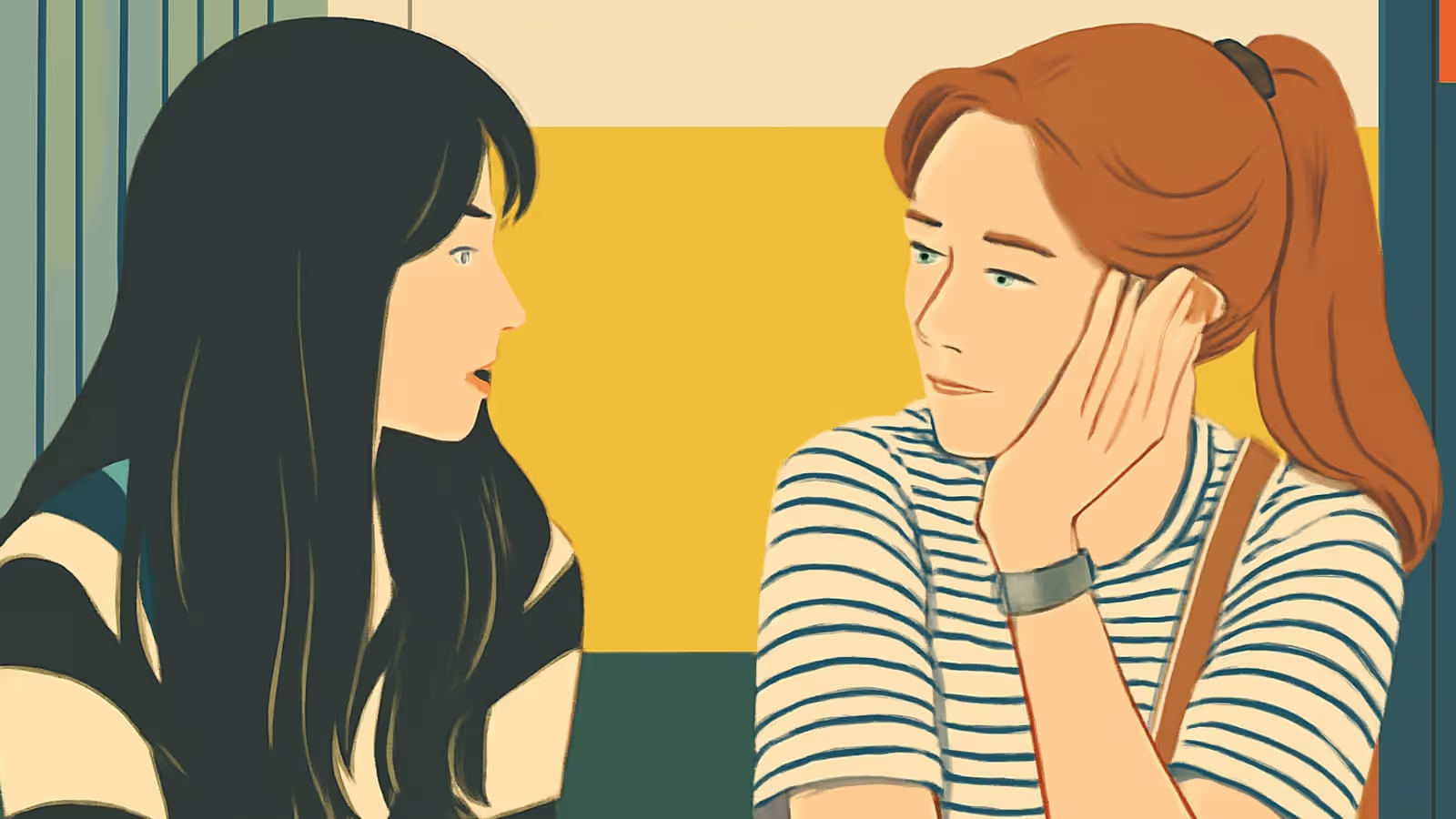
Emotional intimacy is the closeness that grows when you share what you feel and the other person responds with understanding. In diary studies, intimacy within a conversation was linked to both people disclosing more, and sharing feelings predicted it better than sharing facts. [laurenceau-1998-intimacy-process] This guide covers what emotional intimacy is, how it grows, why feeling understood matters, and how to practise it. Our overview of relationships covers the wider field.
What is emotional intimacy?
Emotional intimacy is the sense of closeness that comes from being known and responded to. A 1988 model from the psychologists Reis and Shaver describes intimacy as an interpersonal process, tying it to what each person reveals and to how responsive the other seems, and the diary studies below were built to test it. [laurenceau-1998-intimacy-process]
It is separate from physical intimacy, and it can exist between friends, family members and partners. Our guide to feeling lonely in a relationship covers what its absence feels like from the inside.
How does emotional intimacy grow?
Through a loop of disclosure and response. In two diary studies, people recorded each social interaction right after it happened, for one week in one study and two weeks in the other. Intimacy within an interaction was linked to disclosure from both people, and perceived responsiveness explained part of that link. In the second study, sharing feelings predicted intimacy better than sharing facts. [laurenceau-1998-intimacy-process]
Closeness can also be generated on purpose. In an experiment with pairs of strangers, structured self-disclosure tasks that grew steadily more personal over about 45 minutes left people feeling closer than small talk did. [aron-1997-closeness] That result came from the first of three studies, and the later two did not find a reliable closeness boost from other manipulations, such as telling people closeness was the aim. [aron-1997-closeness]
| Sharing a fact | Sharing a feeling |
|---|---|
| ”I had a long day at work." | "I felt overlooked in the meeting today, and it stung." |
| "The appointment is on Thursday." | "I am nervous about Thursday’s appointment." |
| "We should talk about the holiday." | "I am worried we are drifting, and I miss planning things with you.” |
Those pairs are our illustrations and not wording from the studies. The difference they show is the one the diary study measured: the second column gives the other person something to respond to.
Why does feeling understood matter?
It matters for both relationships and personal wellbeing, according to a review of the research on feeling understood. [reis-2017-feeling-understood] The review also found that how understood we feel tracks only loosely with how well other people actually grasp us, and proposed that three kinds of influence shape the feeling: circumstances, stable personal tendencies and features of the relationship itself. [reis-2017-feeling-understood]
In practice, that means feeling understood is not only about the other person’s skill, and it is not only about yours. Saying back what you heard is one practical way to close the gap, and that suggestion is ours and not a finding. Our guide to active listening covers how it works. For the long-term picture, our guide to the Harvard happiness study covers evidence that the quality of relationships is linked with health.
How do you build emotional intimacy?
Start small, take turns, and go at a pace that feels safe for both people. The steps below are our practical outline of what the research suggests and not a tested programme.
- Share a feeling, not only facts. Add one sentence about how something felt to you.
- Respond with interest before advice. Ask a question or reflect what you heard before you offer a fix.
- Check you understood. Say back what you heard and ask whether you got it right.
- Go a little deeper over time. The structured exercise in the research escalated gradually and was mutual, so match the other person’s pace.
- Repeat in small doses. A short, regular check-in is easier to keep going than an occasional long talk.
Our guide to a gratitude note for a partner covers one low-pressure way to start.
A ten-minute feelings check-in
Find someone you trust and take turns. Each of you has three minutes to say how you really feel about one thing in your week while the other listens without advising. Then the listener says back what they heard.
6:00
Share only what you choose to, and stop whenever you want. This is practice for ordinary closeness, not therapy.
Done. Notice whether you feel more understood than you did ten minutes ago.
What gets in the way of emotional intimacy?
Several patterns can make sharing feelings harder, including withdrawal and avoidance. Our guides to stonewalling, attachment theory and avoidant attachment cover them.
The research here has limits. It measured closeness in single interactions and short procedures, not whether habits last for years, and it cannot say what to do when one person does not want closeness. If sharing feelings feels impossible or unsafe, a therapist or couples counsellor can help.
When to seek help
Speak to a doctor, therapist or couples counsellor if difficulty sharing feelings, loneliness inside a relationship or repeated conflict is affecting your mood, sleep or daily life. No screener on this site measures relationship closeness. Our loneliness self-assessment measures loneliness, which is related to it but not the same, and it is a screener and not a diagnosis.
If a relationship involves fear, control or violence, closeness exercises are not the answer. Our guide to coercive control covers the signs, and local emergency services or a domestic abuse support service can help. If you feel unable to keep yourself safe, contact your local emergency services or a crisis helpline.
How MyFreud can help
Whether sharing more is changing how your days feel is hard to judge from memory. Daily mood tracking in MyFreud shows the pattern across weeks, so you can compare how you feel after the days you shared something with someone and the days you did not. It does not replace talking with the people in your life, or a therapist.
Download MyFreud and start today: App Store or Google Play.