
You do not have to be underweight to have anorexia. Atypical anorexia nervosa is the diagnosis for someone who meets every criterion for anorexia except that one, and it is recognised in DSM-5 under Other Specified Feeding or Eating Disorder. [apa-2013-dsm5-ed]
The restriction is the same, the fear of weight gain is the same, and the way body shape is experienced is the same. What differs is a number that, in this illness, turns out to be a poor guide to how unwell somebody is.
What atypical anorexia is
Atypical anorexia is anorexia nervosa in everything but weight. DSM-5 lists it as a named example within Other Specified Feeding or Eating Disorder: all criteria for anorexia nervosa are met except that, despite significant weight loss, the person’s weight is within or above the normal range. [apa-2013-dsm5-ed]
Three things define anorexia and only one of them concerns the scale. There is restriction of energy intake relative to what is needed. There is intense fear of gaining weight, or behaviour that persistently interferes with gaining it. And there is a disturbance in the way body weight or shape is experienced, or a lack of recognition of how serious the situation is. [apa-2013-dsm5-ed]
Two of those three are entirely psychological, which is why weight was never a sufficient test.
What the research found
A study of adolescents first presenting to a specialist eating disorder service compared those with atypical anorexia against those meeting full criteria, and found little evidence that the atypical group was less unwell. [sawyer-2016-atypical] That comparison held across physical and psychological measures.
The same study found that most of the adolescents with atypical anorexia had been at a higher weight before the illness, and that they had lost more weight over a longer period than the full-criteria group. [sawyer-2016-atypical] The scale reading was unremarkable; the journey to it was not.
That is the mechanism worth holding on to. A person who loses a large amount of weight quickly can be physiologically compromised while still weighing an amount nobody in the room would think to question. Restriction does its damage regardless of what the starting point was.
A schematic of the argument in this section, not measured data. Assessment is a clinical judgement across all of these together, never a single number.
Why it gets missed
Atypical anorexia is missed because the stereotype does the screening. The mental image of an eating disorder is a visibly underweight young woman, and everyone involved uses it: friends, family, sometimes clinicians, and very often the person themselves. The same stereotype fails in a second direction, which our guide to eating disorders in men covers: where the goal is muscularity rather than thinness, the standard screening questions can come back clean from someone who is seriously unwell.
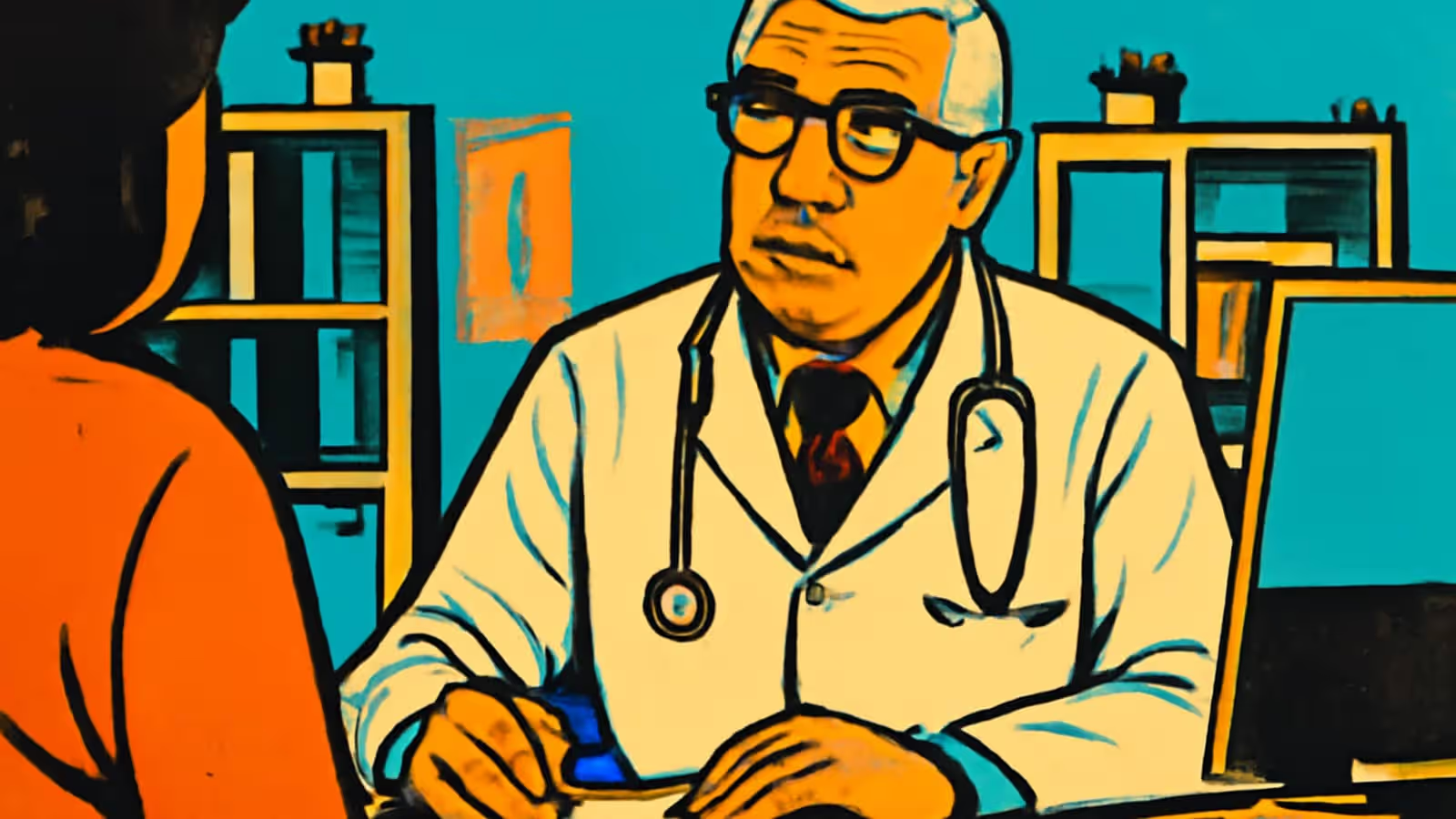
That produces a specific and damaging conversation, reported often enough to be a pattern rather than an anecdote: someone describes restriction and fear, and is told they do not look unwell enough for it to be that. The illness carries on and the person now has a reason to distrust their own account of it.
Weight stigma sharpens this. Someone at a higher weight who has lost a great deal may be congratulated for exactly the behaviour that constitutes the illness, which is close to the worst possible response and is a common one.
Delay matters here more than in most conditions. Eating disorders are more treatable earlier in their course, so the years spent not qualifying for help are not neutral waiting time. [treasure-2020-ed]
Is weight the only reason you have ruled this out?
Tick anything true of the last few months. This is a reflection prompt rather than a test, and it produces no diagnosis.
0 of 8 ticked
Restriction, fear and preoccupation are the features that define this illness, and none of them is measured on a scale. Ask a doctor for an eating disorder assessment and say the words atypical anorexia. Take somebody with you if you can.
A few of these on their own can have other explanations, but rules around eating that are hard to break and that narrow your life are worth describing to a doctor even when you are unsure. Say what you do rather than what you think it means.
Not much of this fits. If your relationship with eating still worries you, that concern is reason enough to talk to someone; nothing here has to reach a threshold first.
No screener on this site covers eating disorders, and that is deliberate rather than an oversight: a self-scored questionnaire is a poor instrument for an illness whose defining feature includes not recognising its seriousness. The self-assessment hub has free screeners for anxiety, depression and other areas that often accompany it, but an eating disorder assessment belongs with a clinician.
What to say to get taken seriously
Describe behaviour and history rather than appearance. The most clinically useful facts are how much weight you have lost, over what period, what you are restricting, and how much of your day is occupied by food and shape.
Some phrasing that helps:
- “I have lost [amount] over [period].” Rate of loss is a stronger indicator of medical risk than the weight arrived at.
- “I meet the criteria for anorexia apart from my weight. I want to be assessed for atypical anorexia.” Naming the diagnosis moves the conversation off appearance.
- “These are the rules I follow about eating.” Concrete and hard to reinterpret.
- “I have been told before that I do not look unwell enough.” Says plainly that you have already been turned away.
Bring someone if you can. A second account is useful in an illness that quietly argues against its own treatment, and it changes the dynamic of the appointment.
For the wider picture, our eating disorders pillar covers the range of conditions and how they are treated, and our guide to binge eating disorder covers the most common eating disorder of all, which is also routinely missed. Our guide to orthorexia covers a third failure of recognition: restriction that gets complimented rather than noticed. And our guide to ARFID covers a fourth, where the restriction has nothing to do with weight at all, so nobody thinks to call it an eating disorder.
When to seek help
Contact a doctor now rather than at a threshold. Eating disorders respond better to earlier treatment, and there is no weight you need to reach before you are allowed to ask. [treasure-2020-ed]
Seek same-day medical advice if you have fainted or nearly fainted, if your heart has been racing or beating irregularly, if you feel dizzy on standing, or if you have been unable to keep food or fluids down. Those can indicate medical instability, and they do not require you to be underweight.
Go urgently if you have thoughts of harming yourself.
How MyFreud can help
MyFreud does not treat eating disorders and is not a substitute for the assessment described above; what it can do is help you describe the pattern accurately when you ask for one. Daily mood tracking over a few weeks gives you something concrete to bring to a doctor, which matters in an illness where the account you give of yourself is the thing most likely to be doubted.
Download MyFreud and start today: App Store or Google Play.