
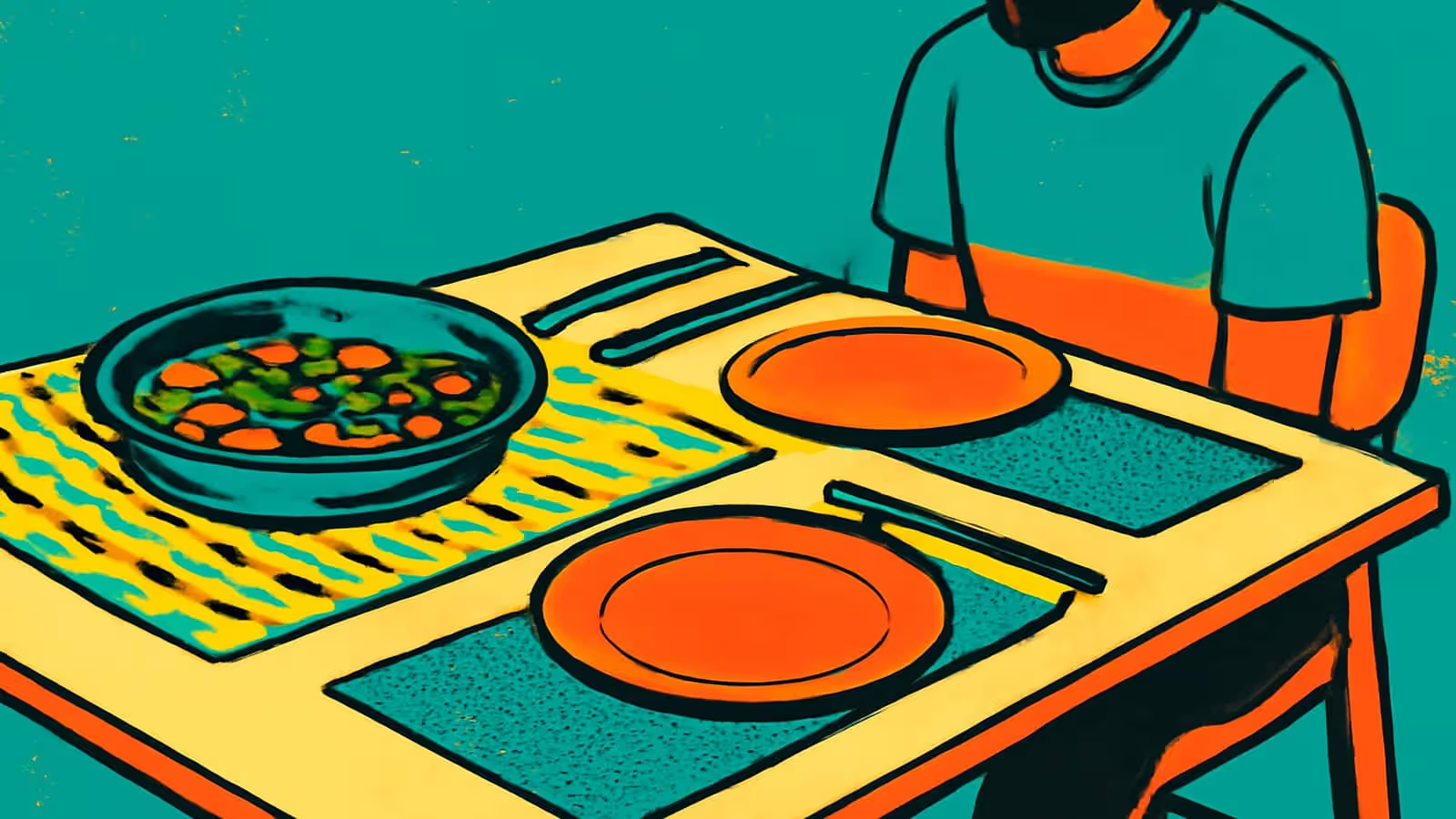
ARFID is an eating disorder in which body image plays no part at all. The restriction is real, the consequences are real, and the reason has nothing to do with wanting to be thinner.
That absence is the whole reason it goes unrecognised. Somebody who eats very little and has no weight concern does not match what anybody is looking for, so the answer they get for years is that they are a fussy eater.
What the diagnosis requires
Avoidant restrictive food intake disorder entered the manual in 2013. [apa-2013-dsm5-arfid] Two halves matter.
Persistent failure to meet nutritional or energy needs, producing at least one of: significant weight loss or faltering growth in children, significant nutritional deficiency, dependence on supplements or tube feeding, or marked interference with everyday functioning.
And no disturbance in how weight or shape is experienced. No fear of fatness, no drive for thinness, no distorted body perception. If those are present, the diagnosis is a different one.
The restriction also has to be more than food simply not being available, and more than an ordinary cultural eating practice.
The three usual drivers
The reason for the avoidance matters, because treatment follows from it.
Sensory. Texture, smell, colour, temperature, how something looks on the plate. Frequently lifelong, and often narrowed to a small set of foods that are reliably tolerable.
Fear of consequence. Usually traceable to an incident: choking, a severe episode of vomiting, a painful reaction. What follows is avoidance of anything resembling the circumstances of that event, which tends to widen over time.
Low interest. Simply not feeling hungry, forgetting to eat, finding eating effortful and unrewarding. The least visible of the three, because it produces no obvious refusal, only a gradual absence.
A schematic contrast of the two conditions as described in the diagnostic criteria cited. Not measured data.
The bottom two bars are effectively the diagnosis. Everything else can overlap; those cannot.
Why it stays missed
Three things conspire.
It looks like a preference. A narrow diet reads as personality rather than as a condition, and the person has usually been told so since childhood.
Weight can be normal. Someone eating a very limited range of energy-dense foods may not lose weight at all, while being genuinely deficient. Our guide to atypical anorexia covers the same failure of recognition from the opposite direction: serious restriction in somebody who does not look how people expect.
Adults have adapted around it. Meals arranged in advance, restaurants avoided, food brought from home. The impairment is enormous and none of it is visible, because a working system does not look like a problem.
Is the restriction costing something?
Tick anything true. This is a reflection prompt rather than a test, and it produces no diagnosis.
0 of 8 ticked
The fifth item is the one that makes this distinct, and it is the detail to lead with at an appointment, because it points away from the diagnoses people assume. The seventh is the one that gets a referral moving fastest, since a measurable deficiency is harder to dismiss than a description of the eating.
A limited diet on its own is not a disorder and plenty of people manage perfectly well with one. What matters is cost: whether it is affecting your health, your weight, or your ability to eat with other people.
Nothing here matched. If eating is difficult but weight or shape concerns are part of it, our eating disorders guide covers those patterns.
No screener on this site measures eating disorders, deliberately. Self-scored instruments in this area tend to reassure exactly the people who should not be reassured. The hub lists what we do cover.
What helps
Say the specific thing that is not true of you. “I restrict food and I have no concerns about my weight or shape” is the sentence that redirects an assessment. Without it, clinicians reasonably start where most restriction starts.
Bring the physical evidence. Blood results, weight history, a growth chart for a child. Deficiency is objective and it moves referrals in a way that a description of eating habits does not.
Expect the approach to differ by driver. Sensory avoidance, fear after an incident, and low appetite need different work. A programme built for anorexia targets beliefs about weight and shape that are simply not present here.
Do not aim for a normal diet immediately. Structured, graded expansion, one food at a time, with somebody guiding the order. Doing it alone tends to produce a bad experience that narrows the range further.
Treat the nutrition and the eating together. Where deficiencies or weight loss exist, correcting them is part of treatment rather than something to do afterwards. [nice-ng69-arfid] Restrictive eating responds to structured treatment. [treasure-2020-arfid]
Our guide to orthorexia covers a different restriction pattern that also gets misread, in that case because it is praised rather than dismissed.
When to seek help
See a doctor if a restricted diet is producing weight loss, faltering growth in a child, fatigue, or abnormal blood results, or if it is preventing you eating with other people, travelling or working normally.
Ask for a referral to an eating disorder service and say explicitly that weight and shape are not part of it, so you are assessed for the right thing. Most countries have an eating disorder charity running a helpline and webchat alongside the clinical route; check its hours before you need it, because very few of them run around the clock.
Go urgently if you are fainting, if your heart is racing or irregular, or if you have thoughts of harming yourself.
How MyFreud can help
What a clinician needs is the pattern over weeks, and what anybody can recall in an appointment is yesterday. MyFreud gives you daily mood tracking that takes seconds, so how eating relates to your energy and mood across a month is something you can show rather than summarise.
Download MyFreud and start today: App Store or Google Play.