
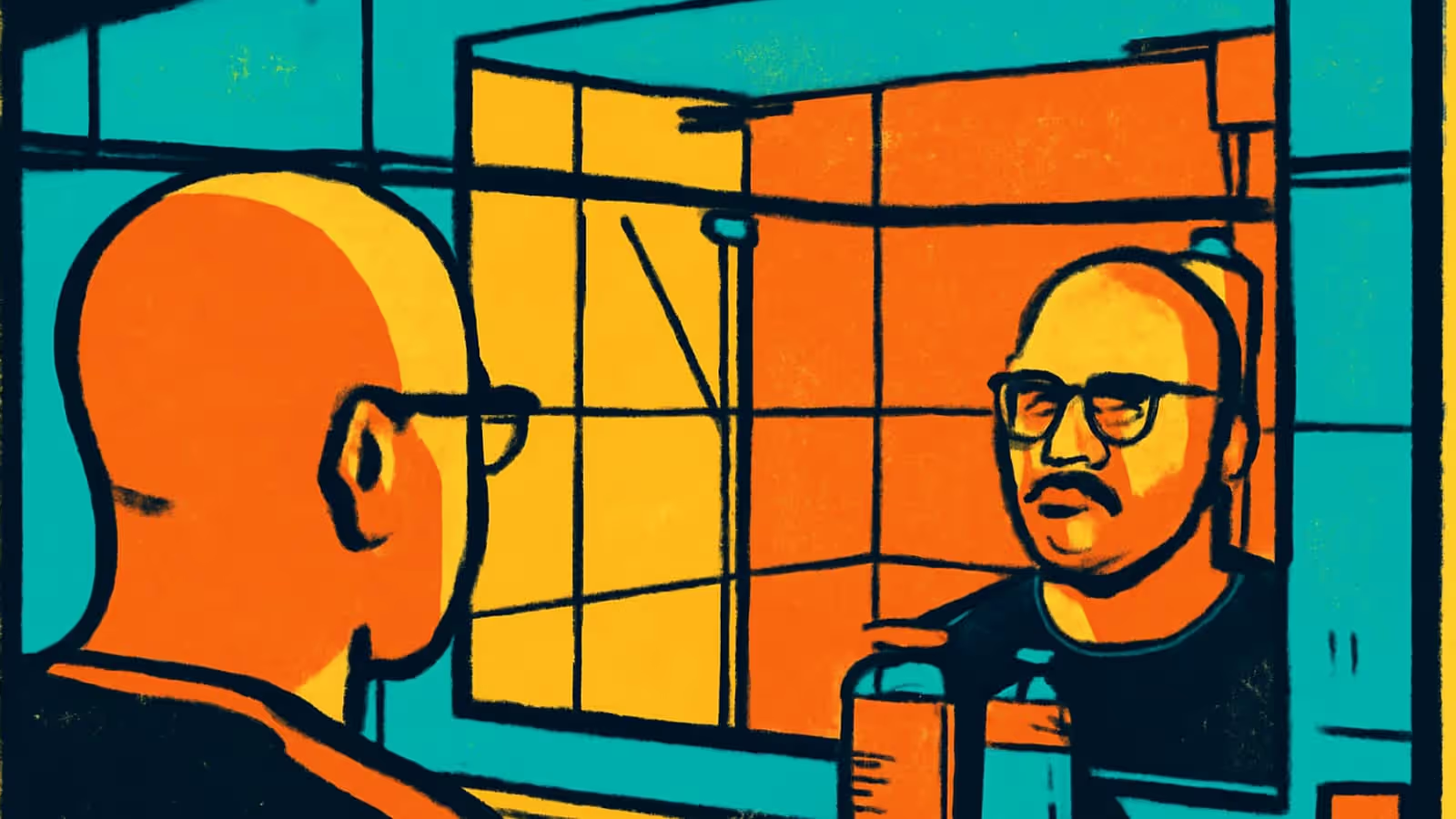
Eating disorders in men are missed rather than absent, and some of the reasons are built into the tools. The diagnostic categories and the questionnaires used to detect these illnesses were largely shaped around how they present in women, so a man can be seriously unwell and still answer the standard questions in a way that raises nothing.
That is a more useful explanation than stigma alone, because it points at something specific.
Why the counting itself is difficult
Detection is harder for men for reasons that sit in the instruments rather than in the men. A review of the epidemiology in males identifies low apparent base rates, heavy use of residual diagnostic categories, classification schemes that are female-centric, and a consequent shortage of assessment instruments suited to male presentations. [mitchison-2015-males]
Read that list again as a chain rather than four complaints. If the categories were written around one group, the questionnaires derived from them inherit that shape, and the resulting prevalence figures then reinforce the belief that made the categories narrow in the first place.
Rarity and invisibility produce the same number in a study. They are not the same thing.
The presentation often runs the other way
The commonest male picture is oriented toward muscularity rather than thinness. The same rigid control over food, the same compulsive exercise, the same distress when the routine breaks, all pointed at getting bigger and leaner rather than smaller. [mitchison-2015-males]
This is why a screening question can fail. “Are you afraid of gaining weight?” can be answered honestly with a no by somebody weighing every meal, training through injury, and unable to eat at a restaurant because the macronutrients are unknown.
A schematic of the detection gap described in this article and in the review cited. Not measured data.
The top question is the one most likely to be asked and the least likely to work for the presentation on the right. The two at the bottom are the ones that would catch it, and they are asked far less often.
Muscle dysmorphia is not filed as an eating disorder. It is classified as a form of body dysmorphic disorder, which means the presentation most associated with men sits outside the diagnostic family everybody searches when they suspect an eating problem. [mitchison-2015-males]
The behaviours get praised
The same actions that raise alarm in a woman attract compliments in a man. This is not a minor social observation; it is a reason the illness runs longer before anyone intervenes.
Weighing food is called tracking. Eating the same meals for months is called consistency. Training while injured is called commitment. Refusing a meal out because it cannot be measured is called dedication. Nobody in the gym is worried, and several people are impressed.
An illness that recruits encouragement rather than concern has an unusually long run before it is named. Our guide to orthorexia covers a closely related pattern where the framing is health rather than physique, and atypical anorexia covers the case where somebody is seriously ill without being underweight, which is another way the standard picture misleads.
Is the control the problem?
Tick anything true. This is a reflection prompt rather than a test, and it produces no diagnosis. Any physical symptoms need a doctor.
0 of 8 ticked
The first item is the most telling one here, because distress at a missed session separates a demanding routine from a routine that is now in charge. The seventh matters too: praise that lands badly is often the earliest signal a person notices themselves, well before anybody around them does. None of this requires being underweight to be worth acting on.
Structure around food and training is not a problem in itself, and plenty of people track things without harm. What changes the picture is rigidity: whether the rules can flex for a holiday, an illness or a dinner, or whether breaking them produces real distress.
Nothing here matched. If the difficulty is eating enough or a restricted range of foods rather than controlling shape, our guide to ARFID covers a different pattern entirely.
No screener on this site assesses eating disorders, deliberately. The instruments in general use have the limitations described above, and a questionnaire is a poor basis for a decision this consequential. The hub lists what we do cover.
Appearance concern in men does not always centre on eating at all. Where the focus is one specific feature and the behaviours are checking and concealing rather than restricting, the condition to read about is body dysmorphia.
What helps
Do not wait to look ill. Weight is a poor gauge of severity, and waiting to qualify for a mental picture of the illness is how years pass. Our guide to atypical anorexia covers why.
Describe the behaviour, not the label. Tell a doctor what you actually do: what you weigh, what you avoid, what happens when the routine breaks. That travels better than trying to work out which category you fall into.
Say it if the goal is muscularity. This is the detail most likely to change what a clinician asks next, and the one most likely to be left out because it does not match the expected story.
Ask for referral to an eating disorder service. NICE guidance recommends the same evidence-based psychological therapies regardless of sex, so being referred is the step that matters. [nice-ng69-eating]
Get the physical side checked. Restriction and heavy training together affect heart rhythm, bone density and hormones. That is a reason for a blood test and an examination, not a reason to be frightened of going.
Take the praise as information about other people. It reflects what a culture admires, not whether you are well.
When to seek help
See a doctor if your eating or training rules have become rigid, if breaking them causes real distress, if you are training through injury or illness, if you avoid eating with other people, or if food and body shape occupy most of your thinking.
Seek help sooner rather than later if you have fainted, if your heart has been racing or irregular, if you have stopped having morning erections or noticed a drop in libido, or if you are using laxatives, diuretics, steroids or fat burners. These are physical warning signs and they need examining now.
You can self-refer to talking therapy services, and a doctor can refer you to a specialist eating disorder service.
Go urgently if you have thoughts of harming yourself.
How MyFreud can help
The thing that makes this hard to catch early is that each rule arrived reasonably and none of them looked like illness on the day it started. MyFreud gives you daily mood tracking that takes seconds, so the drift from a routine you chose to a routine that is choosing for you becomes something you can actually see.
Download MyFreud and start today: App Store or Google Play.