
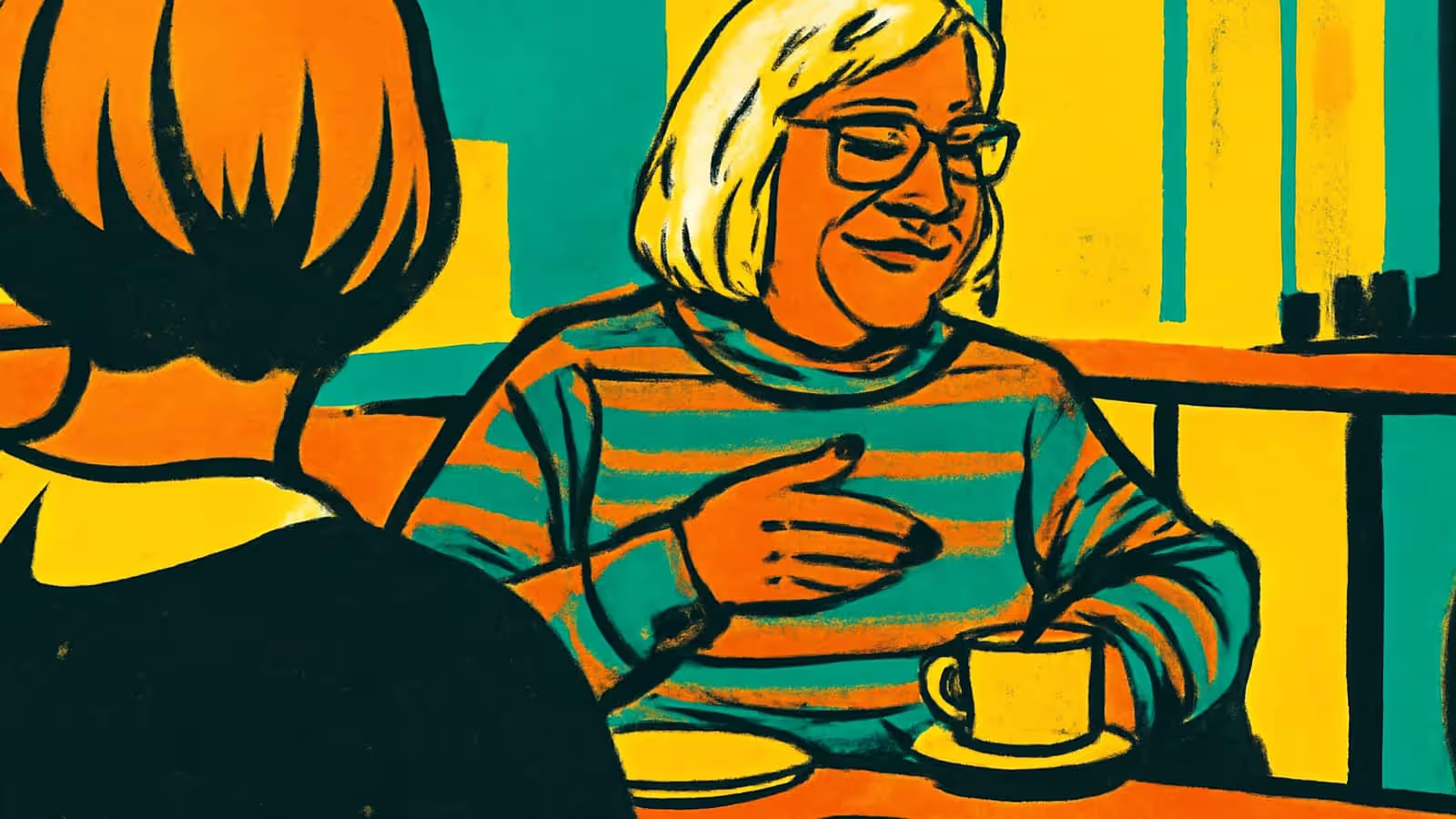
Dementia is a set of different conditions sharing a name, and the most useful thing anyone has said about it recently is that a large share of the risk appears to be modifiable. [livingston-2024-commission] This guide covers what the distinctions between types actually change, what the prevention evidence does and does not claim, why depression sits on both sides of the diagnosis, and why carer mental health belongs in the middle of the topic rather than at the end.
Four conditions, one word
Dementia describes a decline in memory, thinking or reasoning severe enough to interfere with daily life. What causes it varies, and the differences are practical rather than academic. Our guide to early signs of dementia covers what that decline actually looks like before it is obvious to anyone.
| Type | Typically begins with | Course | Worth knowing |
|---|---|---|---|
| Alzheimer’s disease | Memory for recent events | Gradual and fairly steady | The most common cause, roughly two thirds of cases |
| Vascular dementia | Slowed thinking, planning difficulty | Often stepwise, after vascular events | Shares its risk factors with heart disease |
| Dementia with Lewy bodies | Visual hallucinations, fluctuating alertness | Fluctuating, sometimes markedly | Certain antipsychotics can cause severe reactions |
| Frontotemporal dementia | Personality, behaviour or language change | Variable | Often starts younger, and is frequently mistaken for a mental health condition first |
That last row causes real harm when it is missed. A person in their fifties whose behaviour changes markedly is far more likely to be assessed for a mood or personality problem than for a neurodegenerative one, and the delay to diagnosis is correspondingly long.
What the prevention evidence actually says
The Lancet Commission’s 2024 report estimated that around 45 per cent of dementia cases are potentially attributable to fourteen modifiable risk factors spread across life. [livingston-2024-commission] That is the headline, and the qualifier is the important part.
Attributable is a population claim. It means that if a risk factor were eliminated across a whole population, that share of cases might not occur. It does not mean an individual who addresses those factors will not develop dementia, and people who did everything available still do. Holding both halves is the honest position.
A schematic of the life-course structure described by the Lancet Commission (2024). Heights show relative prominence rather than reported population attributable fractions.
Hearing loss deserves singling out, because it is the largest single modifiable factor identified and the intervention is unglamorous. Treating hearing loss with hearing aids is neither expensive nor difficult, and it is better supported than most things marketed for brain health.
Depression, on both sides
Depression appears in this topic twice, and confusing the two is a common and costly error.
It is a risk factor: depression in midlife and later life is associated with higher subsequent dementia risk, and it appears on the Commission’s list. [livingston-2024-commission]
It is also a mimic. Severe depression in later life can impair memory, concentration and processing speed enough to resemble early dementia, and that picture improves when the depression is treated. This is why a memory assessment considers mood rather than assuming, and why an older person with new cognitive complaints should have their mood taken as seriously as their memory. Our pillar on depression covers the condition itself.
One counterintuitive pointer: people who are highly distressed about their own memory are, on average, more likely to be depressed or anxious than to have dementia. People with dementia frequently have less insight into the change than those around them do. Neither is reliable alone.
Changes worth a conversation
For yourself or for somebody you are worried about. This is not a screening tool. It lists changes that are worth raising with a doctor rather than watching.
0 of 6 ticked
This is the pattern worth assessing properly. Assessment is also how treatable causes get found, including depression, thyroid problems and vitamin deficiencies, which is a reason to go rather than to wait.
Enough of a change to be worth describing to a doctor. Take specific examples and roughly when they started, since that is what an assessment works from.
Slower recall that comes back later is normal ageing. If worry about memory is itself the problem, that is worth raising, because it tracks anxiety and low mood more often than dementia.
No dementia screener is published on this site, and a self-administered one could not be reliable. The depression screener is here because low mood is both a risk factor and a treatable mimic.
The carers
Family carers have high rates of depression and anxiety, and carer wellbeing predicts outcomes for the person being cared for, which means this is not a separate topic politely appended to the end. [who-2021-dementia]
What helps is better evidenced than most carers realise. Sörensen and colleagues found that interventions for carers produced real benefits, with multi-component approaches, practical help combined with psychological support, outperforming either alone. [sorensen-2002-carers] Support groups, respite, and therapy for the carer are all worth asking about by name.
Two things carers are rarely told. Grief for someone still alive is a recognised phenomenon and does not mean you have given up on them; our guide to ambiguous loss covers it. And resentment does not mean you are failing, it means you are depleted, which our guides to compassion fatigue and burnout address directly.
When to speak to someone
See a doctor about any change in memory or thinking that interferes with daily life and represents a change from how the person used to be. Assessment finds treatable causes as well as untreatable ones, including depression, thyroid problems, vitamin deficiency and medication effects, which is the strongest argument against waiting.
If you are the carer, ask your own doctor to record you as one, and say plainly how you are doing rather than only how they are. The consultation is frequently the only occasion anyone asks, and carers routinely use it to talk exclusively about the person they care for.
If you are having thoughts of harming yourself, seek help now rather than at the next appointment. Contact your local emergency services or a crisis helpline.
How MyFreud can help
Carers are unusually bad at noticing their own decline, because attention is pointed elsewhere by definition. Daily mood tracking gives you a record of your own weeks rather than theirs, which is what makes it possible to answer honestly when somebody finally asks how you are. Our guide to supporting someone with dementia covers the practical side, including why correcting a false belief so reliably fails.