
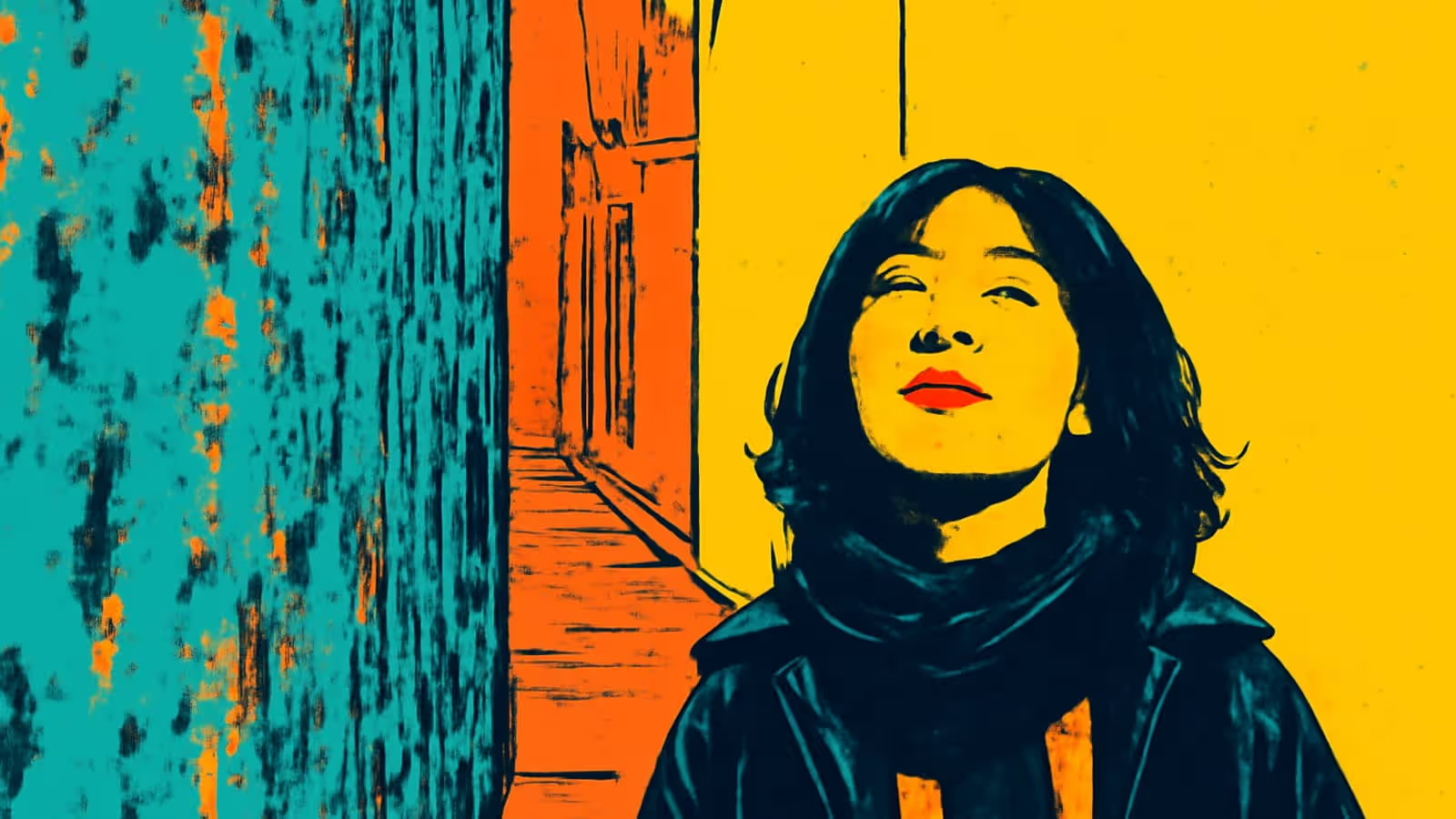
Autism masking, called camouflaging in the research literature, is the effortful suppression of autistic traits and rehearsal of neurotypical-seeming behaviour in order to appear less visibly autistic. It works, in the narrow sense that it often succeeds at blending in, and the evidence on what it costs to sustain is now substantial.
Our overview of autism covers the condition itself; this article is about one specific behaviour many autistic people describe, and what the research says it is linked to.
What masking actually involves
Effort, sustained and renewed, rather than a trait someone simply has. Forcing eye contact that feels uncomfortable, scripting conversations in advance, suppressing repetitive movements, monitoring and adjusting facial expressions in real time. What unites these is that none of them come naturally in the moment; they have to be actively maintained, which is a different kind of tiring than an activity that is merely difficult.
What the evidence links it to
A 2024 systematic review and meta-analysis found camouflaging consistently associated with worse mental health across the board: higher anxiety, depression and social anxiety, and lower mental wellbeing. [khudiakova-2024-camouflaging-meta] The consistency of that finding is worth pausing on.
Illustrative summary of the association pattern reported in Khudiakova et al. (2024), a meta-analysis of studies on camouflaging and mental health in autistic people.
The finding held regardless of age, regardless of sex, and regardless of whether someone had received a formal autism diagnosis. That breadth is what makes this more than a result specific to one narrow group.
What this does not prove
That masking causes these problems. Every study included in the meta-analysis was cross-sectional, meaning camouflaging and mental health were both measured at a single point in time in the same people. A design like that can establish a strong, consistent association. It cannot establish which came first.
Three explanations are equally consistent with the data: masking could be driving the worse mental health, people who are already more anxious or depressed could be masking more as a response, or some third factor could be producing both. The honest summary is that the two travel together reliably, which is itself useful to know, without claiming the causal arrow points one way.
How this connects to burnout
Directly, according to the people who defined the term. A study that built a definition of autistic burnout from the accounts of autistic adults themselves described it as a highly debilitating condition involving exhaustion, withdrawal, executive function problems and reduced functioning, and named exhausting effort spent masking or camouflaging as a contributing component. [higgins-2021-autistic-burnout]
That detail matters because it came from lived experience rather than from a researcher’s hypothesis: the people describing burnout from the inside specifically named masking fatigue as part of it, rather than a researcher proposing the connection and testing it afterward.
What does masking actually cost, day to day?
This is a prompt for noticing, not a diagnosis of anything. Think about a typical week.
0 of 5 ticked
Several of these together describe a real, sustained cost rather than ordinary social tiredness. Naming it to a doctor or a therapist, using the word masking or camouflaging specifically, is worth doing: it routes the conversation toward something with an actual evidence base rather than a vague complaint about tiredness.
One or two of these can describe ordinary social effort that most people experience sometimes. What is worth noticing is whether the pattern is specific to certain settings and whether the recovery time needed afterward feels disproportionate to what happened.
If none of this describes your experience, this article may not be pointing at what you are noticing, and that is a genuinely useful thing to know rather than only a reassuring one.
No screener on this site assesses autism or masking specifically. The hub above covers anxiety, depression, stress, sleep, burnout, self-esteem and loneliness, several of which the research above links to masking.
What this does not settle
This article does not argue that masking is always harmful, always avoidable, or something to feel guilty about. Some settings genuinely require it, at least for a time, for safety or for practical reasons like employment. Naming a real cost is not the same as prescribing that the cost should never be paid.
The research is also younger than the community conversation about masking, which has existed for longer than the formal evidence base measuring it. That gap does not mean the community’s account is wrong; it means the research is catching up to something people were already describing.
When to seek help
Speak to a doctor if exhaustion, anxiety or low mood connected to sustained social effort is affecting your work, sleep or relationships, and use the word masking or camouflaging specifically if that is what you are experiencing, since naming it accurately routes the conversation better than a general complaint of tiredness would. This applies whether or not you have a formal autism diagnosis.
Seek help sooner if withdrawal, exhaustion or low mood are worsening rather than settling, since that pattern is closer to what the burnout research describes and is worth addressing directly rather than waiting out.
If you are having thoughts of harming yourself, treat that as urgent and contact your local emergency services or a crisis helpline.
How MyFreud can help
MyFreud is useful here for noticing which settings cost the most, which is hard to see clearly from inside a pattern that has become automatic. Logging mood alongside where you were and what you were doing, day by day, can make visible exactly which situations demand the most sustained effort, which is the first step toward finding where that cost can actually be reduced.
Download MyFreud and start today: App Store or Google Play.