
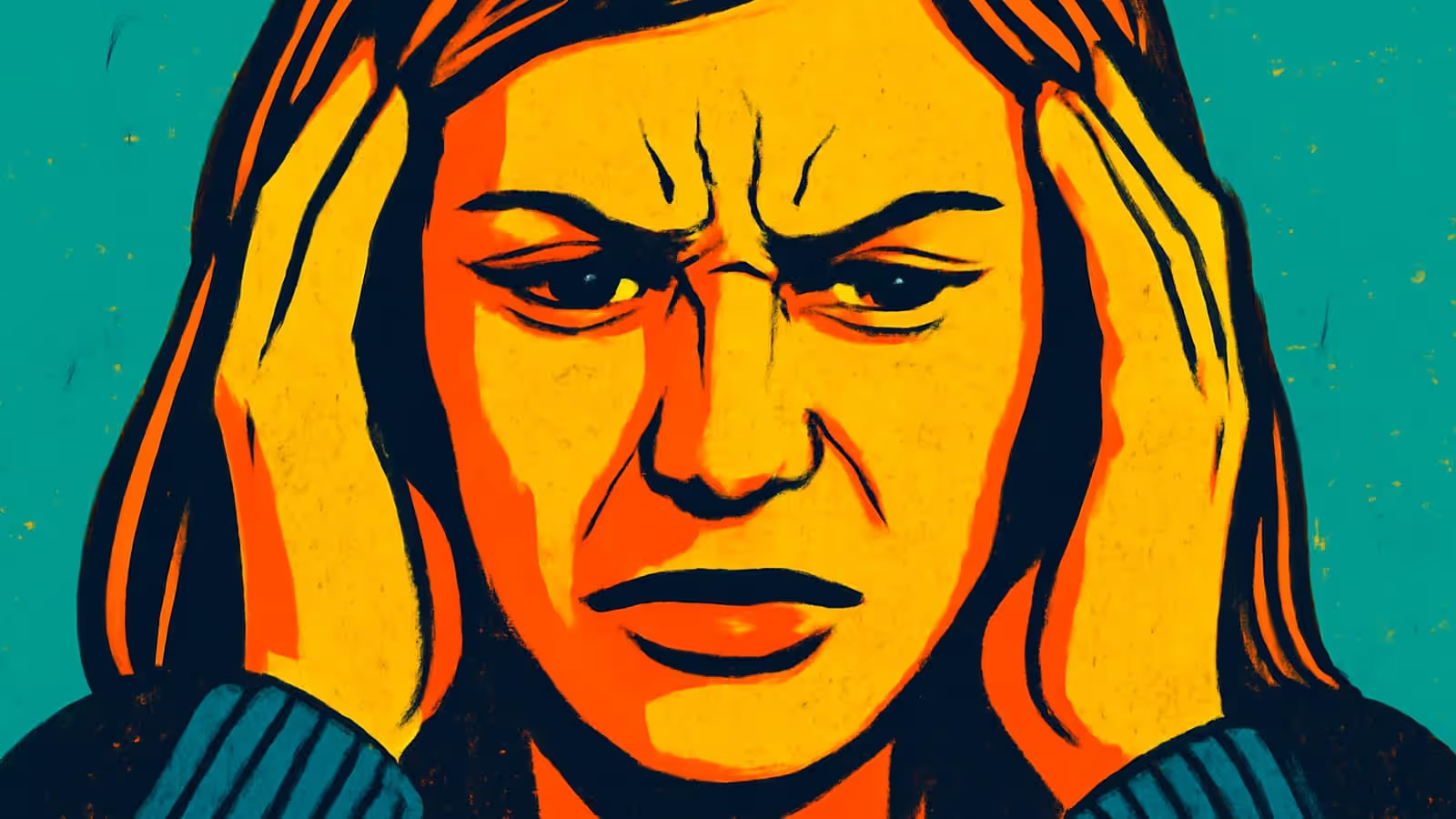
Overstimulation is what happens when more input arrives than you can process, until noise, light, movement and demands stop being separate things and become one weight. In ADHD it is common, and it is not a term any diagnostic manual uses.
That gap matters more than it sounds. A word that does not appear in the criteria does not get asked about in an assessment, so an experience that shapes entire days goes unmentioned by the person and unprompted by the clinician.
Where it comes from
The mechanism is the filtering problem that defines part of ADHD in the first place. Being easily distracted by extraneous stimuli is one of the recognised inattentive features, and distraction and overstimulation are the same event described from two angles. [apa-2022-dsm5tr-adhd] That filtering account is also what separates this from feeling overwhelmed by worry, and our guide to ADHD or anxiety covers how the two get confused in both directions.
Most people discard the fridge hum, the conversation two desks away, the flickering strip light and the tag in their collar without ever registering that they have done it. Where that filtering is less reliable, all of it arrives at something closer to equal priority.
None of it is individually overwhelming. Each piece takes a small share of capacity, and the share is what accumulates.
Why it feels like it comes from nowhere
Because it is cumulative rather than triggered, so the thing you were doing when it hit is rarely the cause. By the time it registers, the load has usually been building for hours across inputs you did not consciously notice.
That is why the question “what set you off?” so often has no good answer, and why the honest answer, that it was a supermarket after a day of meetings and a delayed train, sounds like an excuse rather than a mechanism.
Where is the load actually coming from?
Tick anything true of a typical bad day. This is a reflection prompt rather than a test, and it produces no diagnosis.
0 of 8 ticked
The seventh and eighth items together are the useful finding: if it accumulates and you only notice late, then anything you do at the point of noticing is already a rescue rather than a plan. The lever is reducing input earlier in the day and booking recovery before an event rather than after it.
Most people find a loud day tiring. What distinguishes this is whether the effect is disproportionate and whether it reliably ends in irritability or shutdown rather than ordinary tiredness.
Nothing here matched. If the difficulty is starting tasks rather than tolerating input, our guide to ADHD paralysis covers that pattern instead.
No screener on this site measures ADHD, deliberately. Diagnosis requires a clinical assessment including developmental history back to childhood, which no questionnaire can provide. The hub lists what we do cover.
Why it so often turns into irritability
Because regulating a response costs capacity, and capacity is what overstimulation consumes. The pause between feeling something and saying it takes effort, and when most of your resources are going on filtering a loud room, there is very little left to fund that pause.
What other people then witness is the snap, not the four hours of accumulation that produced it. So the event gets filed by everybody, including you, as a temper problem.
Our guide to why you feel so irritable covers the wider set of causes, and rejection sensitive dysphoria covers a different intense response that also gets mistaken for a character trait.
What actually helps
Reduce input rather than raising tolerance. Noise-reducing earplugs, lower lighting, sunglasses outdoors, a seat facing away from the room. Tolerance is not a muscle here and capacity does not increase with practice.
Leave early, before you need to. The most useful exit is the one taken while things are still merely uncomfortable, and it is the one people talk themselves out of.
Book the recovery in advance. If Saturday holds a wedding, Sunday morning is not free. Planning the blank time before the event rather than after is the change with the largest effect.
Take genuinely blank time. Scrolling is input. Ten quiet minutes with no phone does more than an hour of the alternative.
Say it in plain terms to people close to you. “I have hit my limit for noise and I need twenty minutes” is a sentence most people receive well, and it is far better received than the version that arrives as snapping.
Ten blank minutes
Use this before you reach the point of shutting down, not after. Somewhere dim and quiet, phone face down and out of reach. The point is the absence of input rather than doing anything in particular.
5:00
No phone, no music with words, no planning. If your mind wanders, let it. You are lowering the amount arriving, not concentrating on anything.
Done. That counts.
A note on the evidence. Sensory sensitivity in ADHD is less well researched than the core attention and hyperactivity features, so the descriptions here rest on the recognised filtering difficulty and on what people consistently report, rather than on a large trial literature. That is worth saying plainly rather than dressing up.
A different attention pattern that often sits nearby is absorption rather than distraction: our guide to maladaptive daydreaming covers vivid fantasy that runs for hours and displaces the day, which is a description rather than a diagnosis.
When to seek help
See a doctor if difficulties with attention, organisation and follow-through have been present since childhood and are affecting your work, study or relationships, and mention the overstimulation specifically, because it will not be asked about.
Ask about a referral for an ADHD assessment if that pattern fits. NICE guidance sets out how diagnosis and treatment should be approached, and you can ask what the pathway looks like in your area, since waits vary a great deal. [nice-ng87-adhd-overstim]
If overstimulation is the dominant difficulty and attention problems are not, it is worth raising autism with your doctor too, since sensory differences feature more centrally there.
Go urgently if you have thoughts of harming yourself.
How MyFreud can help
The hardest part of this is that the load is invisible until it has already tipped over, and nobody can reconstruct afterwards which four ordinary things stacked up. MyFreud gives you daily mood tracking that takes seconds, so the shape of a week becomes visible and the demanding days stop being a surprise.
Download MyFreud and start today: App Store or Google Play.