
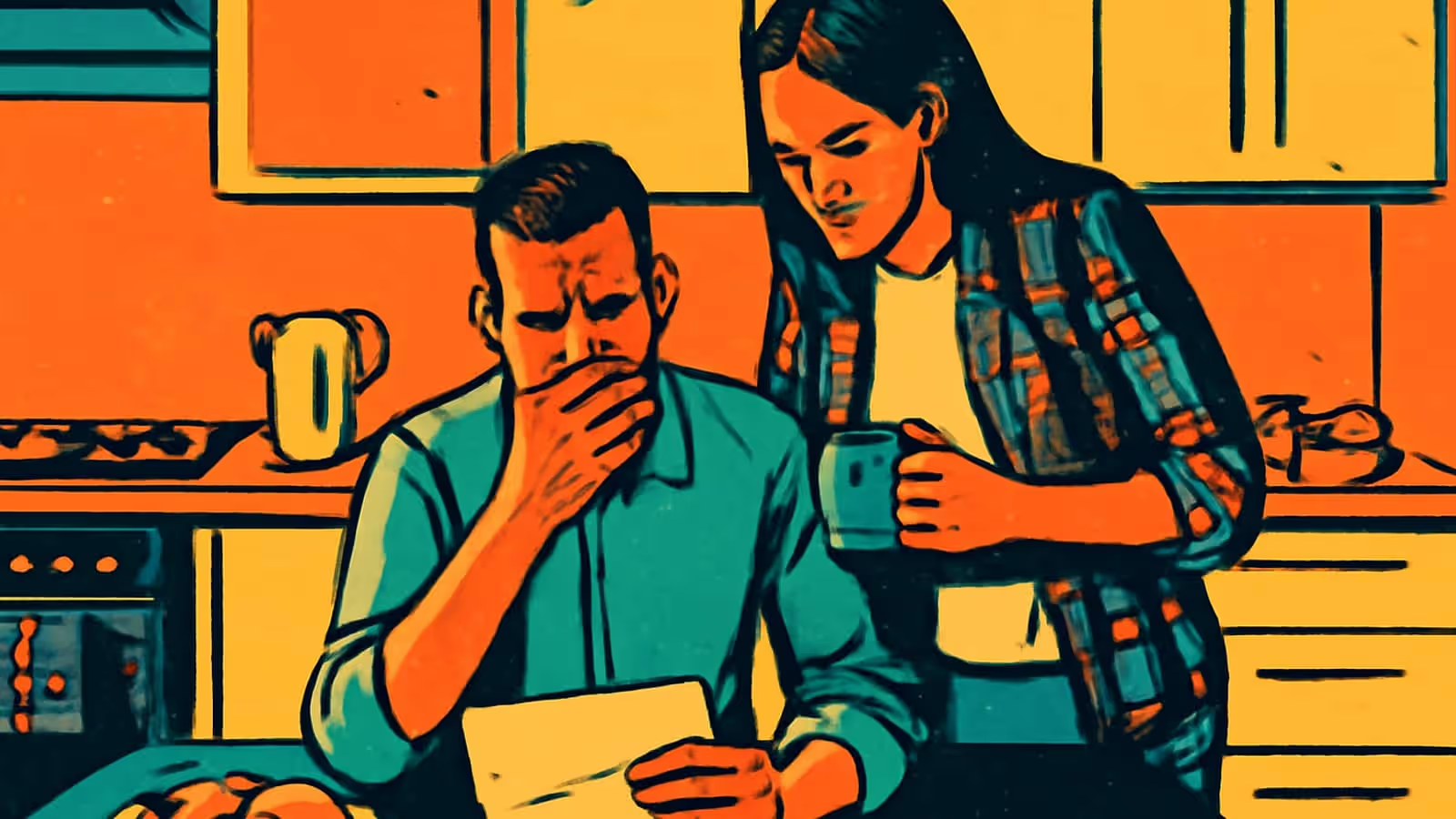
The two best-known ways to help a heavy drinker are staging a confrontation and waiting for rock bottom, and neither is what the evidence points to. The approach with the strongest trial support trains the family instead, and most people have never heard of it.
That matters because the well-known options both carry a cost. One risks the relationship you will need later; the other is not a plan at all.
What the trial actually found
Community Reinforcement and Family Training, usually shortened to CRAFT, works with the concerned relative rather than on the drinker. A randomised trial comparing methods of engaging treatment-refusing users through their relatives found the CRAFT approach engaged a substantially higher proportion of them in treatment than the comparison approaches it was tested against. [meyers-craft]
- Changing how you respond 38%
- Reinforcing sober time 27%
- Looking after yourself 22%
- Raising treatment well 13%
A schematic of how CRAFT allocates the relative's effort as described in this article, drawn to show relative share rather than measured data.
Notice the shape. Only a small slice is about asking them to get help, and the largest is about what you do. That is not a moral point about the family being at fault. It is a practical one: your behaviour is the part of the system you can actually change, and changing it alters the conditions the drinking happens in.
The second finding is the one worth holding on to if nothing else lands. The relatives improved on measures of their own functioning and distress whether or not the drinker entered treatment. There is no version of this where you do the work and get nothing.
Why the confrontation is not first choice
The staged intervention is the version everyone pictures, and its cultural profile far exceeds its evidence. Comparative research has generally found it engages fewer people than approaches working with the family over time.
Two reasons, and both are practical rather than theoretical. Most families never actually go through with it, so a large share of the intended benefit never happens at all. And among those who do, a confrontation that fails leaves the drinker feeling ambushed by the people whose relationship is the main asset in any later recovery. You get one of those, and spending it early is expensive.
None of that makes it worthless, and there are situations where a clear collective boundary is exactly right. It is simply not the first thing to reach for.
Helping against enabling
The distinction is not about how much you do, it is about what your actions protect.
| Protecting them from consequences | Supporting the person |
|---|---|
| Phoning work with an excuse | Saying you will not phone, without an argument |
| Paying the fine or the debt | Helping them look at the money with them sober |
| Cleaning up before anybody sees | Leaving it, and not making a speech about it |
| Arguing with them while they are drunk | Saying you will talk tomorrow, and going to bed |
| Drinking with them to keep it social | Suggesting things that are not built around alcohol |
The right column is not colder than the left. It is warmth without the cover, and the difference is that the signals from the outside world reach the person rather than being absorbed by you first.
The single most useful behavioural rule is the one about not engaging while they are drunk. Nothing agreed at eleven at night with somebody intoxicated survives the morning, and the argument itself frequently becomes the reason to drink tomorrow.
Reinforce the sober hours
This is the part of CRAFT that people find least intuitive and that changes households fastest. Most families, understandably, are attentive during a crisis and absent during a good afternoon, because a good afternoon is when you finally get to rest.
The effect is that attention is concentrated around drinking. Deliberately inverting it, so that sober time is when the good conversations, the outings and the warmth happen, does not require anybody to be praised for not drinking, which is patronising and lands badly. It just means being genuinely present when they are sober and quietly less available when they are not.
Raising it without a scene
Privately, sober, brief, and about specific observable events. “On Tuesday you did not remember collecting Ella, and I was frightened” can be discussed. “You are an alcoholic” is a label to be argued with, and the argument is one you will lose because you are not the person who gets to decide.
Say the thing, say what you felt, say what you would like, and stop. The instinct to add the other eleven examples is strong and it converts a conversation into a prosecution. Our pieces on whether people have to hit rock bottom and what relapse actually is are worth reading first, and the addiction guide covers the wider picture.
The one thing not to encourage
Do not encourage somebody physically dependent on alcohol to stop abruptly on their own. Withdrawal in that situation can involve seizures and delirium tremens and is a medical emergency, which is why detox is medically supervised and why guidance treats assessment of dependence severity as the first step rather than an afterthought. [nice-cg115-help]
The right encouragement is to see a doctor before stopping, not to stop today. That distinction is worth being precise about, because “just stop” is the most natural thing in the world to say and is, in this one respect, dangerous advice. [apa-craft-help]
Looking after yourself is part of the method, not a footnote
This is the piece people skip, and in this approach it is load-bearing rather than decorative.
Living with somebody’s drinking produces its own set of outcomes: disturbed sleep, hypervigilance about their mood and whereabouts, a social life that has quietly contracted because it is easier than explaining, and often a slow slide into either constant monitoring or complete numbness. None of that is a character weakness and all of it degrades your ability to do anything useful.
The reason it is built into the method rather than added at the end is that a depleted relative cannot hold a limit. Holding one requires being calm when somebody is angry with you, and being calm at eleven at night is a function of how the rest of your week went. So the self-care items are not there to be kind to you. They are there because the intervention stops working without them.
Practically: keep at least one commitment that has nothing to do with the household, tell one person the truth about what it is actually like, and get your own support rather than waiting for the drinker to get theirs first. That last inversion is the one most families find hardest and it is the correct order.
When to seek help
Encourage a medical appointment if they drink every day, if they drink in the morning or shake until they do, if they have blackouts, or if they have tried to stop and felt physically unwell. Those point to physical dependence, which changes what safe help looks like.
Get help for yourself in parallel rather than afterwards. Family-focused approaches exist precisely because living with somebody’s drinking is its own problem with its own outcomes, and it does not require the drinker’s cooperation to begin. Go sooner if there are children in the household, if there has been any violence, or if you have started drinking more yourself.
Contact your local emergency services or a crisis helpline if you feel unsafe or have thoughts of harming yourself.
How MyFreud can help
MyFreud is a mobile app that helps you find solutions to problems that have affected your mind and productivity. Live coaching sessions are for you rather than for them, which is the whole logic of the approach above, and each one ends with an actionable plan rather than a suggestion to look after yourself. Daily tracking gives you something the household argument never produces, which is an accurate record of how often and how much, rather than two people disagreeing about last month. The notepad is where the one specific thing you want to say goes, written while calm, so it survives the moment you have to say it.
Download MyFreud and start today: App Store or Google Play.