
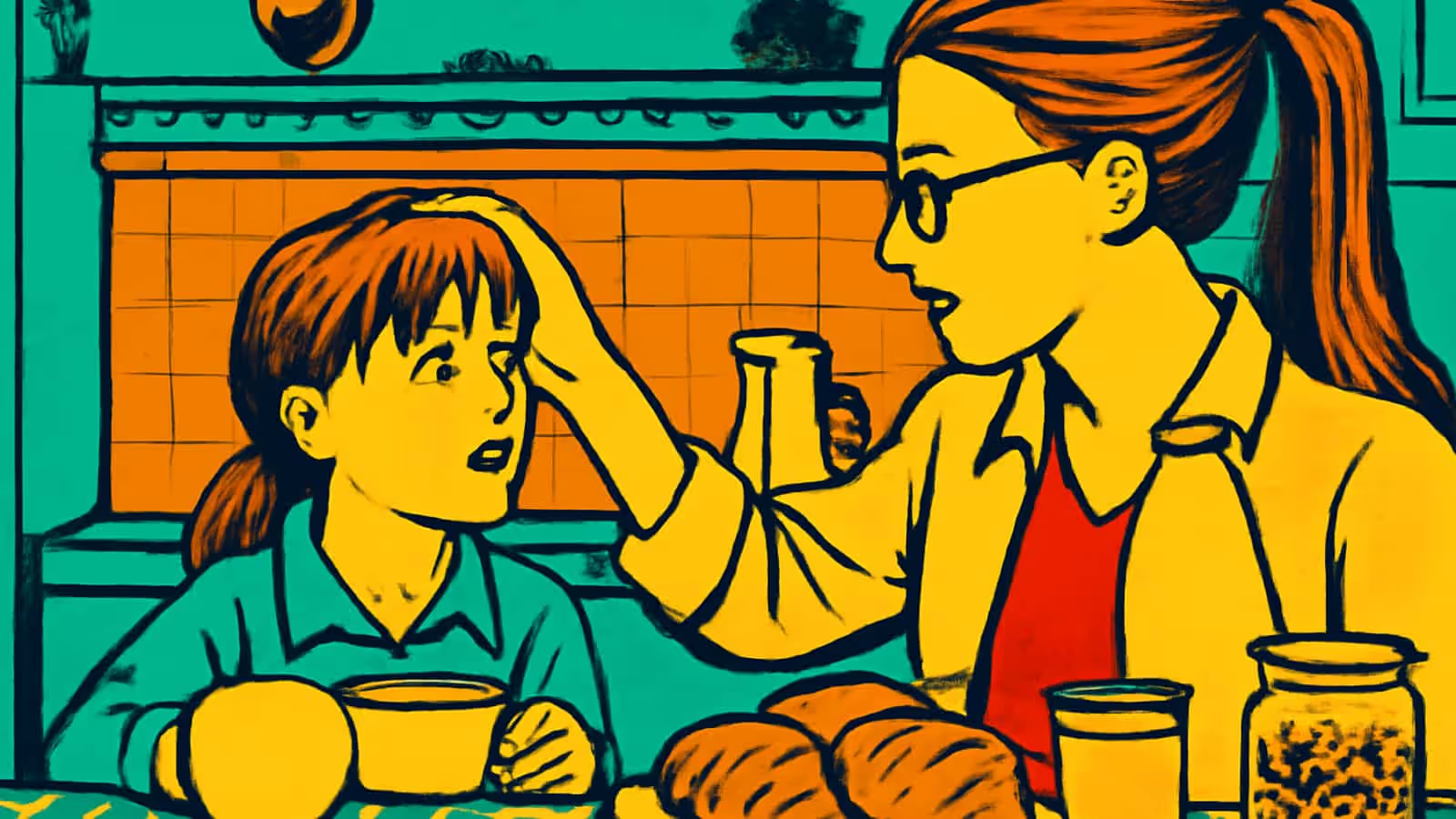
A stomach ache before school is usually real pain with an emotional trigger, not an invented excuse. That distinction decides everything about what to do next, and most of the advice parents are given gets it backwards.
Our overview of school anxiety covers the wider picture and what tends to help; this article is about the specific version that arrives as a physical symptom, which is how it most often presents in younger children.
Why the pain is genuine
Because anxiety produces physical sensation rather than merely accompanying it. The system that makes an adult’s heart pound before speaking in public produces nausea and abdominal pain in a child, and neither person is choosing the sensation.
This is why the usual test parents reach for does not work. Pain that is worse on school mornings and absent at weekends looks like proof of pretending; it is actually a clean demonstration of a trigger, and it is exactly what you would expect to see if the cause were anxiety. The pattern that seems to expose the child is the pattern that explains them.
What happens to these children later
More than most parents are told, which is the case for taking it seriously rather than for alarm. Children seen in clinics for abdominal pain with no identified physical cause were followed into their late teens and twenties alongside a comparison group, and the difference in anxiety was substantial. [shelby-2013-fap]
| Children seen for unexplained abdominal pain | Comparison group | |
|---|---|---|
| Ever had an anxiety disorder | About 51 percent | About 20 percent |
| Had one at follow-up | About 30 percent | About 12 percent |
Read those as group figures rather than as a forecast. Half did not go on to have an anxiety disorder at all, most of the difference had already appeared before the pain did, and being in the first column is not a diagnosis of anything. What the numbers establish is that unexplained physical pain in childhood is worth attending to at the time, which is the opposite of the wait-and-see advice it usually attracts.
The two questions that feel like one
Separating them is the single most useful thing a parent can do. Is anything physically wrong is a question for a doctor, and it needs asking rather than assuming, because recurrent abdominal pain has physical causes and nobody should be reasoning past that. Is this happening on a pattern is a question only you can answer, and it takes about a fortnight of dated notes.
A clear examination is information, not a dead end. Once a doctor has looked and found nothing damaged, you can say something to your child that is both true and useful: the pain is real, and it is not coming from something broken. Children generally find that more reassuring than adults expect, because the thing they were quietly worried about was the other possibility.
What does the pattern actually look like?
This is for noticing a shape rather than reaching a conclusion. Think about the past month.
0 of 5 ticked
Several of these together describe a pattern rather than a series of bad mornings, and it is worth raising with both a doctor and the school. Bring the dates: which mornings, how long it lasted, and what happened once they were in. That is the information that turns a concern into something either of them can act on.
One or two of these does not settle much on its own, and a couple of weeks of dated notes will settle it quickly. Note the day, whether it was a school day, and whether it passed. Patterns that are invisible day to day are obvious on a page.
If the pain is happening at weekends and in holidays as much as on school days, this article is probably not describing it, and a doctor is the right next step rather than a conversation about school.
No screener on this site is designed for children, and none should be used to assess one. The hub above covers adult anxiety, depression, stress, sleep, burnout, self-esteem and loneliness.
What this does not establish
The study above looked at children referred to clinics for abdominal pain, who are not the same as every child who feels sick before school, and the association it reports is between unexplained pain and later anxiety rather than between school mornings and anything.
It also cannot say which way the arrow points. Anxiety producing pain, pain producing anxiety and something underlying both are all consistent with what was measured, and the authors could not separate them either.
When to seek help
Speak to a doctor about recurrent pain before assuming a cause, and say plainly that it clusters on school days, because that is useful information rather than something to be embarrassed about. Ask about both halves: what needs ruling out physically, and whether the pattern warrants anything further.
Seek help sooner if your child is missing school regularly, if the pain has spread into weekends and evenings, if they have stopped seeing friends, or if weight, sleep or mood have changed. A pattern that is widening is a different situation from one bad month.
If you are having thoughts of harming yourself, treat that as urgent and contact your local emergency services or a crisis helpline.
How MyFreud can help
MyFreud is useful here for the fortnight of notes this whole article turns on. Logging the day, whether it was a school day and how long it lasted produces the one thing a doctor and a school both ask for and almost nobody can reconstruct afterwards, which is what the pattern actually looks like rather than what the worst morning felt like.
Download MyFreud and start today: App Store or Google Play.