
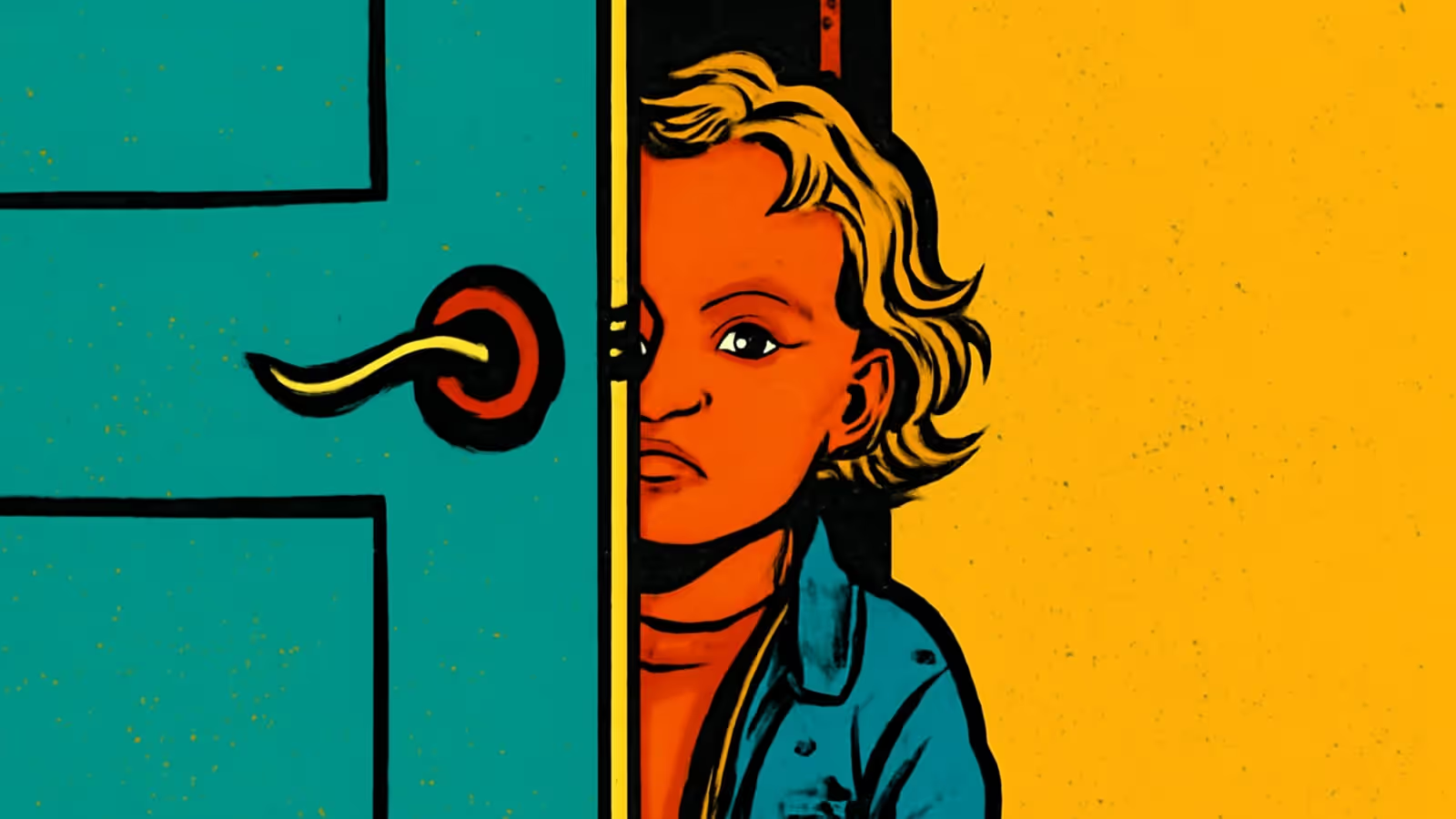
School refusal is anxiety severe enough to stop a child getting to school or staying there, and it looks different from ordinary reluctance in one specific way: it follows the school calendar, not the child’s mood. A child with first-day nerves is quieter for a morning and fine by lunchtime; a child in the pattern of school refusal produces the same distress, in the same shape, on repeat school mornings, and it does not resolve on its own.
Is this school refusal, or just first-day nerves?
The difference is the pattern across days, not the intensity on any single morning. First-day nerves show up around genuine novelty, a new class, a new teacher, the first week back after a long break, and fade within days as the newness wears off. School refusal repeats on ordinary school mornings, weeks or months into a term the child has already settled into, with no obvious trigger changing.
Watch the weekday shape rather than any one morning. A child who is bright and easy on Saturday, fine on Sunday until the evening, and in visible distress by Monday’s alarm is showing the pattern that gives school refusal its name. A child who is anxious about school and anxious about most other things too, weekends included, may be dealing with a broader anxiety difficulty rather than something specific to school, which is worth mentioning to a doctor either way.
What does school refusal actually look like?
It looks like illness, most days. Stomach aches, nausea, headaches, dizziness and tiredness are the most commonly reported physical complaints, and they are usually genuine sensations produced by a real stress response rather than an invented excuse. Our guide to stomach aches before school covers the most common of those complaints and what the long-term evidence says about it.
Alongside the physical symptoms, look for pleading, crying or bargaining specifically at the point of leaving for school; physical resistance such as clinging, hiding or refusing to get dressed; repeated requests to call home, see the school nurse, or be collected early once there; and a pattern of complaint that is worst at the door and eases noticeably once the school day is avoided. Tantrums are more common in younger children, while older children and teenagers are more likely to argue, negotiate, or simply go quiet and immovable.
Why does the anxiety cluster around Sunday evenings?
Sunday evenings are when the coming week stops being abstract. Anticipatory anxiety, the dread that builds before a feared event rather than during it, tends to peak in the hours before the thing itself, which for a child in this pattern means the evening before a school day rather than the morning of it.
Watch for a child who is relaxed through Saturday and most of Sunday, then becomes withdrawn, tearful or irritable as Sunday evening goes on, sometimes with a return of the stomach ache that vanished for the weekend. That evening dip, followed by relief once staying home the next day has been settled, is one of the more reliable signals parents report, more useful in practice than asking a child to explain the fear directly, which most children, especially younger ones, cannot easily do.
How common is this, and does it mean something is seriously wrong?
It is common, and on its own it does not mean a child has a serious underlying problem. A review drawing together decades of studies on school refusal describes it affecting a meaningful minority of school-age children, clustering most around two transition ages: the start of full-time school and the move into secondary school.
Both of those ages mark a change rather than a steady period, which lines up with how often the trigger is something that shifted, a new building, a new form of separation, a new social demand, rather than something wrong with the child or the school in a lasting sense. Common does not mean it should be left to pass; the pattern that keeps it going, described below, is why waiting rarely works on its own. [ulas-2024-review]
What is actually driving it in my child?
There is no single cause, and “school” is rarely the real answer even when it is the one a child gives. Research assessing why individual children avoid school describes it as usually serving one of a small number of functions: escaping something specifically frightening at school, avoiding an uncomfortable social or evaluative situation, difficulty separating from a parent, or being drawn toward something more rewarding at home. [kearney-1990-functional]
That distinction matters because the plan that helps depends on which one is operating. A child avoiding a feared lesson needs a different first step from a child who cannot bear being away from a parent, and both need something different again from a child who is mostly finding home more rewarding than school. Our school anxiety guide covers how to identify the specific trigger and build a graded return around it once you have a clearer sense of which pattern fits.
Is there a proper test or checklist for school refusal?
Not a validated one, no. No published, validated screening questionnaire exists specifically for school refusal in children, and none of the clinical screeners on this site is built or scored for children, so nothing here is a diagnostic test. What follows is a way to organise what you have already noticed, over the last two or three weeks, into something you can describe clearly to a teacher or a doctor.
Does this look like school refusal?
Tick anything that has been true over the last two to three weeks. This is a reflection prompt, not a test, and it produces no diagnosis of any kind.
0 of 6 ticked
This matches the pattern described on this page closely enough to be worth raising with your child’s school and a doctor soon, ideally before a short absence becomes a long one.
Some of the pattern is there. Keep a plain record for another week or two of which mornings are hard and what the complaint is, since that record is exactly what a teacher or doctor will find useful if it continues.
A pattern tied to genuine novelty, a new term, a new teacher, that is settling as the newness wears off is a different thing from school refusal and usually needs time and reassurance rather than a formal plan.
If you want a broader look at anxiety, mood or sleep using instruments that are validated, though not for this specific pattern or for children, our self-assessment hub lists everything currently available.
When to seek help
Speak to a doctor or your child’s school pastoral lead if the pattern above has lasted more than a couple of weeks, if attendance has already dropped to partial or none, or if the anxiety clearly extends well beyond school into most of your child’s week. Seek help sooner rather than later where separation from a parent is the dominant fear, since that responds well to early support and tends to become more entrenched the longer it is left. Seek help promptly, without waiting to see if it passes, if there is low mood, self-harm, or any talk from your child of not wanting to be alive.
How MyFreud can help
MyFreud is not built for children and does not replace a school, a doctor or a child mental health service for a pattern like this one. Where it helps is on the adult side of the situation: a parent under strain from the mornings, the arguments, the missed work meetings and the worry can use the app’s daily mood tracking to see whether their own stress is climbing alongside their child’s, and its short guided exercises for the specific mornings that are hardest to get through calmly.
Download MyFreud and start today: App Store or Google Play.