
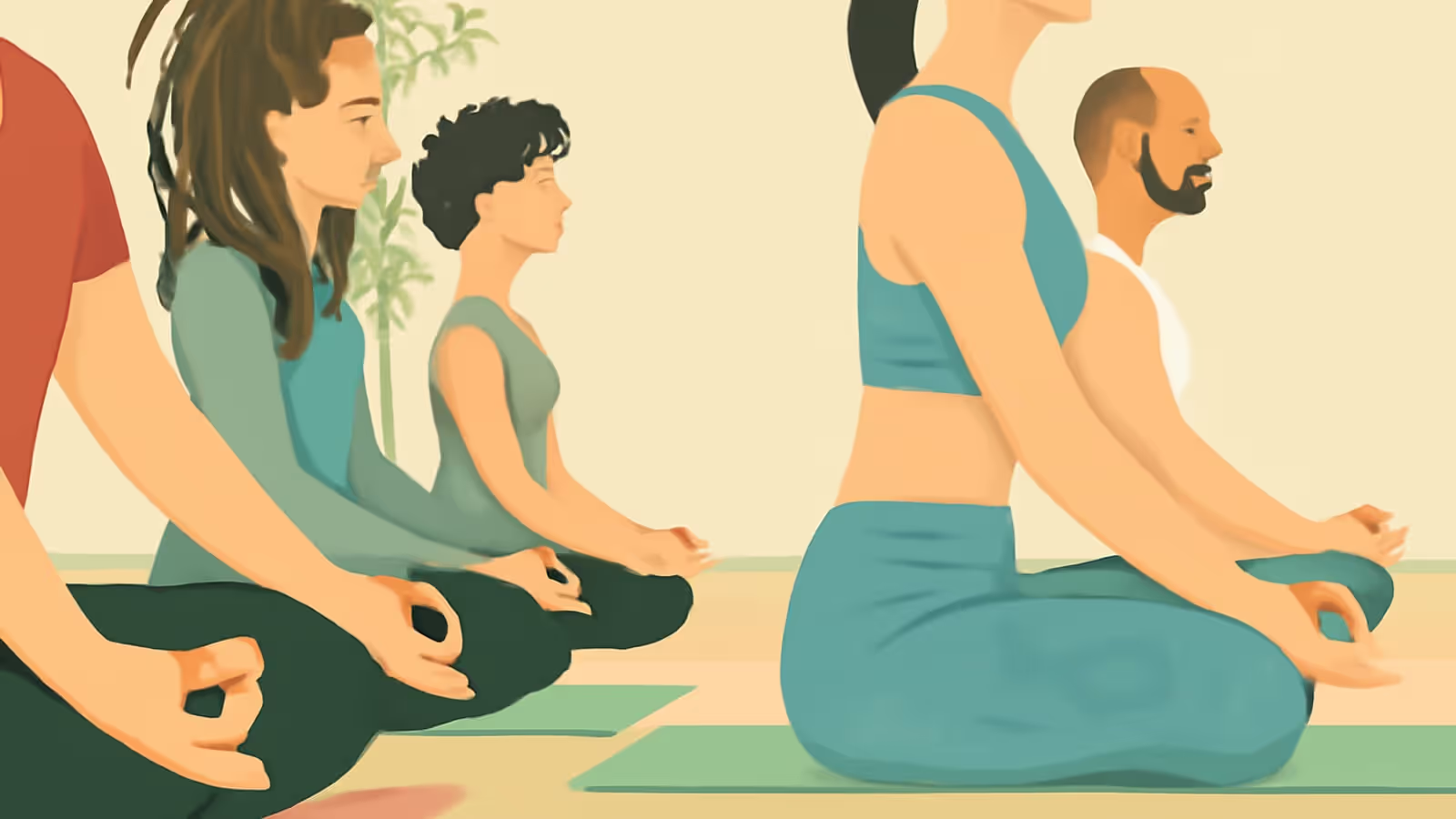
Mindfulness-based stress reduction (MBSR) is a structured eight-week group course that teaches mindfulness meditation, and the research suggests it helps with anxiety, depression and pain, with weaker evidence for stress itself. The strongest single study is a 2023 trial in which eight weeks of MBSR performed about as well as the antidepressant escitalopram for anxiety disorders. [hoge-2023-mbsr-escitalopram] This guide covers what the course involves, what the evidence shows, how it compares with medication, and who should be careful with it.
What is MBSR?
MBSR is a structured eight-week group course that teaches mindfulness meditation through a trained teacher and daily practice at home. It began in 1982 as a ten-week programme for 51 chronic pain patients who had not improved with traditional medical care. [kabat-zinn-1982-pain-program]
The version tested today is the eight-week one. In the 2023 trial it meant a weekly 2.5-hour class, a day-long weekend class and 45 minutes of guided practice at home each day. [hoge-2023-mbsr-escitalopram] That is about 20 hours in class and, if you practise every day, roughly 40 hours at home, before the day-long class. It is a different proposition from a ten-minute app session, and the time is part of what is being tested. Our guide to mindfulness covers the wider field.
Does MBSR work?
Mindfulness meditation programmes have moderate evidence of improving anxiety, depression and pain, and low evidence of improving stress and distress. That comes from a review of 47 trials with 3,515 participants, which covered mindfulness programmes in general and not MBSR alone. [goyal-2014-meditation-programs]
The effects were small to moderate. At eight weeks the standardised effect sizes were 0.38 for anxiety, 0.30 for depression and 0.33 for pain, and at three to six months they were 0.22 for anxiety and 0.23 for depression. [goyal-2014-meditation-programs]
Goyal and colleagues (2014): standardised effect sizes of 0.38, 0.30 and 0.33 at eight weeks and 0.22 and 0.23 at three to six months, shown multiplied by 100. A larger bar means a larger average improvement than comparison groups.
The same review rated the evidence for stress and distress as low, which is an awkward fact for a course with stress in its name. [goyal-2014-meditation-programs] Low evidence means the data were limited or inconsistent. It does not mean the course makes stress worse.
Is MBSR as good as medication for anxiety?
In one trial it was not meaningfully worse than escitalopram, a widely used antidepressant, for anxiety disorders over eight weeks. The trial randomised 276 adults with generalised anxiety disorder, social anxiety disorder or panic disorder to eight weeks of MBSR or to escitalopram at 10 to 20 mg a day. [hoge-2023-mbsr-escitalopram]
Clinicians who did not know which treatment each person received rated severity on a seven-point scale. It improved by 1.35 points with MBSR and 1.43 with escitalopram, which met the pre-set standard for MBSR not being worse. Study-related side effects were reported by 21 people in the MBSR group and 110 in the escitalopram group, and 208 of the 276 completed the trial. [hoge-2023-mbsr-escitalopram]
Read that with its limits in view. It is one trial, and the main outcome was measured at eight weeks. It compared two active treatments and had no placebo arm, so it cannot separate what each treatment does beyond expectation. Participants knew which treatment they were getting, as they must with a course and a pill. And “not worse” is a statement that the gap fell inside a pre-set margin, not that the two are identical. If you take medication, do not stop or change it without speaking to the person who prescribes it.
How is MBSR different from MBCT?
MBSR is the general eight-week mindfulness course. MBCT, mindfulness-based cognitive therapy, drew on the MBSR format and was built for one job, which is preventing relapse in people who have had several episodes of depression. Our guide to MBCT covers what that evidence shows and where it stops.
The practical difference is who each is for. MBSR is taught to a general group with stress, anxiety, pain or low mood, while MBCT is aimed at people with recurrent depression who are currently well.
Who should be careful with MBSR?
People for whom sitting with their attention turned inward tends to stir up distress should take particular care. That can happen with a history of trauma and during a current depressive episode, and it is a reason to have a trained teacher and a group rather than working alone. Our guide to when meditation makes things worse covers it properly.
It is also demanding. Daily practice is hard when concentration is poor, so if you are in the middle of a severe episode, ask a doctor whether a course makes sense now or later.
How do you find and start an MBSR course?
Look for a course that matches the standard format, and ask what it involves before you pay. Useful questions: whether it runs eight weekly sessions, whether there is a day-long class, how much daily practice is expected, who teaches it and how they trained, and what it costs.
If the time is the barrier, a short practice is not MBSR and has not been tested as MBSR, but it is a way to see whether sitting with your attention suits you.
A five-minute taster, not a course
Sit comfortably and rest your attention on the feeling of your breathing. When your mind wanders, which it will, notice that and return to the breath. That return is the practice.
5:00
Do not judge how it went. Noticing that your mind wandered is the skill being practised. If sitting still stirs up distress, stop and speak to a doctor or therapist.
Done. Notice how you feel, then carry on with your day.
When to seek help
Speak to a doctor if anxiety, low mood or pain is affecting your work, sleep or relationships, or if it has lasted most days for two weeks or more. MBSR is one option among several with evidence behind them, and a doctor can help you weigh it against therapy and medication. Our stress self-assessment and anxiety self-assessment are screeners and not diagnoses, and they can help you decide whether to have that conversation. Our guide to anxiety covers the wider options.
If you feel unable to keep yourself safe, contact your local emergency services or a crisis helpline.
How MyFreud can help
Whether a course changes how your days feel is easy to lose from memory over eight weeks. Daily mood tracking in MyFreud shows the pattern across weeks, so you can compare the weeks before and after you start. It does not replace a course, and it does not replace speaking to a doctor.
Download MyFreud and start today: App Store or Google Play.