
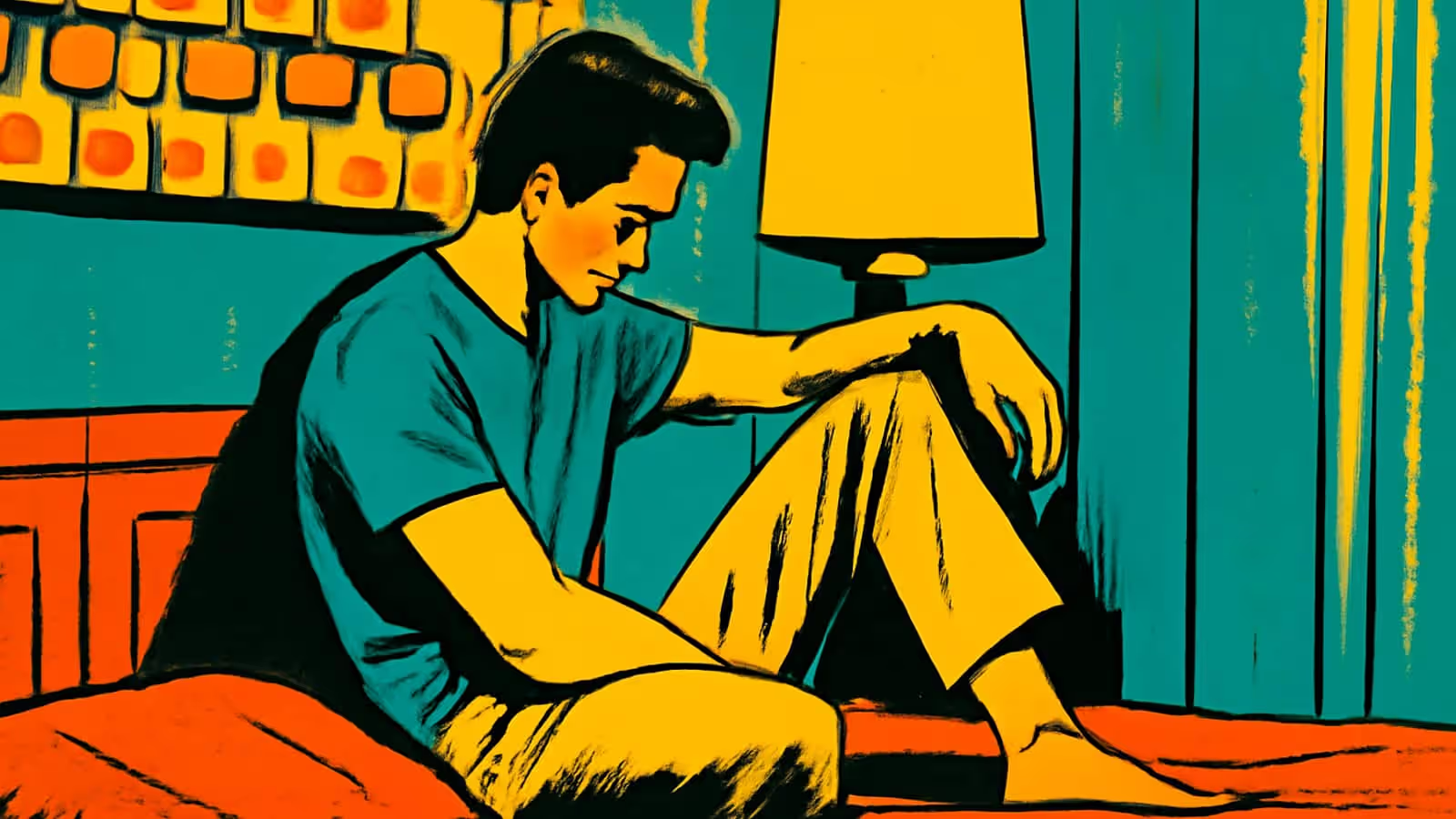
If you want one thing to watch in bipolar disorder, watch sleep. A systematic review of prodromal symptoms, covering 17 studies and 1,191 people, identified sleep disturbance as the most important early symptom of mania. [jackson-2003-prodromes]
It is also the most trackable. Mood is difficult to rate honestly from inside a mood change; hours slept is a number.
Cause or early symptom, and why it barely matters
Sleep deprivation is widely described as a trigger for mania, and the honest version of that claim has a caveat attached.
In most accounts it is not possible to tell whether the sleeplessness caused the episode or was already its first symptom. The two arrive in the same order and look identical from outside, so the directionality remains genuinely unsettled.
Notice, though, that the two readings converge on the same instruction. If sleep loss triggers episodes, protect sleep. If sleep loss is the first sign of one, watch sleep and act early. There is no version of this where a run of short nights is worth ignoring.
A schematic of the two interpretations described in this article and the uncertainty noted in the literature cited. Not measured data.
Both columns say the same thing, which is unusual and convenient. The uncertainty is real and it does not change what to do on a Tuesday.
The distinction that matters most
There are two ways to sleep four hours and they mean entirely different things.
Insomnia. You want to sleep, you cannot, and you are tired the next day. Unpleasant, common, and not specific to bipolar disorder.
Reduced need for sleep. Four or five hours, and you genuinely feel fine. Energetic, not tired, and often getting more done than usual.
The second is a feature of hypomania and mania rather than a sleep problem, and reporting it accurately is one of the most useful things anybody can do at an appointment. Our guide to hypomania covers why that episode so often goes unmentioned: it does not feel like illness, so nobody thinks to describe it.
The sentence worth memorising for a doctor: “I slept four hours and was not tired.” That is a clinical observation. “I have not been sleeping well” is not the same statement and points somewhere else entirely.
Sleep does not settle between episodes
A common assumption is that sleep is disrupted during episodes and normal in between. Frequently it is not.
Work examining people with bipolar disorder during stable periods found a large proportion still had clinically significant sleep disturbance, with profiles closer to people with insomnia than to good sleepers. [harvey-2008-bipolar-sleep]
That has a practical consequence. A sleep problem persisting during a well period is worth treating rather than tolerating as residual, particularly given how central sleep is to what happens next.
What is your sleep telling you?
Tick anything true recently. This is a reflection prompt rather than a test, and it produces no diagnosis.
0 of 8 ticked
The second and third items together are the combination to act on, because reduced need for sleep alongside increased energy is the prodromal pattern rather than a sleep problem. The seventh matters too: other people frequently notice the change before the person having it does, which is exactly what makes it worth having agreed in advance who says something.
One disturbed week has many ordinary explanations. What makes it informative is the direction over several nights, and particularly whether less sleep is coming with more energy rather than less.
Nothing here matched. If sleep is stable, that is genuinely worth something, since it is the most useful single signal available in this condition.
The free insomnia screener uses the ISI and measures difficulty sleeping. It cannot detect reduced need for sleep, which is the opposite pattern and the more significant one here, so read a low score accordingly.
What helps
Regularity over duration. Consistent sleep and wake times, weekends included, is the element clinical approaches for bipolar disorder most consistently target. The same applies to when you eat and when you are active.
Treat known disruptions as risks to plan around. Long-haul travel, night shifts and all-night deadlines are not neutral here, and they are usually foreseeable.
Track the number, not the feeling. Hours slept is objective and mood is not, particularly during a mood change. This is the argument for keeping any record at all.
Agree a plan in advance, with somebody else in it. What happens if sleep drops for three nights: who you tell, who you call. Written down while well, because the point of the plan is that it works when judgement is affected.
Be careful with alcohol. It fragments the second half of the night reliably, which is covered in our guide to waking at 3am.
Do not change medication over sleep on your own. Sleep problems in bipolar disorder can relate to the condition, the medication or both, and that is a conversation rather than an adjustment. [nice-cg185-bipolar-sleep]
Our guide to bipolar 1 and bipolar 2 covers the distinction between them, and what causes bipolar disorder covers the wider picture.
When to seek help
Contact your team promptly if you have needed markedly less sleep for several nights and feel energetic rather than tired, particularly alongside faster thoughts, more activity, more spending or more risk-taking. That combination is worth acting on early, when there are more options.
See a doctor if sleep is disturbed during a stable period, because it is treatable and worth treating rather than accepting.
Go urgently if you have thoughts of harming yourself, if you are unable to sleep at all, or if you are making decisions that are out of character and carry real consequences.
How MyFreud can help
The most useful early signal in this condition is a change from your own baseline, and a baseline is precisely what nobody can hold in their head. MyFreud gives you daily mood tracking that takes seconds, so a run of short nights is something you and your clinician can see rather than try to recall.
Download MyFreud and start today: App Store or Google Play.