
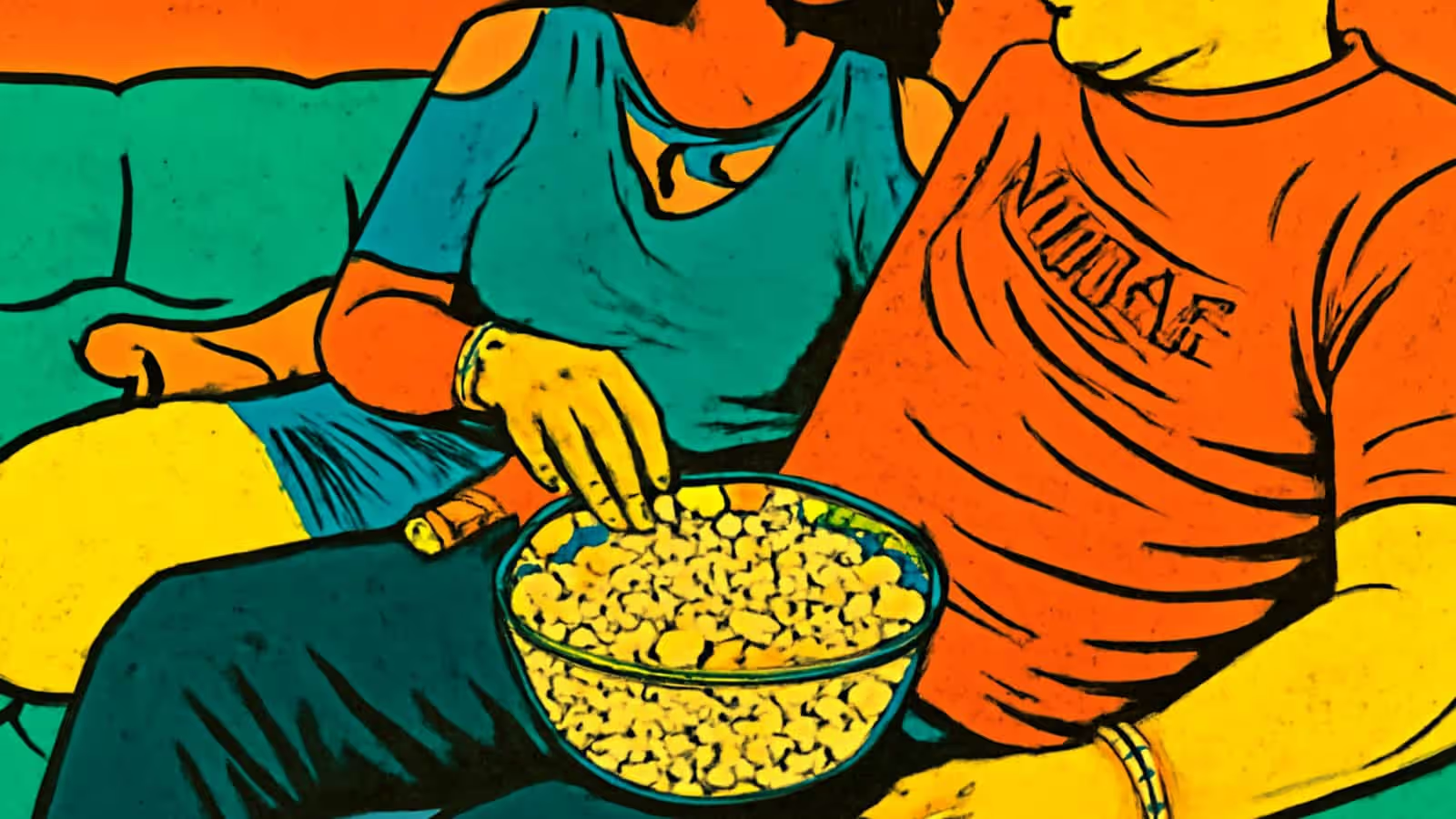
The Last House put a lot of people back in the odd position of paying to feel something they spend the rest of their lives avoiding. It is a genuinely strange thing to want, and the usual explanation, that some people are just adrenaline junkies, explains almost nothing. What is actually going on is more specific, and it also explains why horror is a poor idea for a small number of people rather than a personality quirk.
The pleasure is in the landing, not the fear
Frightening yourself on purpose works because your body produces a large stress response while your mind holds on to the knowledge that nothing is wrong, and the gap between those two is where the enjoyment sits. The fear is the setup. The relief is the payoff.
Researchers call the general phenomenon benign masochism: deliberately seeking an experience the body reads as negative, in a context that makes it safe. [rozin-masochism] It is the same structure as eating food that is painfully spicy, going into water that is too cold, or standing at a great height behind a barrier. In each case the sensation is one you would flee in earnest and pay for in play.
The word doing the work is benign. Remove the safety and the whole thing collapses: nobody enjoys a real intruder. What horror sells is not fear, it is a rehearsal of fear you already know the ending of.
A schematic of the pattern described in this article, to show shape over time rather than measured data.
The chart is the argument. Both of the top two lines climb, and a snapshot taken at the climax cannot tell them apart. What separates them is what happens after the credits: one comes down, and one does not. Everything useful in this article follows from that difference.
Horror fans are not braver
They appear to be about as frightened as everyone else. Where they differ is in keeping hold of the safety knowledge while their body reacts, which is a skill rather than an absence of fear.
That skill has an obvious family resemblance to what exposure-based therapy trains: staying in contact with a fear response, deliberately, until it falls on its own without anything being done about it. Research during the pandemic found horror fans reported coping somewhat better than non-fans, which is intriguing. [scrivner-horror]
It is also exactly the kind of finding to be careful with. People who are already comfortable with unpleasant arousal are the people who choose horror in the first place, so the correlation may be running entirely backwards. Enjoying horror is not a treatment, and nobody should be watching films instead of getting help. Our anxiety guide and our guide to how to deal with anxiety cover what actually is.
The two cases where it costs more than it gives
Most people can watch what they like. Two situations are genuinely different, and both are worth naming because in both the harm is invisible from the outside.
Panic disorder. In panic disorder the feared object is the physical sensation itself: the racing heart, the tight chest, the sense of unreality. A horror film manufactures those sensations for two hours. For most people that is the entertainment; for somebody who has learned to read a racing heart as the start of a catastrophe, it is a rehearsal of the wrong lesson. Our panic attacks guide covers why that loop forms.
Trauma. Specific content can restart symptoms that had settled, and the trigger is often not the obviously frightening part. It can be a sound, a setting, a kind of powerlessness. This is not about being fragile and it is not predictable from how gory a film is, which is why “it is only a film” is such useless advice to somebody it has happened to.
Between those two, the ordinary case: general anxiety, no trauma history, no panic. There the evidence for harm is thin, and some people report that a controlled scare with a defined ending is easier than the undefined dread of an ordinary Tuesday. [apa-anxiety-horror]
Why it wrecks your sleep, and what to do
The arousal outlasts the story. That is the whole mechanism, and knowing it changes what helps, because the instinct is to argue yourself out of being scared and arguing does not work on a nervous system.
You spent two hours fully activated. The credits do not reset it, so you go to bed with a raised heart rate and a mind that has been trained all evening to treat small noises as significant. Telling yourself the film was fictional addresses a belief you already hold and leaves the physiology untouched.
What works is giving the arousal somewhere to go and somewhere to come down. Twenty minutes of something absorbing and undramatic between the film and bed. Lights and background sound rather than straight from screaming into silence and dark. And not checking whether the house is locked more than once, because checking is the behaviour that teaches your brain the threat was real. Our article on relaxation techniques for sleep covers the wind-down in more detail.
A ten-minute come-down, for after the credits
For the gap between the film ending and going to bed. Do something with your hands, keep the lights on, and breathe out for longer than you breathe in. The aim is not to stop feeling scared but to let the arousal fall before you are lying in the dark with it.
10:00
If you notice the urge to check the doors a second time, that is the arousal talking. Once is fine. Twice teaches the wrong lesson.
Done. Notice it dropped without you having to be convinced of anything.
Children are a genuinely different case
The mechanism that makes horror safe for adults is the one children have least of. Younger children hold the boundary between fiction and reality less reliably, and without it a frightening film sits much closer to a frightening event.
The practical consequence is that effects on sleep can run for weeks rather than a night, and that a child insisting they are fine is not strong evidence, because the reassurance-seeking often arrives days later disguised as something else. This is a developmental fact rather than a matter of toughness, and it does not predict anything about who they will be at twenty.
When to seek help
Speak to a doctor or a therapist if frightening images stay with you for days, if you have begun avoiding being alone or being in the dark, or if a film has restarted symptoms connected to something that actually happened to you. That last one is worth taking seriously rather than waiting out, and it is treatable.
Go sooner if the physical sensations of fear have themselves become the thing you are afraid of, which is the shape panic disorder takes, or if sleep has not recovered after a week. Ask for exposure-based cognitive behavioural therapy by name.
Contact your local emergency services or a crisis helpline if you feel unsafe or have thoughts of harming yourself.
How MyFreud can help
MyFreud is a mobile app that helps you find solutions to problems that have affected your mind and productivity. Live coaching sessions give you somewhere to work out whether a reaction that unsettled you was ordinary arousal or something worth following up, each one ends with an actionable plan rather than reassurance, daily tracking shows whether sleep actually recovered or only felt like it did, and the notepad is where the wind-down plan lives.
Download MyFreud and start today: App Store or Google Play.