
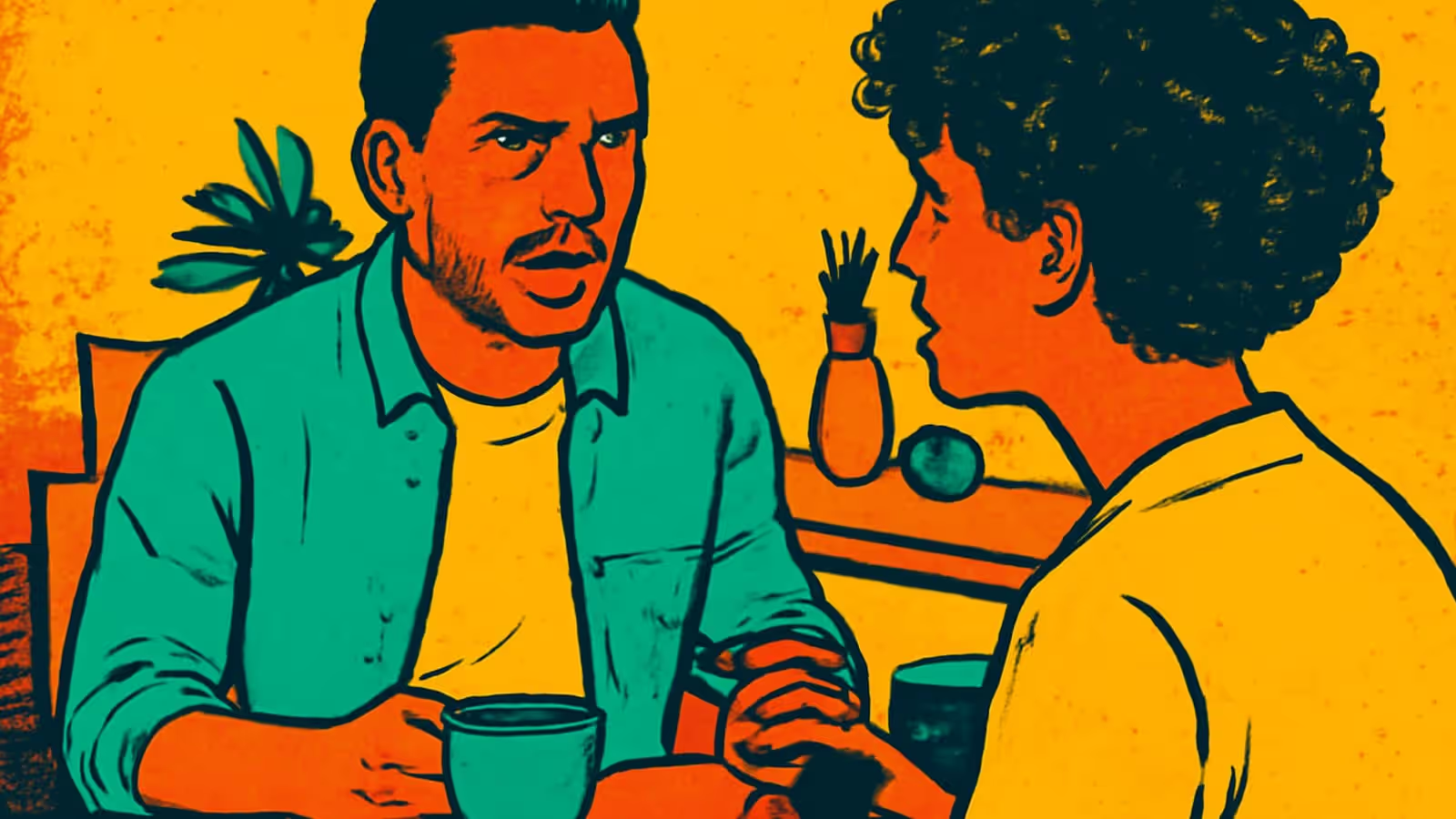
Fawning is appeasing whoever feels threatening in order to stay safe. It sits alongside fight, flight and freeze in a popular four-part model of what people do under threat.
The behaviour is real and the label is informal. Fawn is not a diagnosis, and knowing which parts of this are established and which are shorthand will save you a lot of confusion.
Where the term actually comes from
The word was named and popularised by the therapist Pete Walker in his 2013 book on complex post-traumatic stress, not by a diagnostic manual. [walker-cptsd] It has spread widely enough since that many people meet it assuming it is a clinical category, and it is not one.
That does not make it worthless. Research on stress responses has long described affiliative and tending behaviour under threat rather than only fighting and fleeing, which is the same observation from a different direction. [taylor-tend-befriend] Treat “fawn” as a useful piece of vocabulary for something real, and do not expect a clinician to write it down.
What fawning actually looks like
Fawning looks like agreement that arrives before you have consulted yourself. The behaviours are ordinary in isolation and it is their automaticity, not their content, that marks the pattern.
Common forms: saying yes and feeling the cost only afterwards, apologising for things that are not yours, monitoring other people’s moods continuously and adjusting to them, going quiet about your own preferences until you genuinely cannot recall what they were, and becoming most accommodating precisely when someone is angriest with you.
Why appeasement is a strategy rather than a flaw
Appeasing is what works when you can neither win nor leave, which is the exact position a child is in. Fighting an adult you depend on is dangerous and fleeing is not available, so keeping that adult calm becomes the strategy with the best outcome, and it is learned thoroughly because it is rehearsed daily.
The problem is not that the strategy was wrong. It is that it was learned in an environment where it was the best option available, and it keeps running in adult relationships where disagreeing and leaving are both genuinely possible.
Patterns of this kind cluster with other features of complex trauma, including difficulties with emotional regulation and self-concept. [cloitre-icd11-cptsd]
The wider picture of how trauma shapes these responses is in our pillar.
The four responses side by side
Each response is an answer to the same question, which is what to do about a threat you cannot simply remove.
| Response | The strategy | Looks like | Forms when |
|---|---|---|---|
| Fight | Remove the threat | Anger, confrontation, control | Resistance sometimes worked |
| Flight | Get away from it | Leaving, avoiding, staying busy | Escape was possible |
| Freeze | Become unavailable | Shutting down, going blank, numbness | Neither fighting nor fleeing was safe |
| Fawn | Make the threat safe | Agreeing, appeasing, anticipating | Keeping someone calm reduced harm |
Most people recognise more than one row, and the model is best read as four available strategies rather than four types of person.
Does this pattern sound familiar?
These describe the automatic version rather than ordinary consideration for other people. Tick anything that is usually true of you.
0 of 6 ticked
Most of this is familiar to you. That is worth taking seriously and worth taking to a therapist, though it is a description of a habit rather than a diagnosis of anything.
A few of these are familiar. Noticing which situations bring them out is usually more informative than the count itself.
Little here matches the automatic pattern. Ordinary consideration for other people is not the same thing and is not a problem to solve.
This is not a screening tool. No validated self-assessment exists for this pattern, and none of the seven on this site measures it.
Fawning is not the same as kindness
The difference is whether you chose it. Kindness is something you can decline to offer and do not feel endangered by withholding; fawning is agreement that has already happened by the time you notice.
This distinction matters because the most common reaction to reading about fawning is to start suspecting every generous impulse, which helps nobody. The test is what happens when you imagine saying no. Mild reluctance, awkwardness or a wish to be liked are ordinary social feelings. Dread that is out of all proportion to the actual consequence is the thing being described here.
What actually changes it
Noticing comes before changing, because the pattern runs faster than deliberation and you cannot interrupt something you have not yet seen. Most people find it first in hindsight, in the resentment or the tiredness that follows an interaction, and working backwards from there is a legitimate route.
The practical intervention that helps soonest is introducing a delay. Saying you will think about it, even for thirty seconds, opens the gap the automatic yes currently occupies, and the discomfort of that pause is itself informative. Beyond that, treatment for complex trauma addresses the fear the strategy is answering rather than the behaviour on the surface, which is why simply resolving to be more assertive so rarely holds.
When to seek help
Speak to a doctor or a therapist if this pattern is shaping your relationships, your work or your sense of what you want, and particularly if it is keeping you in a situation that is harming you. Appeasement is a reasonable strategy for surviving a dangerous relationship and a poor one for deciding whether to stay in it, and that is the point at which outside help matters most.
Look for someone who works with complex trauma specifically. You do not need the word fawn to be recognised: describing the behaviour, and when in your life it started, gives a clinician more to work with than the label does.
How MyFreud can help
MyFreud is useful here for the noticing problem specifically. Logging interactions where you agreed to something and how you felt afterwards turns a pattern that is invisible in the moment into one you can see across a fortnight, which is usually the point at which people first catch it happening rather than remembering it.
Download MyFreud and start today: App Store or Google Play.