
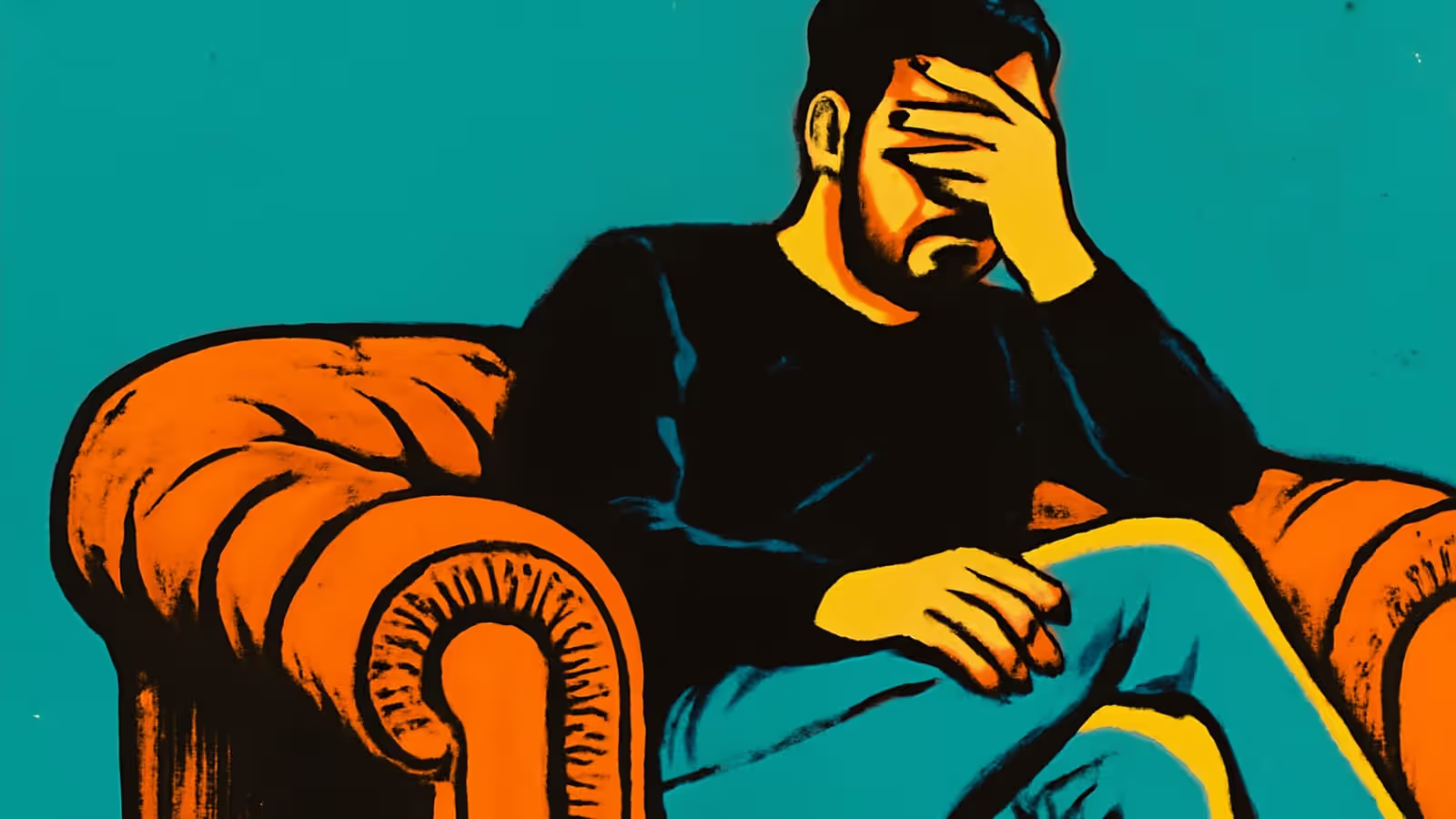
Scrupulosity is obsessive-compulsive disorder whose obsessions attach to morality or faith. The mechanism is ordinary OCD; only the subject matter is different.
That sentence does most of the work, because the thing people most want to know is whether they have a conscience problem or an anxiety problem, and the answer changes what helps.
What it actually looks like
The obsessions are intrusive and unwanted: a blasphemous image arriving mid-prayer, a sudden certainty that a half-remembered conversation was a lie, a fear that you enjoyed something you should not have.
The compulsions are what the person does to make that stop. Praying again because the first attempt was contaminated by the thought. Confessing the same act repeatedly. Mentally replaying a day looking for the moment you were unkind. Asking somebody whether what you did counts.
A 2008 review that pulled the scattered literature together described scrupulosity as pathological guilt or obsession concerning moral or religious matters, accompanied by compulsive observance, and distinguished it from ordinary religious practice by its distress and its cost. [miller-2008-scrupulosity]
The OCD guide covers the general shape of obsessions and compulsions, which is worth reading first if the term is new.
Devotion and scrupulosity are not on the same scale
The most common mistake, made by sufferers and by the people around them, is to treat this as too much of a good thing. It is not more devotion. It is a different process wearing devotion’s clothes.
| Devotion | Scrupulosity | |
|---|---|---|
| Where the act comes from | Chosen | Compelled, and resented |
| What it produces | Meaning, sometimes comfort | Relief that fades, then dread |
| What happens if you stop | You miss it | You cannot stop, or stopping brings panic |
| Direction over time | Settles into practice | Escalates; the ritual grows |
| The doubt | Answered, or held peacefully | Never answered, no matter how good the answer |
| How it feels to the person | Connected | Frequently numb, going through the motions |
The last row is the one that surprises people. A person deep in scrupulosity often describes feeling further from their faith than anyone around them realises, because every act of observance has become an anxiety-management task.
The content is a clue to values, not to character
OCD attaches to what a person cares about. That is not a poetic framing, it is the observed pattern: the themes that dominate are the ones where being wrong would be intolerable to that particular person. [stein-2019-ocd-scrup]
So a devout person gets religious obsessions. An ethical person gets moral ones. A new parent gets intrusive thoughts about harm coming to the baby. In every case the theme is chosen by what the person would least want to be true.
This matters clinically, because the most frightening feature of scrupulosity, from the inside, is the conviction that the thoughts reveal something. They do not. The reason a blasphemous image is so distressing to a believer and so uninteresting to somebody else is precisely that the believer cares.
The version that has nothing to do with religion
A large share of scrupulosity is secular, and it is missed more often because nobody is looking for it under this name.
It sounds like this. Replaying a conversation from three days ago to check whether a thing you said was technically a lie. Refusing to let a small misunderstanding stand, so you correct it by message, twice. Confessing to a partner that you noticed somebody attractive, then confessing again because the first confession might have understated it. Declining to describe a film you enjoyed in case that implies endorsement of something in it.
The tell is the same as the religious form: the question is unanswerable by design, the checking never closes it, and the person is exhausted by an integrity standard nobody else has asked of them. The 2008 review made this point explicitly, treating moral scrupulosity as the same disorder with different content rather than a milder relative. [miller-2008-scrupulosity]
It also gets a particular kind of praise that keeps it going. Somebody who compulsively checks their own honesty is frequently described as principled, which is a difficult thing to argue with and a poor reason to leave it untreated.
What treatment involves
Exposure and response prevention is the studied approach here as elsewhere in OCD: approaching the doubt deliberately and declining to perform the ritual, until the brain stops treating the doubt as an emergency. [nice-cg31-scrup]
A systematic review published in 2024 gathered the psychotherapy trials specifically for scrupulosity and found the evidence base still small, with exposure and response prevention the most studied approach and a shortage of the large trials that other OCD themes have accumulated. [toprak-2024-scrupulosity] That is an honest limitation rather than a reason to wait: the general OCD evidence is strong, and scrupulosity is a theme within it rather than a separate condition.
Our guide to exposure and response prevention covers what the treatment actually asks of you, and our guide to CBT for intrusive thoughts covers the thinking part alongside it.
- Repeating and correcting 34%
- Mentally reviewing the past 28%
- Seeking reassurance 22%
- Actual practice 16%
- Actual practice 82%
- Mentally reviewing the past 8%
- Repeating and correcting 6%
- Seeking reassurance 4%
A schematic of the pattern described in this article and in the sources cited, not measured data.
The two panels describe the same hour and the same person. What changes is how much of it is the thing itself, and it is a question worth asking yourself honestly rather than a diagnosis.
Why reassurance is the hardest part to give up
Reassurance-seeking is the compulsion that hides best, because everybody around the person is willing to supply it and it looks like a reasonable question.
The loop is mechanical. The doubt arrives, the answer relieves it, and the relief teaches the brain two things: that the doubt was worth taking seriously, and that the answer was what settled it. So the next doubt arrives faster and asks for more. People end up confessing the same act to the same person for the fourth time, or asking a search engine to adjudicate something a search engine cannot adjudicate.
Treatment asks you to stop asking, and asks the people around you to stop answering, which is why the conversation with family is part of the work rather than an afterthought. Our guide to reassurance-seeking covers the same loop as it shows up in health worry, where it is easier to see from the outside.
When to seek help
Speak to a doctor if moral or religious doubt is taking up substantial time, if you are repeating acts of observance to relieve anxiety rather than to practise, or if you have begun avoiding places, texts or people because of what the thoughts might do there.
Say plainly how long it takes each day and what you have stopped doing. Those two facts move an assessment along faster than describing the content of the thoughts, which many people find almost impossible to say out loud.
Ask specifically whether the service treats obsessive-compulsive disorder and offers exposure and response prevention, and if faith is part of your life, whether the therapist is willing to work alongside it rather than around it. Go urgently if you have thoughts of harming yourself, or if the guilt has reached a point where you feel you deserve harm.
How MyFreud can help
The part of this that goes unrecorded is how much of the day it takes, because the rituals are mental and nobody sees them. MyFreud gives you daily mood tracking that takes seconds, which is a way of noticing the pattern across weeks rather than trying to judge it from inside a bad afternoon.
Download MyFreud and start today: App Store or Google Play.