
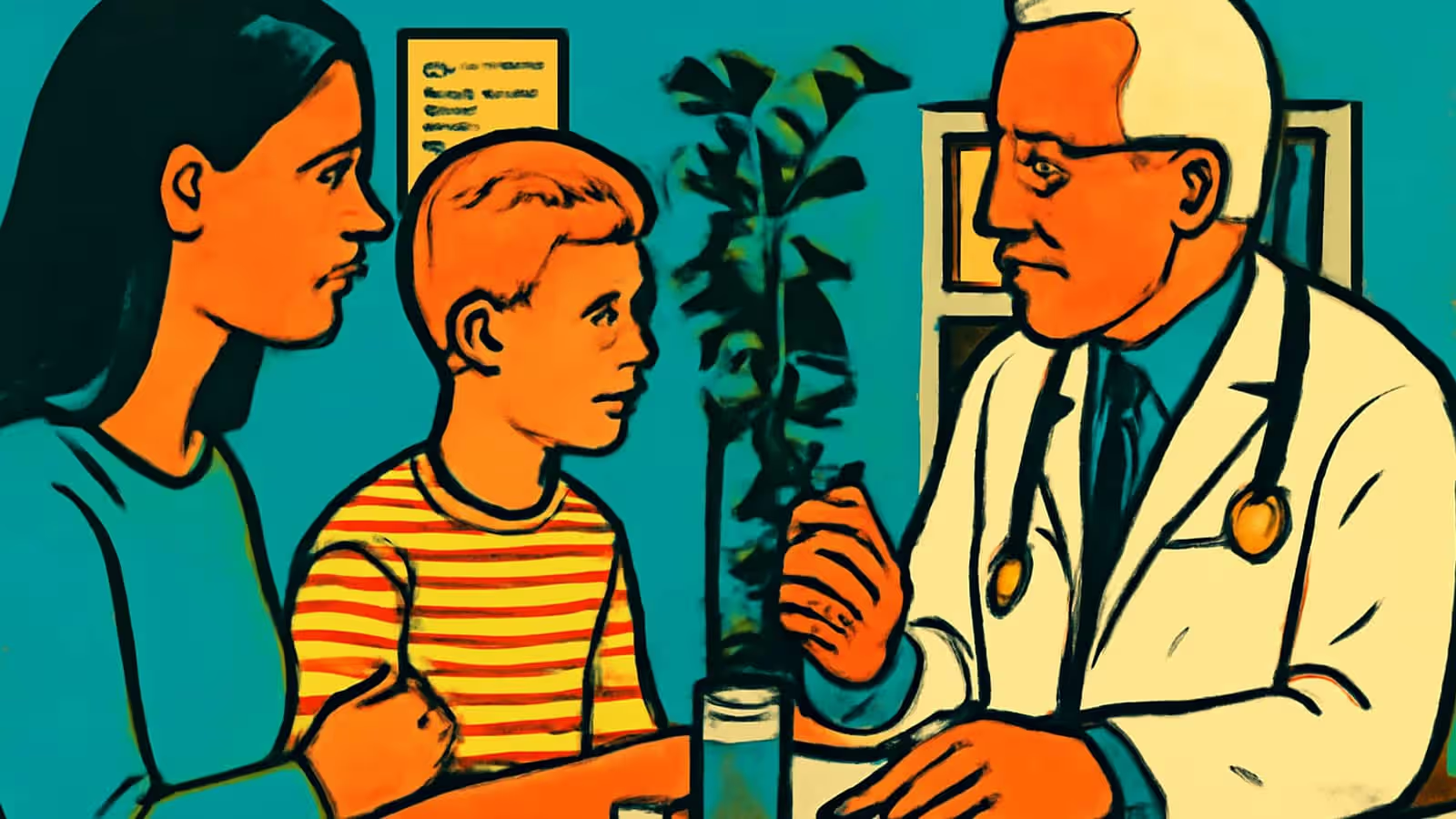
A child psychiatrist is a medical doctor who trained in medicine first, then in psychiatry, then again specifically in children and adolescents. That medical training is the whole practical difference: they can diagnose, prescribe and stop medication, and they can consider whether something physical is producing what looks like a psychological problem.
Who does what, and why the distinction matters
The roles differ by training and by what each one is allowed to do, not by how good they are. A psychiatrist prescribes and a psychologist or therapist does not, and for most childhood difficulties the talking treatment is the part that carries the effect.
| Child psychiatrist | Child psychologist or therapist | |
|---|---|---|
| Trained as | A medical doctor, then psychiatry, then child and adolescent | Psychology or a therapy profession |
| Can prescribe | Yes | No |
| Usually does | Diagnosis, medication, ruling out physical causes | Detailed assessment and the talking treatment |
| Typical length of contact | Reviews, often spaced out | Weekly sessions over a block |
| Who most children see | The smaller number | The great majority |
The row that surprises people is the last one. Being told your child does not need a psychiatrist is not a lesser outcome or a door closing; it usually means the problem has a treatment that does not require one.
When the psychiatrist is the right call
Four situations, and outside them a therapist is normally the better first step. Medication is a live question. The picture is unclear or severe enough that a diagnosis is doing real work rather than labelling. Several difficulties are tangled together and nobody can say which is driving which. Or something physical needs ruling out, since thyroid problems, sleep disorders, seizures and the side effects of other medication can all present as a change in mood or behaviour.
That last one is the least obvious and the reason the medical training matters. A child who has become irritable, tired and inattentive has a psychological explanation available and several physical ones, and the person who can hold both is the one who trained in medicine. [apa-dsm5-child]
Why waiting has a cost
Because this is when most of it starts. A meta-analysis pooling 192 studies from around the world found the first mental health condition begins before age 14 in about a third of people and before 18 in almost half, with a peak age of onset around fourteen and a half. [solmi-2022-onset]
A schematic of the cumulative pattern reported by Solmi and colleagues, drawn to show its shape. The three anchor points it passes through are the reported figures.
Read the curve rather than any single point. The steepest part is adolescence, which is exactly the window in which families are most often told to wait and see whether it settles. That is not an argument for referring every worried teenager to a specialist, and it is an argument against treating the teenage years as a phase that explains everything.
What to do before the appointment
Write things down as they happen, with dates. An appointment is short, memory reorganises itself around whatever happened most recently, and a parent asked “how long has this been going on” in a room with a clinician will reliably guess.
What is worth recording is concrete: sleep, appetite, school attendance, who they are still seeing, what they have stopped doing, and what was happening around the time it changed. School reports and messages from teachers belong in the same folder, because a difficulty that shows up in two settings is a different proposition from one that shows up only at home.
Which kind of help is this?
For a parent trying to work out what to ask for. It cannot tell you what is wrong, only which appointment is likely to be the useful one.
0 of 6 ticked
The last three items are the ones that most change the answer. Ask specifically whether an assessment by a child and adolescent psychiatrist is appropriate, and take your written record with you.
This shape usually points at a talking treatment rather than a psychiatric appointment, which is the commoner and often the more useful of the two.
Little of this pattern is present. Start with your family doctor or the school, and say what you have noticed, since both are ordinary routes to whatever comes next.
A reflection prompt, not a screener. Every screener on this site is validated in adults, so none of them should be used to assess a child.
What the first appointment is usually like
Mostly questions, and more of them to you than you might expect. A child and adolescent assessment normally gathers information from the parents, the child, and often the school, because a child’s own account is one view of something that shows up differently in each setting.
It rarely ends in a prescription on the day. The commoner outcomes are a further assessment, a referral to a talking treatment, or a plan to review in a few weeks, and being told that no diagnosis applies is a real and reasonably frequent result rather than a failed appointment.
When to seek help
Speak to your family doctor or the school if a change in your child has lasted more than a few weeks, or if sleep, appetite, school attendance or friendships have shifted. Ask directly what kind of assessment is available and how long it takes, and take your written record. Anything involving self-harm, or a child talking about not wanting to be alive, is urgent rather than something to monitor: contact your local emergency services or a crisis helpline the same day.
How MyFreud can help
The single most useful thing a parent can bring to an appointment is a dated record, and it is the thing almost nobody has. Tracking day to day produces exactly that, and it also shows whether the bad days cluster around school, which is one of the first questions an assessment asks. Our finding therapy guide covers the wider picture, including the difference between a psychiatrist and a psychologist, and our child mental health guide covers what is ordinary at different ages.
Download MyFreud and start today: App Store or Google Play.