
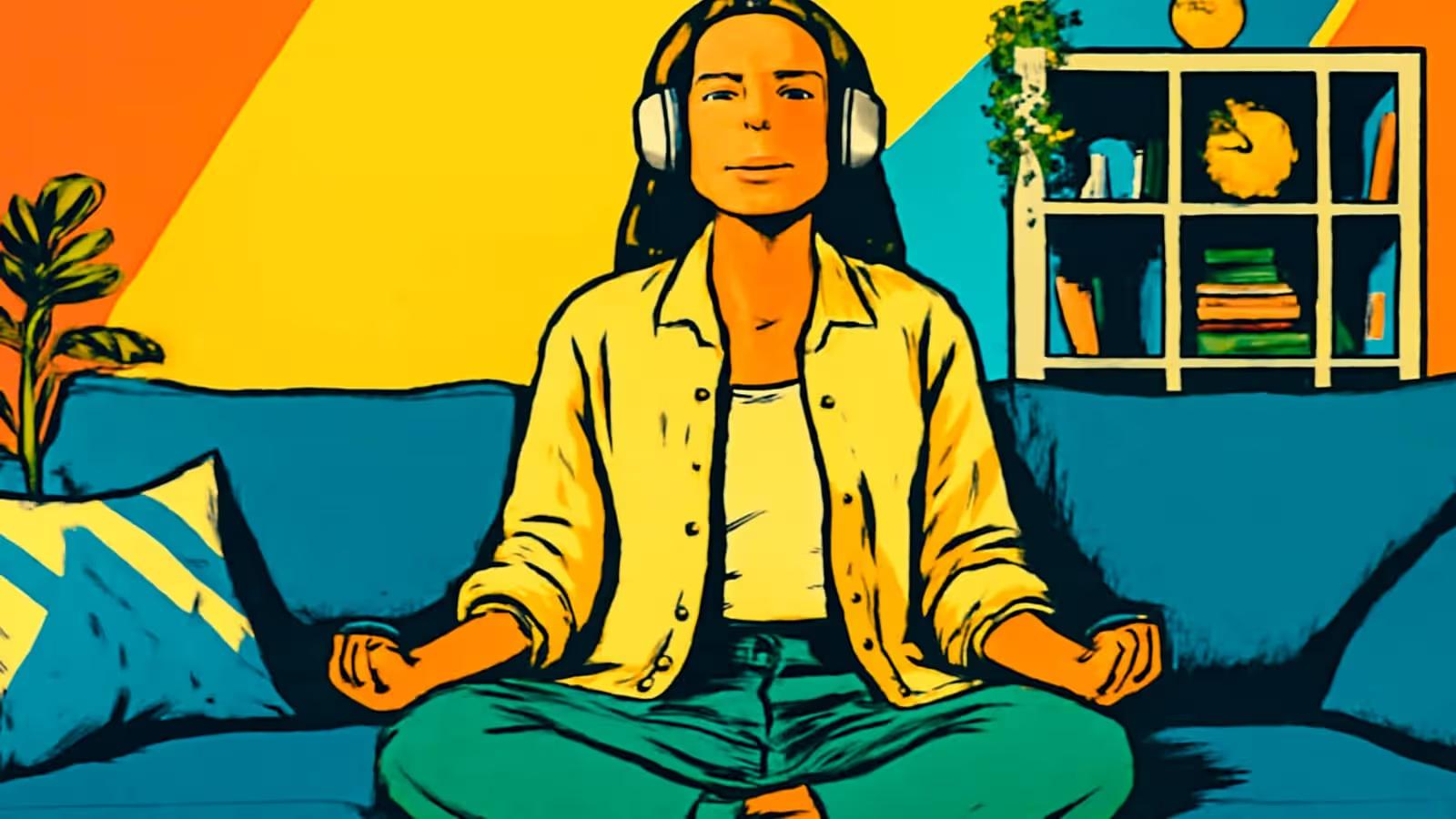
Meditation gives small to moderate relief of depression symptoms in the trials, and its best-evidenced use is a structured course that lowers the chance of depression returning in people who are currently well. A review of 47 randomised trials found moderate evidence that mindfulness meditation programmes improve depression, [goyal-2014] and an analysis of nine relapse-prevention trials found a lower risk of relapse with mindfulness-based cognitive therapy. [kuyken-2016] This guide covers what each review found, who the strongest evidence applies to, and how to start without making things harder. Our overview of depression covers the wider picture.
Does meditation help depression?
A little, according to the best available summary of trials. Goyal and colleagues reviewed 47 randomised trials with 3,515 adult participants and active control groups, and found moderate evidence that mindfulness meditation programmes improved depression, with effect sizes of 0.30 at 8 weeks and 0.23 at 3 to 6 months. [goyal-2014] The authors conclude that meditation programmes can produce small to moderate reductions in several negative dimensions of psychological stress, depression among them.
At 8 weeks the confidence interval around the depression figure ran from 0.00 to 0.59, so the range of plausible effects includes none at all, and any one person may see little change. [goyal-2014]
Hofmann and colleagues pooled 39 studies with 1,140 participants who had conditions including cancer, generalised anxiety disorder and depression. Mood symptoms improved from before to after mindfulness-based therapy, with a Hedges’ g of 0.59 overall and 0.95 in people with anxiety and mood disorders. [hofmann-2010] Those are changes from before to after treatment, a weaker comparison than a randomised control group, which is why the smaller, controlled figures above are the better guide.
Is meditation as effective as other depression treatments?
The reviews found no evidence that it is better, and for relapse prevention it did at least as well. Goyal and colleagues found no evidence that meditation programmes were better than any active treatment, a category that included drugs, exercise and other behavioural therapies. [goyal-2014]
In the relapse analysis, the pooled comparison with other active treatments, which the authors say includes antidepressants, still favoured mindfulness-based cognitive therapy (hazard ratio 0.79, 95% confidence interval 0.64 to 0.97). [kuyken-2016] That does not mean meditation can stand in for treatment you already take. Whether to add, switch or stop anything is a decision for you and your doctor.
What is the evidence for mindfulness-based cognitive therapy?
The strongest evidence is for relapse prevention in people who have had depression repeatedly and are currently well. Kuyken and colleagues pooled individual patient data from nine randomised trials of manualised MBCT, covering 1,258 patients with recurrent depression in full or partial remission. People who received MBCT had a lower risk of depressive relapse within 60 weeks than people who did not (hazard ratio 0.69, 95% confidence interval 0.58 to 0.82). [kuyken-2016] In plain terms, at any point in the follow-up, relapse was about 31 percent less likely among people who received MBCT.
The authors found some evidence that people with more severe depressive symptoms before treatment gained more from MBCT than from other treatments. Age, sex, education, relationship status, age at onset and number of previous episodes showed no statistically significant interaction with the effect. [kuyken-2016] Our guide to MBCT covers what the course involves and how it differs from a meditation app.
| Review | What it covered | Depression result | Limit |
|---|---|---|---|
| Goyal et al., 2014 | 47 randomised trials, 3,515 adults, active controls | Moderate evidence of improvement: effect size 0.30 at 8 weeks, 0.23 at 3 to 6 months | A small to moderate effect, and no evidence of beating active treatments |
| Hofmann et al., 2010 | 39 studies, 1,140 people with conditions including cancer, anxiety and depression | Mood symptoms improved from before to after treatment: g 0.59 overall, 0.95 in anxiety and mood disorders | Before-and-after changes are a weaker comparison than a randomised control group |
| Kuyken et al., 2016 | 9 randomised trials, 1,258 people with recurrent depression in full or partial remission | Lower relapse risk within 60 weeks: hazard ratio 0.69 against no MBCT, 0.79 against other active treatments | Does not cover a severe current episode |
Who was studied, and who was not?
The strongest evidence does not cover a severe current episode. The relapse trials enrolled people in full or partial remission, so they tell us about staying well and not about rescuing someone in the middle of an episode. [kuyken-2016]
Sitting quietly with your thoughts can also be hard when mood is low. If a practice leaves you more distressed and not merely uncomfortable, stop that practice, try a shorter or different one, and tell someone. Our guide to when meditation makes things worse covers what is known about difficult experiences and how to practise more gently.
How do you start meditating if you have depression?
Start with five minutes of paying attention to your breath on most days, and treat it as a taster and not as the treatment the trials tested. The trials tested structured programmes, and the relapse trials tested a manualised course, so a few minutes with an app is a different thing. [kuyken-2016]
Five minutes with the breath
Sit comfortably and notice the breath where you feel it most clearly. When your mind wanders, which it will, notice where it went and come back to the breath without commenting on it. This is a taster of the skill, not the structured programme the trials tested.
5:00
A wandering mind is part of the practice and not a sign it is failing. If the practice makes you feel worse, stop, and try a shorter one with your eyes open.
Done. Note how you felt in a line, and decide whether to do it again tomorrow.
Two other steps are ours. If you have had depression before and are well now, ask a doctor about MBCT by name, because a general request for therapy will not always produce it. And pair any practice with something that has its own evidence: our guides to behavioural activation and exercise for depression cover two options, and mindfulness for rumination covers the loop that meditation is most often used for.
Is now a good time to try it?
Tick anything that is true right now. This is a prompt for reflection, not a test, and it produces no diagnosis.
0 of 5 ticked
Most of these are in place, which resembles the people in the relapse trials. Ask a doctor about a structured course, and start with short practices in the meantime.
A few of these are true. Start small, keep a note of how each practice feels, and raise it with a doctor or therapist if you are not already working with one.
Few of these are in place right now, which is common when mood is low. Talk to a doctor or therapist before starting, and lean on the options in our depression guide that need less from you.
When to seek help
Speak to a doctor if low mood has lasted for weeks, if it is getting in the way of work, relationships or looking after yourself, or if you have had depression before and are noticing the early signs again. Do not stop or change antidepressants because of anything in this guide.
Contact your local emergency services or a crisis helpline if you feel unsafe or have thoughts of harming yourself.
How MyFreud can help
Whether a practice is helping is hard to judge from inside a low mood. Daily mood tracking in MyFreud shows the pattern across weeks, so you can compare the days you practised with the days you did not, and it can show an early downturn before it feels like one. It does not replace a doctor or a structured course.
Download MyFreud and start today: App Store or Google Play.