
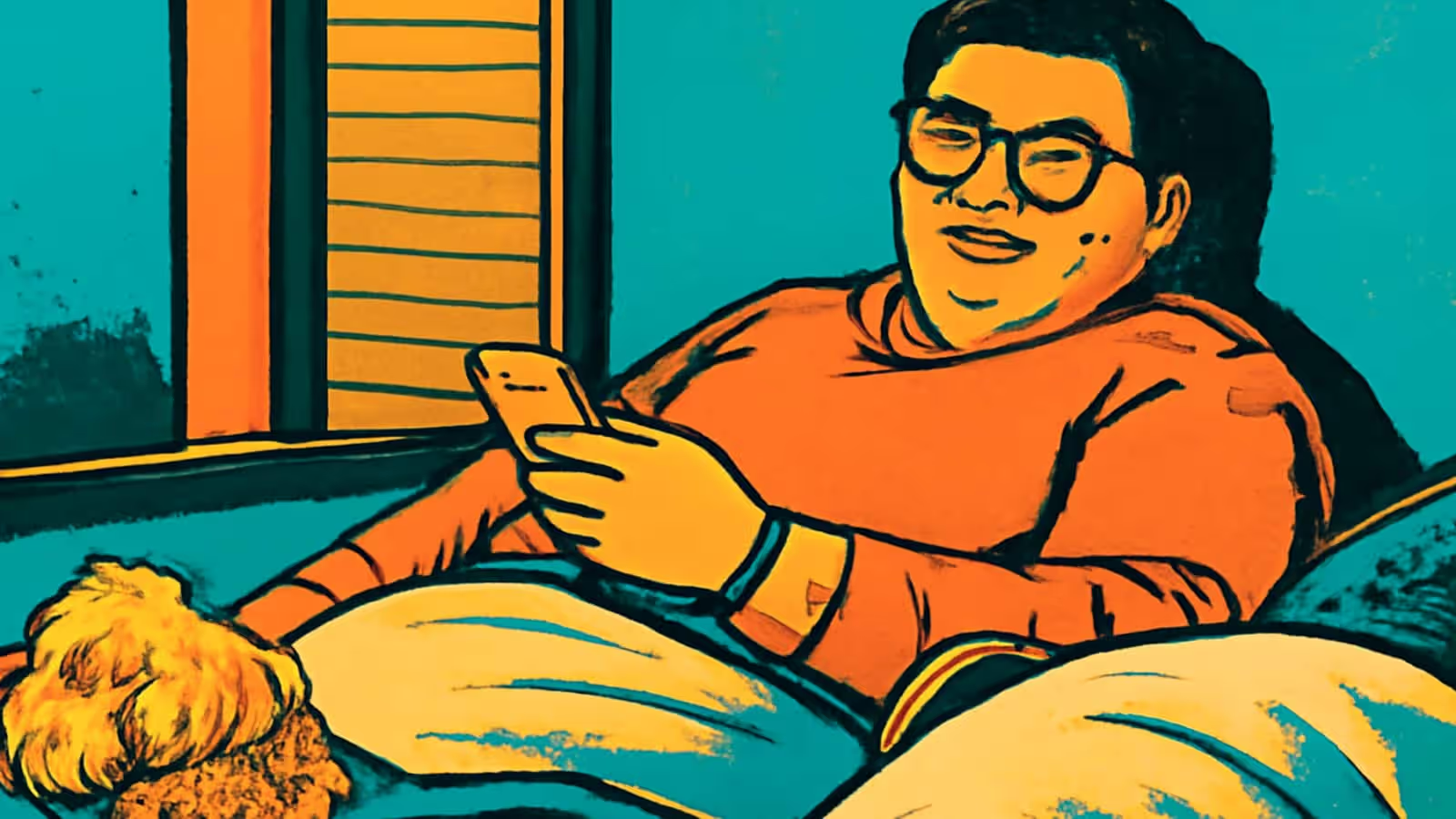
Bed rotting is the internet’s name for deliberately spending hours in bed doing nothing much. The argument about whether it is healthy has been running for a couple of years and both sides are partly right, which is why it has not resolved.
The useful move is to stop asking whether the behaviour is good or bad and start asking what it is doing, because the same afternoon can be two completely different things.
The case for it, which is real
Rest is genuinely undersupplied, and treating every unproductive hour as a symptom is its own error. That deserves saying first, because the alternative framing has done damage of its own.
A Saturday spent horizontal after a punishing fortnight is not a warning sign. Neither is doing nothing without earning it first, which is a rule most people apply to themselves and to nobody else. The instinct behind bed rotting, that unstructured time with no output is allowed, is a correction to something that was worth correcting.
So the concern in the rest of this article is not that people are resting too much. It is that one specific pattern looks identical to rest from the outside and from the inside, in the moment, while doing something different.
What withdrawal does, and why it feels like rest
It delivers relief immediately and costs you later, which is precisely the shape that strengthens a habit while your mood falls. Understanding this sequence is most of what you need.
Say you cancel something. The relief is instant and substantial: the dread stops, the effort is avoided, and the bed is warm. That relief is a reward, and it arrives fast enough to reinforce the cancelling. Nothing about this requires a character flaw; it is how learning works.
What the cancelling also does is remove the things that would have generated some reward later. The conversation, the walk, the sense of having done something, the mild satisfaction of having turned up. So the evening arrives with less in it, mood drops a little further, and tomorrow looks marginally harder, which makes the bed marginally more appealing. [apa-depression-topic] Run that for a fortnight and the loop is self-maintaining.
A schematic of the two patterns described in this article, drawn to show shape rather than measured values.
The two lines are indistinguishable at the point where you are lying in bed enjoying it. They separate afterwards, which is why the honest question is about what happened next rather than about how the afternoon felt.
The three questions that tell them apart
Did it restore you, did you choose it, and did you come back? Any one of them can be misleading on its own; together they are reliable.
Did you get up restored, or flatter? Rest tends to leave you a little better than it found you. Withdrawal tends to leave you heavier, with a familiar sense of the day having been wasted rather than spent.
Was it chosen, or was it the only thing available? There is a real difference between deciding to spend Sunday in bed and finding that getting out of it was not something you could do. The second is not a scheduling preference.
Did you go back to your life? This is the strongest of the three. Rest is bounded and you return from it. Withdrawal spreads: first the plans, then the messages, then the washing, then work.
Which one has this been?
Tick anything true of the last two weeks. This is a prompt for what to do next, not a test, and it produces no diagnosis.
0 of 6 ticked
Losing interest in things you used to enjoy, alongside a spreading pattern and a change in sleep or appetite, is the recognisable shape of low mood rather than of tiredness, and it is worth taking to a doctor rather than waiting out. It is also treatable, and the treatment that targets exactly this pattern is behavioural activation. Ask for it by name. In the meantime, start smaller than feels worth doing.
This is the stage where a small change does the most work, because the loop has started but has not yet taken over your week. Pick one specific activity, put it at a specific time tomorrow, and do it whether or not you feel like it. The point is not the activity; it is proving that doing something does not require wanting to first, which is the belief that keeps the pattern running.
Nothing here suggests a problem, and an afternoon in bed after a hard stretch is a reasonable thing to do rather than something to justify. The one thing worth keeping an eye on is whether it stays bounded, since the pattern that causes trouble is the spreading one rather than any single day. Enjoy it without the running commentary.
What actually shifts it
Doing something small before you feel ready, which is the opposite of the intuitive plan and is the part with the best evidence behind it.
The treatment built on this is behavioural activation, and its premise is that withdrawal maintains low mood, so re-engaging is the lever. It is unusually well supported: a large randomised trial found it performed as well as cognitive behavioural therapy for depression, while being simpler and cheaper to deliver. [richards-cobra-trial] That result matters here because it is a treatment aimed directly at the pattern this article describes.
The core of it is usable without a therapist, and it comes down to a few things.
Schedule, do not decide in the moment. Pick the activity and the time in advance. Deciding at 11am whether to get up is a decision made by the version of you least able to make it.
Start absurdly small. Getting dressed. Ten minutes outside. One message answered. The aim is not to achieve anything; it is to break the rule that action requires motivation first.
Go before you feel like it. In low mood, motivation follows action rather than preceding it, so waiting to feel ready is waiting for the thing that is supposed to arrive second.
Pick things with a person or a place in them. Activities that involve leaving the house or seeing somebody tend to do more than solitary ones, and they are harder to quietly cancel.
The depression guide covers how this pattern fits the wider picture, and our pieces on how to find motivation and anhedonia cover the two things people most often get stuck on here, and revenge bedtime procrastination covers the related pattern at the other end of the day.
When to seek help
Speak to a doctor if low mood has lasted most of the day, most days, for more than two weeks, particularly alongside losing interest in things you used to enjoy, changes in sleep or appetite, or difficulty doing ordinary tasks. That combination is what depression looks like and it responds to treatment.
Ask about behavioural activation by name if the pattern in this article is the one you recognise, since it targets it directly and is not always the first thing offered. Our guides to how to deal with depression and high-functioning depression cover what else is worth knowing before that appointment. Go sooner if you are missing work, if you have stopped eating properly, or if the days in bed have become most days.
Contact your local emergency services or a crisis helpline if you feel unsafe or have thoughts of harming yourself.
How MyFreud can help
MyFreud is a mobile app that helps you find solutions to problems that have affected your mind and productivity. Daily tracking answers the exact question this article turns on, which is what a day in bed did to the days after it, and that is a comparison nobody can make accurately from memory once mood is low. Live coaching sessions are useful for the scheduling half of behavioural activation, because the difficulty is rarely knowing what to do and almost always doing it without waiting to feel ready. The notepad is where tomorrow’s one small thing goes, written the night before by the version of you who can still see the point.
Download MyFreud and start today: App Store or Google Play.